


August 27-28: The 'Blood Moon' Eclipse
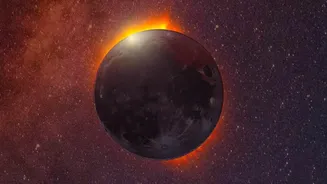
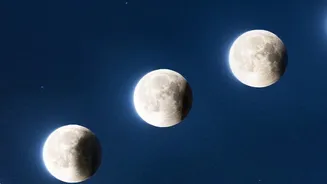
The major highlight for the end of the month is a deep partial lunar eclipse that will occur on the night of August 27-28. This event coincides with the full moon, often called the Sturgeon Moon. A partial lunar eclipse happens when the Earth moves between
the Sun and Moon but they aren't perfectly aligned, so only a part of the Moon passes through Earth's darkest shadow, the umbra. This particular eclipse will be very deep, with nearly 93-96% of the Moon's surface entering the umbra. This means much of the lunar disk will darken significantly and may even take on a reddish, coppery hue, a phenomenon often associated with total lunar eclipses and sometimes called a 'Blood Moon'. The event will be visible across the Americas, Europe, and Africa. For viewers in India, the greatest eclipse occurs around 9:44 AM IST on August 28, meaning it will not be visible as it will be daytime. However, the lead-up to the full moon on the nights of August 26 and 27 will still offer a brilliantly lit moon, perfect for casual observation.
Look West: Venus Meets a Star
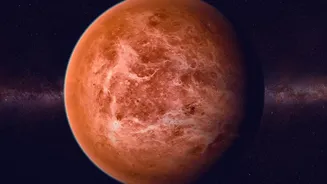
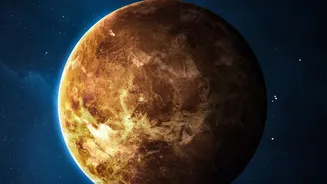
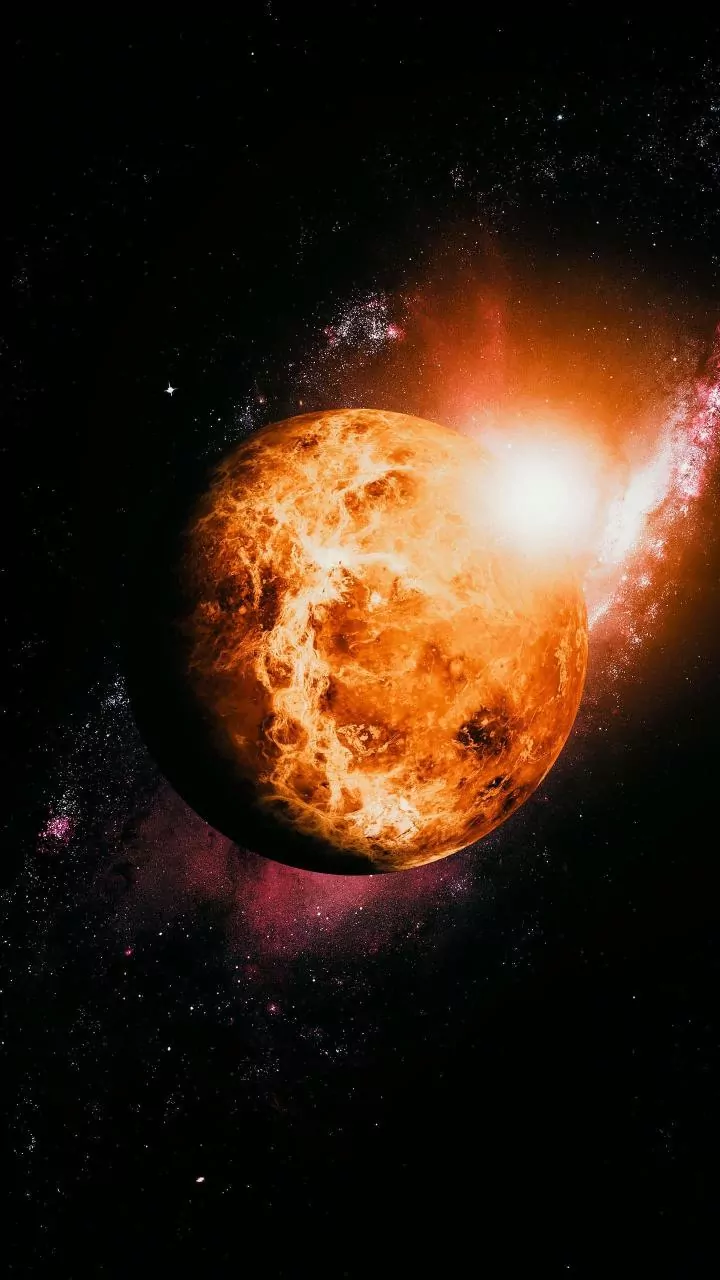
Throughout the last week of August, from August 21 to 24 and beyond, the brilliant planet Venus will be putting on a show in the western evening sky. Look for it shortly after sunset. During this period, you can watch Venus as it appears to close the distance with Spica, the brightest star in the constellation Virgo. This nightly dance leads up to their conjunction, or closest apparent approach, which will happen on September 1. Venus is one of the brightest objects in the night sky, making it an easy and rewarding target even for city-based skywatchers. Simply find a clear view of the western horizon as twilight deepens, and you'll be greeted by its unmistakable, steady light.
All Month: Navigate by the Summer Triangle
While not a specific date, the end of August provides a perfect opportunity to spot one of the most famous star patterns of the season: the Summer Triangle. This is not an official constellation but an asterism, a prominent pattern formed by three bright stars from three different constellations. The stars are Vega (in the constellation Lyra), Deneb (in Cygnus), and Altair (in Aquila). On August evenings, this enormous triangle can be found high overhead. Vega is the brightest of the three. Once you locate this trio, you can use it as a celestial signpost. The faint, hazy band of the Milky Way runs right through the triangle, making it a stunning sight under dark, clear skies. Using binoculars, you can explore this rich area of the sky, which is home to smaller constellations like Sagitta the Arrow and Delphinus the Dolphin.
Getting Ready for Saturn's Big Show
Though its main event is a little later in the year, late August is an excellent time to start tracking the planet Saturn. The ringed planet is becoming increasingly prominent in the night sky, rising in the east around 10:18 PM. It is building towards its opposition on October 4, 2026. Opposition is the point when Earth passes directly between the Sun and an outer planet, making that planet appear at its largest and brightest in our sky. In late August, Saturn will already be a fantastic target for those with a small telescope, which will reveal its famous rings. Even to the naked eye, it appears as a bright, steady, yellowish point of light. As it will be visible all night long around its opposition, now is the time to familiarise yourself with its position in the constellation Cetus.