




The Lab Without Limits
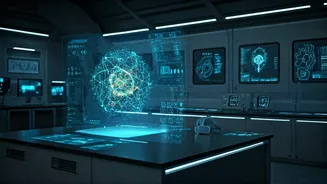
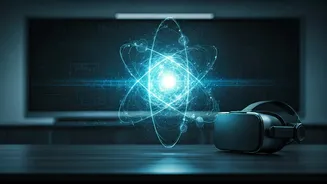
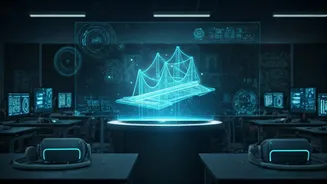
What exactly is a VR/AI science classroom? It's far more than a video game. These are sophisticated, immersive learning environments where students don a virtual reality (VR) headset and step into a fully equipped, interactive laboratory. Here, they can
manipulate virtual equipment, from beakers and Bunsen burners to complex particle accelerators. The Artificial Intelligence (AI) component acts as a personal tutor, guiding students through experiments, offering real-time feedback, and adapting the difficulty based on their performance. Unlike traditional labs, which are constrained by budget, space, and safety protocols, these virtual spaces offer limitless possibilities. Students can conduct experiments that would be too expensive, time-consuming, or downright dangerous to perform in a school setting.
Making Danger Safe
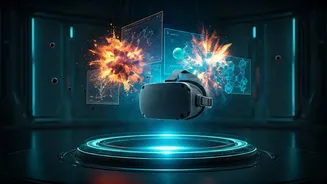
The headline's mention of 'dangerous' experiments is the core value proposition of this technology. In a traditional high school lab in India, safety concerns rightly restrict the curriculum. Students might read about nuclear fission but can never observe it; they learn about exothermic reactions but are kept far from the truly volatile ones. VR labs shatter these limitations. Platforms like Labster and VictoryXR allow students to work with radioactive isotopes, handle deadly pathogens in a simulated biosafety level 4 lab, or even travel to different planets to study geology. The ability to make mistakes without consequence is a powerful learning tool. A virtual chemical explosion doesn't cause harm; it triggers an AI-driven explanation of what went wrong, reinforcing the scientific principle far more effectively than a textbook warning.
More Than Just a Safety Net
While safety is a major benefit, the pedagogical advantages are even more profound. Studies have shown that immersive, hands-on learning significantly boosts retention and understanding. When students can 'see' molecules bonding or 'walk' through the human circulatory system, abstract concepts become tangible and memorable. The AI tutor provides personalized instruction at scale, something a single teacher in a crowded classroom of 40 students cannot possibly do. It can identify where a student is struggling and offer tailored hints or supplementary information. For teachers, the technology provides a rich dataset on student performance, highlighting common misconceptions and allowing them to adjust their lesson plans accordingly. This isn't about replacing teachers; it's about giving them superpowers.
Bridging the Gap in Indian Education
The potential for this technology in India is immense. A persistent challenge in the Indian education system is the disparity in resources. A top-tier private school in a metro city may have well-equipped labs, but a government school in a rural area often has none. VR classrooms can democratize access to high-quality science education. With a few headsets, a school can provide its students with a world-class laboratory experience. This aligns perfectly with the goals of the National Education Policy (NEP) 2020, which emphasizes experiential and interactive learning. As the cost of VR hardware decreases and internet connectivity improves, these virtual labs could become a crucial tool for upskilling the next generation of Indian scientists and engineers.
The Hurdles on the Horizon
Despite the promise, widespread adoption faces challenges. The upfront cost of VR headsets and powerful computers can still be prohibitive for many institutions. There's also the issue of the 'digital divide'—uneven access to stable, high-speed internet. Furthermore, not all VR content is created equal; developing high-quality, pedagogically sound simulations is a complex and expensive process. Finally, there's the human element. Teachers need to be trained not just on how to use the technology, but on how to integrate it effectively into their teaching. A VR lab is not a replacement for good teaching or for the tactile experience of a real lab, but a powerful supplement.