






A New Space Policy Ignites an Ecosystem
The surge in private space exploration is no accident. It is the direct result of a major policy shift by the Indian government. The Indian Space Policy 2023 has effectively opened the final frontier to private enterprise, creating a clear roadmap for
startups to build, launch, and operate space assets. The policy established the Indian National Space Promotion and Authorisation Centre (IN-SPACe) as a single-window agency to guide and authorise private missions, while NewSpace India Limited (NSIL) acts as the commercial arm to transfer ISRO's mature technologies to industry. This framework allows the Indian Space Research Organisation (ISRO) to focus its immense talent on pioneering research and deep space exploration missions like Gaganyaan and a future Indian space station, while startups take on the commercial and manufacturing roles. With a liberalised FDI policy and government-backed venture funds, the goal is to expand India's share of the global space economy from its current 2% to a projected $44 billion by 2033.
The Innovators: From Pioneers to New Contenders
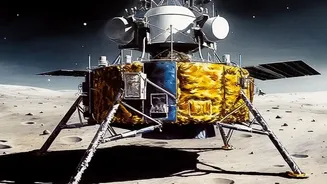
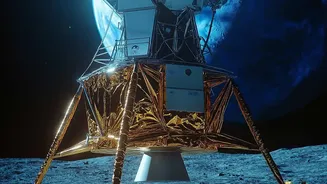
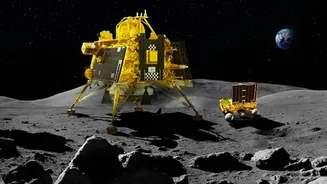
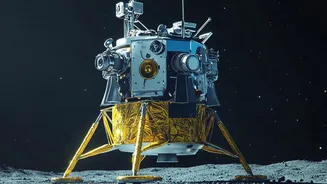
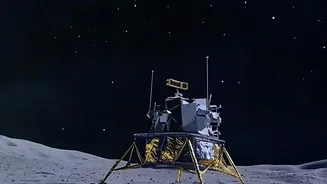
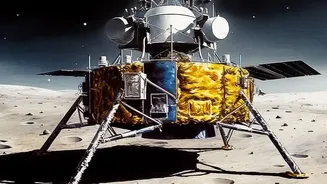
Several companies are at the forefront of this commercial lunar push. Bengaluru-based TeamIndus, now operating as Axiom Research Labs, was one of the earliest pioneers. It began its journey competing for the Google Lunar X Prize, developing a lander and a small rover named ECA, short for 'Ek Choti Si Asha' or 'A Small Hope'. While its initial mission faced hurdles, the company’s early efforts paved the way for the current ecosystem and proved that private Indian firms could aim for the Moon. Building on this momentum, companies like ORBITBeyond are establishing major facilities in India. Its centre in Bhubaneswar is designed to be a hub for manufacturing lunar landers and rovers, drawing on the expertise of engineers who contributed to ISRO's Chandrayaan missions. The talent pool is expanding rapidly, with founders of other space-tech startups, like Kepler Aerospace, also having backgrounds in lunar rover projects and ISRO's own programmes, showcasing the depth of expertise now flowing into the private sector.
The 'Jugaad' Advantage: Frugal Innovation Goes Interplanetary
What makes these Indian startups particularly competitive is their focus on cost-effectiveness. The same spirit of frugal innovation, or 'jugaad', that allowed ISRO to execute the Mars Orbiter Mission and Chandrayaan missions at fractions of the cost of their international counterparts is now a core business strategy for these new companies. The objective is to democratise access to space by drastically reducing the price of lunar logistics. This is achieved through clever engineering, using a mix of bespoke and off-the-shelf components, agile development cycles, and designing modular, reusable systems. Instead of multi-billion-dollar, decade-long projects, these startups operate on a leaner model. The shift is from one-off, grand missions to a production-line economy, where landers and rovers can be built more quickly and affordably, creating a regular 'bus service' to the Moon for scientific and commercial payloads.
Beyond India: Aiming for the Global Lunar Market
The ambition of India's space startups extends far beyond national missions. Their primary target is the burgeoning global market for lunar transport. A key opportunity is NASA's Commercial Lunar Payload Services (CLPS) initiative, where the American space agency buys payload delivery services from private companies to send its science instruments to the Moon. By developing reliable, low-cost rovers and landers, Indian firms are positioning themselves as attractive partners for NASA and other international space agencies. India's recent signing of the Artemis Accords further integrates the country into the U.S.-led framework for lunar exploration, opening up more avenues for collaboration. The success of private launch companies like Skyroot Aerospace has already boosted global confidence in India’s private space capabilities, demonstrating that the country can be a one-stop destination for designing, building, and launching entire space missions.