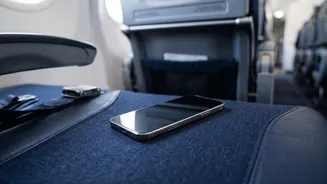







It’s a traveller’s nightmare: you’ve just stepped off the plane and realise your phone, passport, or headphones are still in the seat-back pocket. Your first instinct is to turn around, but you can't. Here’s why it’s not that simple.
Security is the Immediate Barrier
The primary reason
you cannot simply walk back onto an aircraft is security. Once deplaning is complete, the aircraft becomes a secure zone. International and national aviation regulations are extremely strict about who can be on a plane and when. After you step off, you are no longer a tallied passenger on that flight's manifest. Allowing someone to re-enter would breach security protocols, as ground staff have no way of knowing who you may have interacted with or what you might be carrying since you left the plane. To maintain the integrity of the aircraft's security for the next flight, re-entry is almost universally prohibited.
A Race Against the Clock
Airlines operate on incredibly tight schedules. The moment the last passenger disembarks, a highly coordinated process known as the 'turnaround' begins. This involves cleaning crews, caterers, refuelling teams, and maintenance staff rushing to prepare the plane for its next departure, often within a very short window. A passenger walking against the flow of traffic on the jet bridge can cause significant slowdowns. Permitting someone to go back to their seat to search for a lost item would interrupt this critical sequence, potentially causing a chain reaction of delays for subsequent flights.
What Happens to Your Lost Item?
So, where does your forgotten item go? During the turnaround, cleaning crews thoroughly check the cabin, including seat pockets, overhead bins, and floor areas. Any items they find are typically collected and handed over to the airline’s ground staff or the cabin crew supervisor. From there, the item is logged and transferred to the airline’s designated lost and found office at the airport. Depending on the airport and airline, this could be a dedicated counter for the carrier or a centralized airport lost and found department. For instance, as per aviation regulations in India, all found items, whether on the aircraft or in the airport, are handed to the airport operator's Lost & Found.
The Right Way to Report Your Loss
Time is of the essence. If you realise your mistake while still at the gate or in the arrivals hall, immediately contact the airline’s gate agent or ground staff. They may be able to radio the crew and have someone retrieve the item for you before the aircraft is fully cleaned or departs. If you’ve already left the airport, your next step is to file an official lost item report. Nearly all major airlines, including Air India, have a dedicated form on their website or mobile app for this purpose. Be prepared to provide your flight number, seat number, and a very detailed description of the item, including brand, colour, size, and any unique marks.
Tips for a Successful Recovery
The more specific you are in your report, the higher your chances of getting your item back. Instead of 'a black coat', describe it as 'a black Zara wool-blend coat, size large, with a tear in the right pocket lining'. If you lost a laptop, providing the serial number is extremely helpful. After filing the report online, follow up with a phone call. Persistently but politely check on the status of your claim. Keep in mind that items are generally held for a limited period, often 30 to 90 days, before they are disposed of, donated, or auctioned. It's crucial to act fast. Finally, manage your expectations. While airlines and airports do their best, not all items are found. The best strategy is always prevention: before you stand up to deplane, make it a habit to thoroughly check the seat pocket, your seat area, and the overhead bin.