







The Science of Superior Flavour
So, what magic happens when you apply heat to a humble almond or sesame seed? The transformation is largely due to a chemical process called the Maillard reaction. This is the same reaction that gives a grilled steak its savoury crust and bread its golden-brown
topcoat. Heat causes the natural sugars and amino acids within the nuts and seeds to react, creating hundreds of new aromatic compounds. This process releases their volatile oils, resulting in a much deeper, roastier, and more complex flavour profile that raw nuts simply cannot match. Toasting also drives out moisture, which leads to a significantly crispier, crunchier texture that holds up better in salads, baked goods, and curries.
The Best Method: Oven Roasting
For the most even and consistent results, the oven is your best friend. While stovetop toasting has its place, it can often lead to nuts that are scorched on the outside but still raw on the inside. Oven roasting provides a more gentle, ambient heat that toasts the nuts through and through. To do it right, preheat your oven to a relatively low temperature, around 160°C to 175°C. Spread your nuts or seeds in a single, even layer on a rimmed baking sheet; using parchment paper can help prevent sticking. Avoid any oil, as the nuts will release their own. The timing depends on the type and size of the nut. Sliced almonds might be done in 8 minutes, while whole walnuts or pecans could take 10 to 12 minutes. Your nose is your best guide: when you can smell a wonderfully nutty aroma, they are likely done.
The Quick Method: Stovetop Toasting
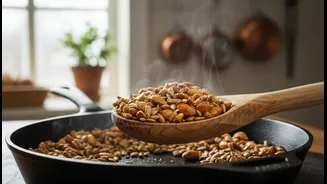
If you only need a small amount or are toasting tiny seeds like sesame or poppy seeds, the stovetop is a perfectly good and very fast option. Use a dry, heavy-bottomed skillet over medium heat. Add your nuts or seeds in a single layer and stay close, as they can burn in an instant. Toss or stir them frequently to ensure they toast evenly. For most seeds and small nuts like pine nuts, this will only take about 3 to 5 minutes. You're looking for a light golden-brown colour and that signature toasty fragrance. As soon as they're done, immediately transfer them from the hot pan to a cool plate to stop the cooking process and prevent them from burning.
Common Mistakes to Avoid
The line between perfectly toasted and burnt is thin. The most common mistake is using a temperature that is too high, which scorches the outside before the inside can toast. Always opt for a lower temperature and a slightly longer time. Another pitfall is walking away; nuts and seeds need to be watched carefully. Also, always toast nuts whole before chopping them. Smaller pieces have more surface area and are far more likely to burn. Finally, let your toasted nuts and seeds cool completely before using them in a recipe or storing them. This is crucial for achieving maximum crunch and preventing them from becoming soggy from trapped steam. Once cool, store them in an airtight container.
Elevating Your Everyday Meals
Once you start toasting, you'll find endless uses for your crunchy, flavourful creations. In Indian cooking, toasted nuts and seeds are transformative. Imagine the depth toasted cashews and poppy seeds can bring to a korma or the fragrant crunch of toasted almonds atop a bowl of kheer. A handful of toasted walnuts or pecans can elevate a simple salad from mundane to magnificent. Sprinkle toasted sesame seeds over a stir-fry, fold toasted pistachios into a pilau, or simply enjoy a bowl of spiced, toasted mixed nuts as a delicious and healthy snack. You can even create your own signature blends, mixing different nuts with spices like cumin, coriander, and garam masala before toasting for a savoury treat.