






A Journey to a Metal World
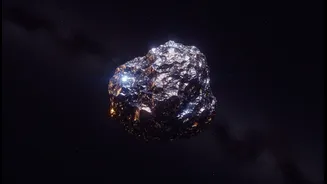
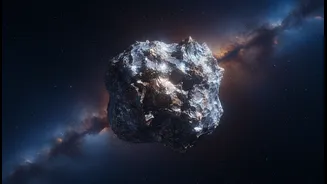
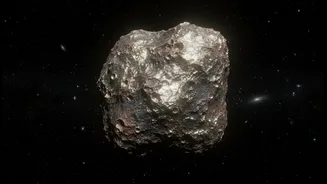
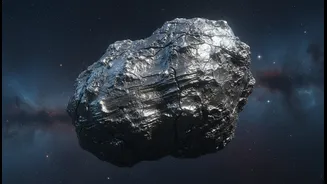
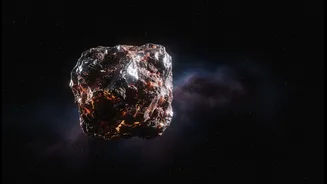
Imagine a world not of rock or ice, but of exposed iron, nickel, and gold, orbiting the sun between Mars and Jupiter. This is the destination of NASA's Psyche mission. The target, an asteroid named 16 Psyche, is thought to be the leftover core of a protoplanet—a
baby planet that was smashed apart billions of years ago. By visiting it, scientists hope to see the building blocks of planets like Earth up close for the first time. Launched in October 2023, the spacecraft is now on a 2.2-billion-mile journey, with an expected arrival in the asteroid's orbit in August 2029. Until then, its long cruise through deep space is far from idle time.
Decoding the Data Stream
The term "telemetry" might sound like it's beaming back secrets from the asteroid already, but at this stage, it's about something just as important: the health and performance of the spacecraft itself. This data confirms that its advanced solar electric propulsion system is working, its navigation is precise, and its science instruments are in perfect shape. This is critical because the mission is testing several new technologies. The most prominent of these is the Deep Space Optical Communications (DSOC) experiment, a system designed to use lasers to transmit vast amounts of data at speeds 10 to 100 times faster than current radio systems. The successful DSOC demonstration, which concluded in September 2025, has already proven that high-bandwidth laser communications are viable across millions of kilometres, paving the way for future crewed missions to Mars.
A Dress Rehearsal at Mars
A major highlight of the journey so far was the spacecraft's flyby of Mars on May 15, 2026. This wasn't just a scenic detour; it was a crucial gravity assist maneuver that bent Psyche's path and slingshotted it toward the main asteroid belt. More importantly, it was a full dress rehearsal for the science to come. The mission team used Mars as a stand-in for the asteroid, turning on all the science instruments to see how they performed. The results were a resounding success. The multispectral imagers captured stunning, high-resolution photos of the Martian surface, the south polar ice cap, and even its tiny moons, Phobos and Deimos. This test confirmed the cameras are perfectly calibrated for their ultimate task of mapping the metallic world of Psyche.
Testing the Tools of Discovery
Beyond the cameras, the Mars flyby provided the first real-world test for Psyche's other key instruments. The Gamma-Ray and Neutron Spectrometer (GRNS), designed to determine the chemical makeup of the asteroid's surface, successfully detected neutrons escaping Mars's atmosphere, confirming its sensitivity. The magnetometer, which will search for a remnant magnetic field at the asteroid, got its first taste of a planetary magnetic field as it passed through the 'bow shock' where the solar wind slams into Mars's magnetosphere. Ben Weiss, the lead for the magnetometer investigation, noted that the test validated the instrument's performance under dynamic conditions. Each piece of data, while about Mars, builds confidence that the instruments will deliver on their promise when they finally reach their primary target in 2029.