
The Grand Vision for India's Waterways
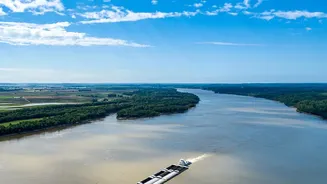
The Government of India is heavily investing in its river systems, aiming to transform them into bustling economic corridors. The flagship Jal Marg Vikas Project (JMVP) is focused on augmenting National Waterway-1 (NW-1), which stretches over 1,600 km
along the Ganga River from Haldia in West Bengal to Prayagraj in Uttar Pradesh. The goal is to increase the modal share of inland water transport (IWT) from its current low of about 2% to 5% by 2030, reducing logistics costs and easing the burden on congested road and rail networks. This mode of transport is significantly more fuel-efficient; one litre of fuel can move 105 tonne-km by water, compared to just 24 by road. By shifting bulk cargo like coal, cement, and steel to rivers, the plan aims to make Indian exports from the hinterland more competitive.
Terminals: The Crucial Link in the Chain
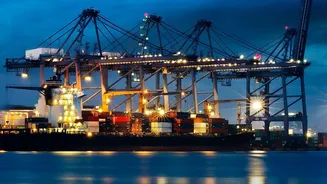
At the heart of this strategy are state-of-the-art Multi-Modal Terminals (MMTs). These are not merely docks, but sophisticated logistics hubs designed to facilitate the seamless transfer of cargo between ships, trucks, and trains. Major terminals have been developed under the JMVP at Varanasi, Sahibganj in Jharkhand, and Haldia in West Bengal. The idea is to create an integrated ecosystem where goods arriving by river can be quickly offloaded and dispatched to their final destinations via road or rail, and vice versa. These terminals are envisioned to handle millions of tonnes of cargo annually and are being equipped with modern facilities, with some operations being handed over to private players to ensure efficiency.
The On-Ground Reality of Last-Mile Connectivity
Despite the development of impressive terminal infrastructure, a significant challenge remains: last-mile connectivity. The cost advantage gained by using cheaper water transport can be quickly negated if the final leg of the journey from the river terminal to a factory or warehouse is inefficient and expensive. A Parliamentary Standing Committee has noted that poor hinterland connectivity is one of the key factors discouraging companies from shifting to waterways. Many terminals lack adequate or efficient rail sidings and are connected by roads that may not be prepared for heavy, consistent truck traffic. This final-stretch problem is a critical bottleneck that can disrupt supply chains and inflate overall logistics costs, undermining the very purpose of the waterways project.
A Closer Look: Varanasi and Sahibganj
The MMT in Varanasi, inaugurated with much fanfare in 2018, exemplifies this challenge. While the terminal is connected by road to National Highway 7, the planned railway connectivity to the Eastern Dedicated Freight Corridor is a critical piece of the puzzle that is still in progress. Similarly, the terminal at Sahibganj was built to connect the industries of Jharkhand and Bihar to the global market, with a focus on transporting domestic coal. However, reports have indicated that a lack of private sector interest and cargo availability have hampered its potential. For both terminals, the full realisation of their projected cargo handling capacity is contingent on the smooth, cost-effective flow of goods to and from the riverbank.
What Businesses Should Do
For any business or logistics planner considering using India's inland waterways, a detailed assessment of terminal access is non-negotiable. Do not assume that a new, modern terminal automatically translates to seamless end-to-end transport. First, conduct a thorough due diligence of the last-mile infrastructure for your specific route. This could involve physical site visits to assess the condition of connecting roads and querying the operational status of rail links. Second, engage with local logistics partners and freight forwarders who have on-ground experience. They can provide realistic estimates of transit times and costs from the terminal gate to the final destination. Finally, build buffer time and contingency costs into your logistics models. While the waterways offer immense potential, the supporting infrastructure is still evolving, and early adopters must plan for potential teething issues and delays in the last-mile segment.