




A World Without Weather
On Earth, nothing is permanent. Wind scours away rock, rain washes away soil, and even the hardest granite eventually succumbs to the relentless cycle of weather. These forces of erosion are driven by one key thing: an atmosphere. Our planet is wrapped
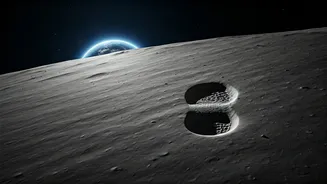
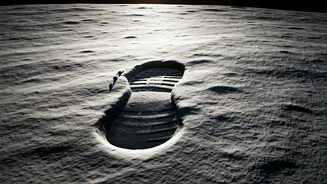
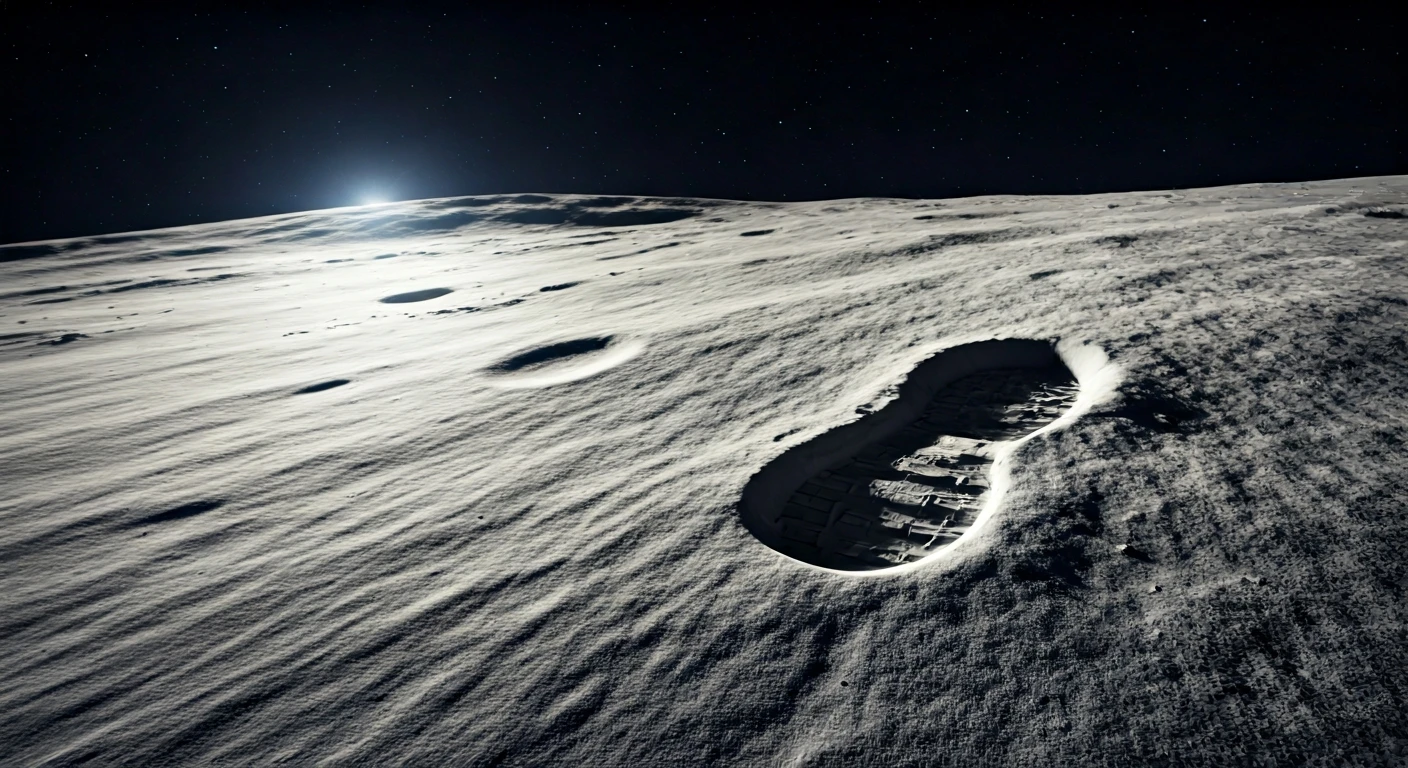
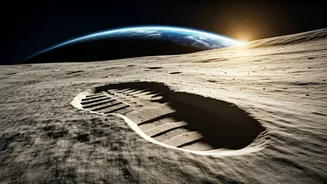
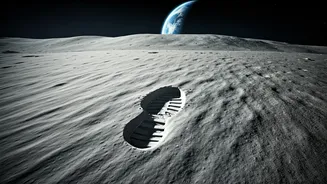
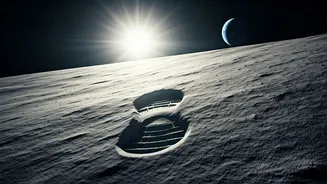
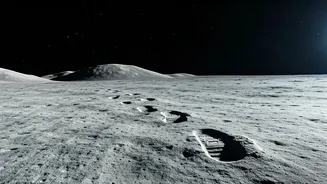
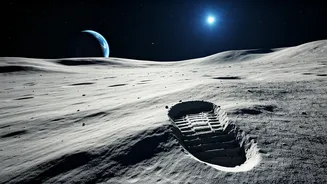
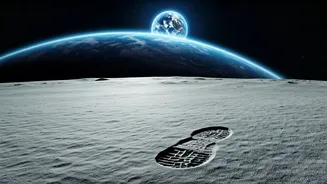
in a blanket of gases that is constantly moving, carrying water, and enabling life. This dynamic system is responsible for erasing our tracks almost as soon as we make them. The Moon, however, is a world frozen in time. It has no significant atmosphere to speak of. There is no air, which means there is no wind to blow dust into the footprints left by Neil Armstrong and Buzz Aldrin. There is no water cycle, which means no rain to wash them away. Without an atmosphere, the Moon is a geological vacuum, a silent world where processes that take moments on Earth can take millions of years.
The Silent Enemies of a Footprint
Saying the footprints will last “forever” is a slight oversimplification, though they will certainly outlast every structure on Earth. The Moon isn't entirely static; it just operates on a different, much slower timescale. The primary threat to these historical markers is a constant, gentle rain of micrometeoroids. These are tiny particles, often no bigger than a grain of sand, that constantly bombard the lunar surface at high speeds because there's no atmosphere to burn them up.
Each tiny impact acts like a microscopic sandblaster, slowly churning and eroding the top layer of lunar soil, or regolith. Over millions of years, this process, known as 'gardening', will eventually erase the footprints. Another, less significant factor is the solar wind—a stream of charged particles from the Sun—which also contributes to a very slow form of surface erosion. But 'slow' is the key word. Scientists estimate the footprints could remain recognisable for as long as 10 to 100 million years.
A Museum on the Moon
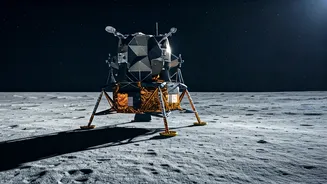
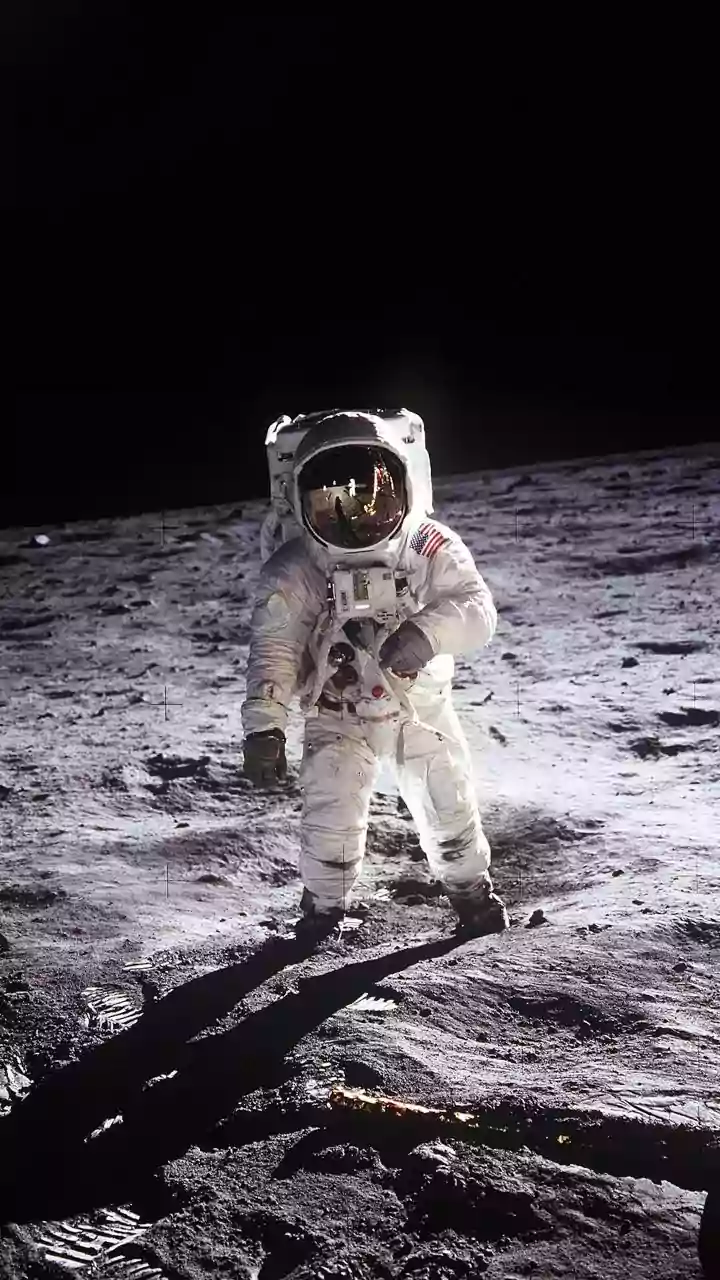
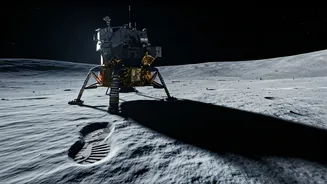
The footprints aren't the only human artifacts sitting pristine on the lunar surface. The Apollo landing sites are essentially outdoor museums. They include the descent stages of the lunar modules, scientific instruments, lunar rovers from later missions, and even personal items. The American flag planted during the Apollo 11 mission is a famous example, though images from NASA’s Lunar Reconnaissance Orbiter suggest it has likely fallen and been bleached white by decades of unfiltered solar radiation.
Everything left behind tells a story. From the discarded backpacks to the tire tracks of the Lunar Roving Vehicle, these items are a silent testament to a monumental human achievement. They are a time capsule, not of a lost civilization, but of the very first time our species stepped onto another world. Because of the Moon’s unique environment, these artifacts are preserved with a fidelity that is impossible on Earth.
Preserving Our First Steps
As India's own Chandrayaan missions continue to explore the lunar south pole and nations like the US plan a return to the Moon with the Artemis program, a new question arises: how do we protect these historic sites? The boot print of Neil Armstrong is arguably as significant to human history as ancient ruins on Earth, yet it has no formal protection.
There is a growing consensus that these sites should be treated with respect. NASA has established guidelines for future missions, suggesting 'keep out zones' around the Apollo landing sites to prevent a new lander's exhaust from blowing away the historic dust. The concern is real: a spacecraft landing or a rover driving too close could easily erase these fragile markers in seconds. As we embark on a new era of lunar exploration, there is a responsibility not just to make new history, but also to preserve the legacy of our very first steps.