



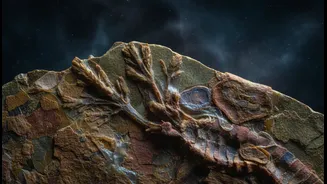


An Unexpected Discovery in a Museum Drawer
The story begins not on a windswept dig site, but in a quiet museum. Paleontologists from the University of Oklahoma were examining a specimen at the Musée de paléontologie et de l'évolution, a small community-supported museum in Montréal. The fossil,
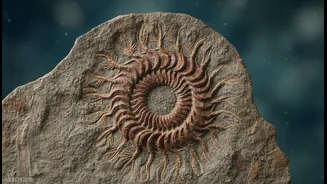
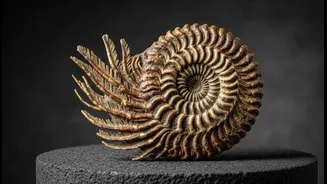
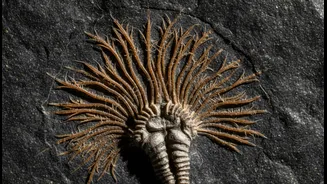
identified as a creature called Dendrocrinus simcoensis, had been in the collection for years, its true importance unknown. This animal lived during the Ordovician period, a time when life was flourishing in the oceans, some 200 million years before the first dinosaurs roamed the Earth. The creature is a crinoid, an animal related to modern starfish and sea urchins, which often resembled a flower rooted to the seafloor. While crinoid fossils are quite common, they almost always consist of just the hard, skeletal plates. This one, however, was different.
The 'One in a Million' Preservation
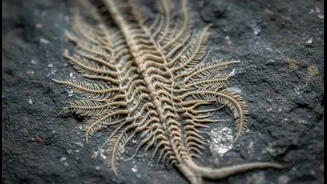
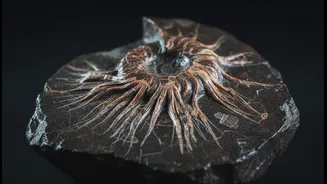
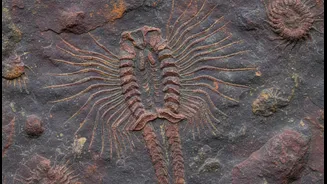
Upon closer inspection, the researchers realised they were looking at fossilised soft tissue. Specifically, they identified the crinoid's delicate tube feet. This discovery is only the second time soft tissue has ever been found in a crinoid fossil, and this specimen is significantly older than the other. The odds of this happening are astronomically low. After an animal dies, its soft parts like skin, organs, and muscles are the first things to decompose, usually disappearing long before fossilisation can occur. For soft tissue to be preserved, a perfect storm of conditions is required. The animal must be buried almost instantly in fine sediment, cutting off oxygen and halting the process of decay. This natural 'vacuum-sealing' process is incredibly rare, which is why paleontologists are calling this a 'one in a million' find.
A Window into an Alien World
The preserved tube feet are more than just a scientific curiosity; they are a direct portal into this ancient animal's life. In crinoids, tube feet are not for walking, but for feeding. These tiny, fleshy appendages were used to capture food particles from the water currents. By studying their structure, scientists can gain unprecedented insights into how Dendrocrinus simcoensis fed and interacted with its environment. It's like finding a 450-million-year-old instruction manual for a creature from another world. This discovery helps fill in crucial gaps in our knowledge, moving beyond what skeletons alone can tell us and painting a much more vivid picture of the planet's earliest complex ecosystems.
Rethinking the Ancient Oceans
This fossil does more than just reveal details about one species; it helps scientists better understand the great evolutionary boom of the Ordovician period. During this time, marine biodiversity tripled in an event known as the 'Ordovician radiation'. Ecosystems became more complex, with filter-feeding animals like crinoids playing a crucial role. Before this discovery, scientists had to infer how these ancient crinoids functioned based on their skeletal remains and by studying their distant modern relatives, like feather stars. Now, they have direct physical evidence. Comparing this ancient anatomy to modern crinoids can reveal how much—or how little—these animals have changed, providing a clearer timeline of their evolution and the factors that shaped the marine biosphere we see today.