



A Policy 'Big Bang' Opens the Skies
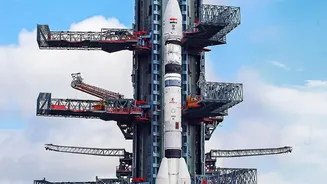
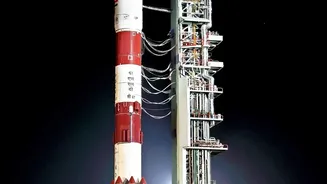
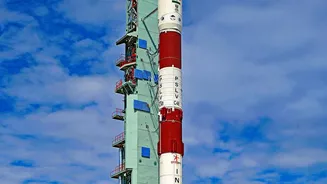
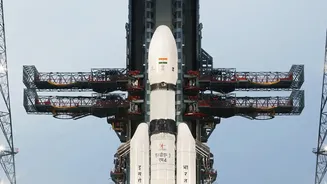
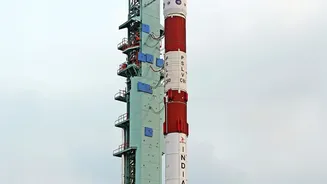
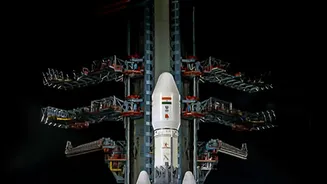
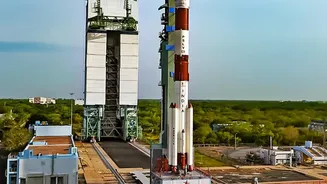
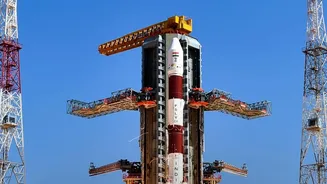
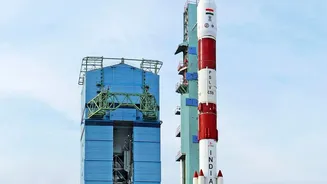
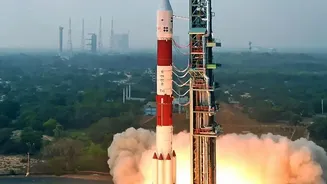
Until recently, the Indian Space Research Organisation (ISRO) was the sole architect of India's space ambitions. This changed dramatically in 2020 when the government opened the sector to private enterprise. This landmark policy shift was designed to unlock
entrepreneurial energy and accelerate growth, creating a more dynamic ecosystem. At the heart of this reform is the Indian National Space Promotion and Authorisation Centre (IN-SPACe), established as a single-window agency to promote, authorise, and supervise the activities of private space companies. By providing access to ISRO's world-class facilities, expertise, and technology, IN-SPACe acts as a bridge, helping startups transition from ideas to flight-ready hardware. This has fueled a boom, with the number of Indian space startups growing from just one in 2014 to over 400 by 2026.
The Innovators: Building a New Satellite Ecosystem
Indian startups are not just launching rockets; they are building the entire satellite value chain. Companies like Hyderabad-based Dhruva Space provide 'full-stack' space engineering, offering modular satellite platforms that can be customized for missions ranging from scientific research to defence. Their platforms, like the P-DoT CubeSat and P-30 NanoSat, allow clients to rapidly develop and deploy satellites without building everything from scratch. Meanwhile, Bengaluru's Pixxel is focused on creating a 'health monitor for the planet' with its constellation of advanced hyperspectral imaging satellites. Unlike standard satellites that see in a few colours, Pixxel's technology captures data across hundreds of spectral bands, revealing details invisible to the naked eye. This powerful data can detect crop diseases, identify mineral deposits, and monitor environmental pollution with incredible precision.
Downstream Data: The On-Ground Impact
The true revolution in satellite technology lies in its downstream applications—how the data collected in orbit is used to solve problems on Earth. The information gathered by startups is becoming crucial for a wide array of sectors. Pixxel's hyperspectral data, for instance, provides actionable insights for agriculture, helping farmers improve yields and manage resources. Dhruva Space has enabled missions for disaster communication in Odisha and environmental monitoring in Nepal. As these satellite constellations grow, they will feed a booming market for geospatial analytics, supporting everything from urban planning and infrastructure monitoring to climate change analysis and national security. This shift from simply building space assets to monetising the data they produce is a key driver behind projections that see India's space economy growing from around $9 billion today to over $44 billion by 2033.
A New Era of Collaborative Growth
The rise of the private sector isn't about replacing ISRO but augmenting its capabilities. The new model fosters a symbiotic relationship where ISRO can increasingly focus on cutting-edge research and deep-space exploration, like the Gaganyaan human spaceflight programme. Meanwhile, startups bring agility, niche specialization, and commercial drive to areas like small satellite launches and data services. This is evident in the launch sector, where companies like Skyroot Aerospace and Agnikul Cosmos are developing small-lift launch vehicles, catering to the growing global market for small satellite deployment. This division of labour allows India to compete more effectively on the global stage, leveraging ISRO's legacy of frugal engineering and the startups' innovative, fast-paced approach. Through technology transfers facilitated by ISRO's commercial arm, NewSpace India Limited (NSIL), private firms are building on decades of public research to create commercially viable products.