





A Seven-Year Journey to the Asteroid Belt
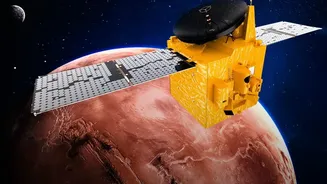
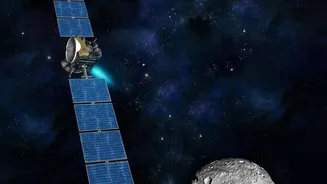
The Emirates Mission to the Asteroid Belt (EMA) is one of the most audacious space projects ever conceived. Led by the UAE Space Agency, the MBR Explorer spacecraft—named after Sheikh Mohammed bin Rashid Al Maktoum—will embark on a five-billion-kilometre,
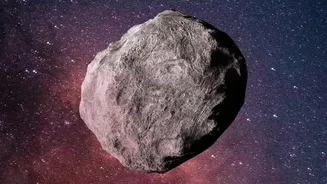
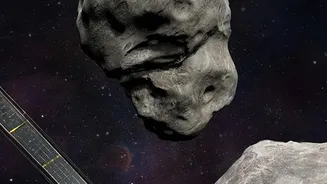
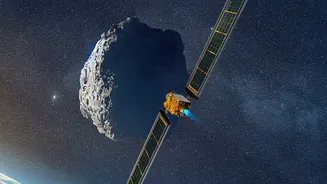
multi-year voyage. Its destination: the main asteroid belt located between Mars and Jupiter. The mission plan involves a series of complex gravity-assist manoeuvres around Venus, Earth, and Mars to build up speed. The spacecraft will perform close flybys of six different asteroids before arriving at its primary scientific target, an unusual asteroid named 269 Justitia, in 2034. The goal is to study these celestial bodies to understand the origins of the solar system and the building blocks of life.
The Indian Connection: Who is HEX20?
At the heart of this international mission is HEX20, a space-tech startup with its engineering facility in Technopark, Thiruvananthapuram. Founded by a group of engineers, the company has quickly established itself as a capable player in the global space market, developing satellite platforms and offering end-to-end mission services. Before this high-profile asteroid mission, HEX20 had already achieved 'flight heritage' by successfully launching its own satellites, including 'Nila' and 'KOYO', on SpaceX missions. Selected by the UAE Space Agency and the Technology Innovation Institute (TII) in late 2024, HEX20 is the first private Indian company to be chosen for a deep-space mission by the Gulf nation, a significant milestone for India's burgeoning private space sector.
Building the Brains and Body of the Lander
HEX20's contribution to the MBR Explorer is not minor; they are responsible for developing critical systems for the lander probe that will touch down on asteroid Justitia. This includes the spacecraft bus—the main body that houses and supports the scientific instruments—as well as the mission software, onboard computer, and power systems. These components must be incredibly robust to withstand the harsh conditions of deep space, including extreme temperatures and radiation. The company delivered these complex systems in just 15 months, a testament to their engineering capabilities. The lander probe was then assembled in Abu Dhabi in a collaborative effort involving HEX20, TII, and other UAE-based universities and research centres.
The Ultimate Challenge: An Autonomous Landing
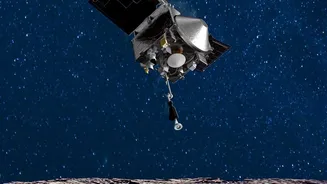
The most challenging part of the mission will occur in 2035, when the lander separates from the MBR Explorer and begins its autonomous descent to the surface of Justitia. Due to the immense distance, there can be no real-time communication from Earth. The lander must rely entirely on the onboard software and systems developed by HEX20 and its partners to navigate, land, and conduct its scientific operations independently. This level of autonomy represents a significant engineering feat. The data collected from Justitia, which is believed to have originated in the outer solar system, could provide invaluable insights into how water and organic materials were distributed during the formation of the planets.
A Win for India's Private Space Ecosystem
HEX20's involvement in the MBR Explorer mission is a landmark achievement that highlights the rapid growth and capability of India's private space industry. Spurred by government reforms in 2020 that opened the sector to non-government entities, hundreds of space startups have emerged across the country. These companies are now contributing to every part of the space value chain, from building rockets and satellites to developing advanced applications. This mission demonstrates that Indian startups are not just serving domestic needs but are becoming trusted partners for major international space agencies, competing and collaborating on a global stage. It signals a new era where Indian innovation is set to play a crucial role in humanity's exploration of the final frontier.