



Getting the Timing Right
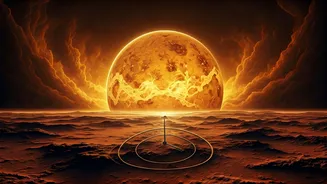
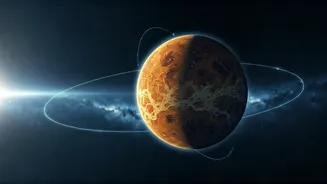
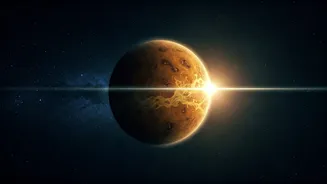
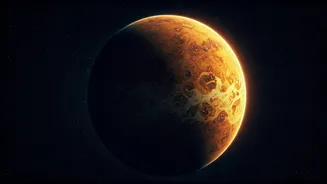
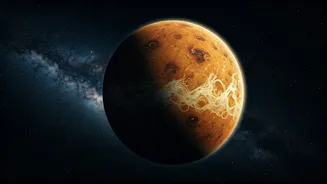
On Earth, our sense of time is simple: a day is one rotation (24 hours), and a year is one orbit around the Sun (365 days). Venus throws this logic out the window. A year on Venus—the time it takes to complete one full orbit around the Sun—is about 225
Earth days. But a single day on Venus—the time it takes for the planet to spin once on its axis—is a mind-boggling 243 Earth days. Yes, you read that right. A Venusian day is about 18 Earth days longer than its year. This makes Venus the only planet in our solar system with a day longer than its year. It’s a fundamental quirk that sets the stage for all the other strange phenomena on our so-called 'sister planet'.
A Planet Spinning the Wrong Way
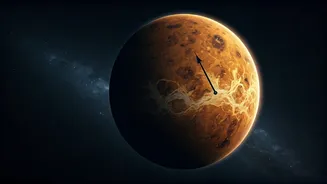
Adding to the weirdness is Venus's rotation. Almost every planet in our solar system, including Earth, spins on its axis in a counter-clockwise direction (prograde motion). If you looked down from above the North Pole, you'd see the planet turning left. Venus, however, spins clockwise. This is known as retrograde rotation. Only Venus and Uranus spin backwards compared to their orbit around the Sun. This means if you could somehow survive on the surface of Venus, you would see the Sun rise in the west and set in the east. This backward, incredibly slow spin is a key ingredient in Venus's bizarre temporal cocktail. Why it spins this way is still a topic of scientific debate, with theories pointing to a massive, planet-altering collision in its distant past or the long-term effects of its incredibly thick atmosphere creating a kind of tidal drag.
So, What's a Day-Night Cycle Like?
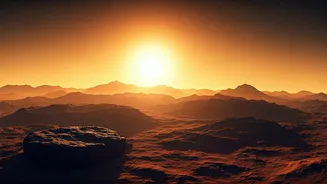
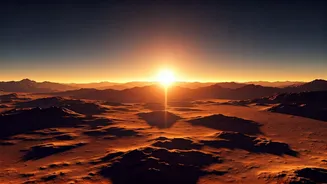
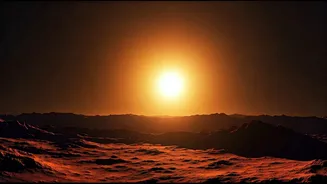
Here's where it gets even more confusing and fascinating. While a rotational day (a single spin) is 243 Earth days, a solar day on Venus (the time from one sunrise to the next) is much shorter. Because the planet is rotating backwards as it orbits the Sun, these two motions work against each other. The result is that the time between sunrises is approximately 117 Earth days. So, if you were to live on Venus, you'd experience about two full day-night cycles for every one year that passes. Each 'day' would have nearly two months of continuous daylight followed by nearly two months of continuous darkness. This strange interplay between its orbit and its backward spin creates a rhythm unlike anything we experience on Earth.
Earth's Twisted Sister
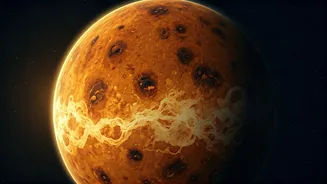
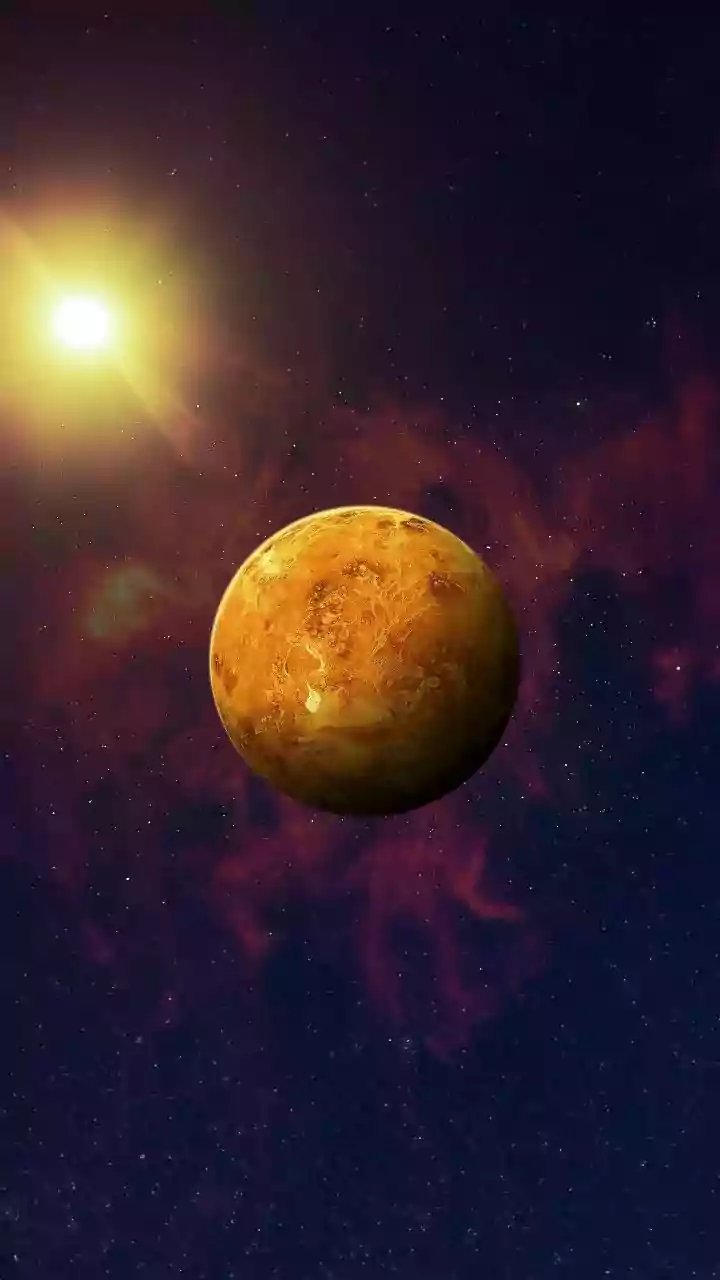
The long, strange day is just one aspect of Venus’s extreme nature. It’s often called Earth's twin because of its similar size and mass, but the comparison ends there. Its atmosphere is a crushing, toxic blanket of carbon dioxide, 92 times thicker than Earth's, creating a runaway greenhouse effect. This traps heat and makes Venus the hottest planet in the solar system, with surface temperatures averaging around 465°C—hot enough to melt lead. Instead of water, its thick, yellowish clouds are made of sulfuric acid. The immense atmospheric pressure on the surface is equivalent to being 900 meters deep in Earth’s ocean. It’s a hellish landscape where its bizarre timing is just one of many inhospitable features.
An Unsolved Cosmic Mystery
Scientists are still working to understand the exact mechanisms that led to Venus’s unique rotation. One leading theory suggests that early in its history, Venus was struck by a massive asteroid or protoplanet that was so powerful it not only slowed its rotation to a crawl but completely flipped it over or reversed its spin. Another compelling idea is that the planet's incredibly dense atmosphere, churning for billions of years, created a powerful tidal effect that gradually slowed its original rotation and may have even reversed it. The planet's solid core and molten mantle may have also played a role. Missions like NASA's VERITAS and DAVINCI+, planned for the coming decade, aim to study Venus's geology and atmosphere in unprecedented detail, hopefully providing definitive answers to this long-standing cosmic puzzle.