


The Exam That Stops a Nation
Once a year, on the third Thursday of November, South Korea undergoes a remarkable transformation. For about eight hours, the nation collectively holds its breath for the College Scholastic Ability Test, or CSAT, known colloquially as 'Suneung'. For over
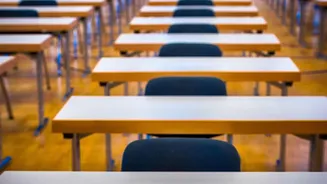
half a million high school seniors, this single day is the culmination of more than a decade of relentless study. The Suneung is not just another standardized test; it is widely seen as the primary determinant of a student’s future, dictating which university they can enter, their subsequent career path, and even their social standing. The pressure is so immense that the entire country mobilizes to create the perfect, silent environment for students to perform their best.
An All-of-Society Effort
The logistical adjustments are staggering. To ensure students get to their test centres on time and without stress, government offices and many private companies delay their opening time to 10 a.m. to clear the roads during the morning rush hour. The Seoul subway runs more frequently, and extra buses are put into service. For students running late, a police escort, complete with sirens, is just a phone call away. This collective effort extends to creating an atmosphere of absolute quiet. Construction work near the 1,300-plus test sites is halted, military drills are paused, and drivers are encouraged not to honk their horns.
No-Fly Zones and Delayed Trading
The most dramatic measures involve the country's skies and financial markets. During the 35-minute English listening portion of the exam, typically in the early afternoon, a nationwide no-fly zone is enforced. All aircraft takeoffs and landings are suspended to prevent engine noise from disrupting the audio test. Planes already in the air must maintain an altitude of at least 3,000 metres. These restrictions affect scores of domestic and international flights, with schedules adjusted months in advance. Similarly, the Korea Exchange, the country's stock market, opens an hour later than usual to help reduce traffic.
The Weight of 'Education Fever'
To understand why a country would go to such lengths, one must understand the concept of 'gyoyungyeol' (교육열), or 'education fever'. In the decades following the Korean War, education was seen as the primary vehicle for social and economic mobility. Getting into a top-tier university—like those in the prestigious 'SKY' trio of Seoul National, Korea, and Yonsei universities—is believed to secure a stable, high-paying job and a respected place in society. This belief system puts immense pressure on students, who often spend their school years in a cycle of regular classes followed by long nights at private cram schools called 'hagwons'. The saying 'Sa-dang O-rak' captures the mood: sleep four hours and you pass, sleep five and you fail.
A Day of Ritual and Support
Beyond the logistical ballet, Suneung day is also steeped in social ritual. At the gates of test centres, underclassmen gather at dawn to cheer on their seniors with drums, banners, and chants of 'Hwaiting!' (a Korean cheer of support). Families and friends give students 'yeot' (a sticky taffy) and 'chapssaltteok' (sticky rice cakes), hoping that luck will 'stick' to them during the exam. While students are inside for the eight-hour marathon, many parents flock to nearby temples and churches, spending the entire day in prayer. It’s a powerful display of collective anxiety, hope, and support, as nearly every adult in the country remembers taking the exam themselves and empathises with the pressure the next generation faces.