





More Than Just Folklore
Traditional Ecological Knowledge (TEK), or Indigenous Knowledge (IK), is the cumulative body of wisdom and practices developed by communities through generations of intimate interaction with their natural environments. It's not a collection of myths or anecdotes,
but a sophisticated system of understanding that is holistic, place-based, and deeply practical. This knowledge, passed down through cultural transmission, governs everything from sustainable farming and water management to medicine and biodiversity conservation. Unlike modern science, which often breaks down systems into component parts, traditional knowledge tends to view the environment as an interconnected whole, where human, spiritual, and ecological health are inseparable.
Wisdom in Water, Forests, and Fields
Across India, examples of this knowledge in action provide powerful proof of its efficacy. In Rajasthan, communities have revived ancient water harvesting structures like 'tankas' and 'johads' to combat desertification and ensure water security, sometimes modernising them with new materials while retaining the core principle. In the Eastern Himalayas, the unique paddy-cum-fish cultivation of the Apatani tribe showcases a highly efficient system of land use that supports both agriculture and aquaculture. In Odisha, the women of the Kalika Prasad village, having secured community forest rights, now sustainably harvest and market non-timber products, leading to both forest regeneration and economic empowerment. Similarly, sacred groves, known as 'orans' in Rajasthan or protected by communities like the Bishnois, act as vital biodiversity hotspots preserved through cultural and spiritual norms.
A Partnership of Equals
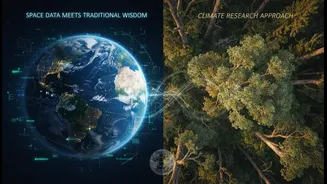
For a long time, this knowledge was dismissed by many Western scientists as unscientific. Today, that perspective is changing dramatically. Scientists and conservation bodies now recognise that integrating traditional knowledge with modern research creates a more powerful and complete picture. Local communities provide invaluable, long-term ground-truthing that satellite imagery and short-term studies can miss—predicting monsoons based on ant behaviour or cyclones from fish movements, for instance. In return, science can offer tools for documentation, broader validation, and scaling up these local solutions. India's official stance increasingly reflects this, with calls to view science and tradition as complementary partners in climate action.
Challenges on the Path to Integration
This collaboration is not without its difficulties. A primary challenge is ensuring that knowledge is not simply extracted or exploited. The landmark case over the patenting of neem's properties serves as a powerful reminder of the threat of biopiracy. There are complex issues around intellectual property, as existing laws are often ill-suited to protect knowledge that is collectively owned and orally transmitted. Furthermore, this knowledge is itself endangered. As younger generations move to urban areas and local languages fade, the chains of transmission are breaking. True integration, therefore, requires more than just data collection; it demands respect for cultural protocols, community rights, and the sovereign status of indigenous groups.