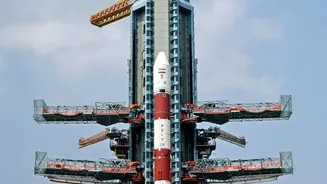








The Policy Shift Launching a New Era
The foundation for this new job market was laid with the Indian Space Policy 2023. This landmark policy marked a strategic departure from a government-led model, actively encouraging private companies to participate in end-to-end space activities. To
facilitate this, the government established the Indian National Space Promotion and Authorisation Centre (IN-SPACe) as a single-window agency. Its role is to streamline regulations, promote private investment, and act as an interface between ISRO and the burgeoning private sector. This policy wasn't just about letting private players build components; it was a clear signal that India is open for business in space, aiming to grow its share of the global space economy from around 2% to a projected 8-10% by 2033.
Meet the New Trailblazers
This policy liberalisation has led to a boom in space-tech startups. Today, India has over 200 such companies building everything from launch vehicles to satellites and ground infrastructure. Companies like Skyroot Aerospace, which successfully launched India's first private rocket, and Agnikul Cosmos, known for its 3D-printed rocket engines, are at the forefront of launch vehicle development. In the satellite domain, startups like Pixxel are building constellations for Earth observation, providing high-resolution data to various industries, while Dhruva Space offers satellite platforms and deployment services. These companies are not just vendors to ISRO anymore; they are developing their own technologies, attracting significant venture capital, and securing international clients.
More Than Just Rocket Scientists
While aerospace engineers and scientists remain crucial, the new space ecosystem is creating jobs across a much wider spectrum of skills. The demand extends to propulsion, avionics, and systems engineers, but also to software developers, data scientists, and mission control engineers. As startups scale, they also need professionals in manufacturing, logistics, marketing, legal services, and finance. An estimated 40,000 technically skilled professionals could be required over the next five years to fuel this expansion. This diversification of roles is crucial, as it creates avenues for talent from various engineering and management disciplines, preventing the kind of brain drain that previously saw talent move abroad for opportunities.
The Ripple Effect: Downstream and Ancillary Jobs
The most significant job growth may come from downstream applications, which use space-derived data to create value on Earth. Satellite data is transforming sectors like agriculture (for crop monitoring and resource management), disaster management (for forecasting and response), and urban planning. This creates a demand for geospatial data analysts who can interpret this information. Furthermore, an entire ancillary industry is growing to support the main players. These companies provide everything from specialised metal alloys and composite materials to solar panels, battery systems, and critical software, forming a robust domestic supply chain that aligns with the 'Make in India' initiative.
Skilling Up for the Stars
To meet the surging demand, India is focusing on skill development. Initiatives like the IN-SPACe Seed Fund and other government-backed funds are designed to incubate ideas and support startups, which are becoming key training grounds for the next generation of space professionals. The experience gained at a fast-paced startup is invaluable, often putting young engineers on a faster career track than traditional paths might offer. While premier institutions like the Indian Institute of Space Science and Technology (IIST) provide a direct pipeline to the space sector, private companies are actively recruiting from a wide range of engineering colleges, prioritising demonstrated technical ability and project work over institutional pedigree. This broad-based hiring approach is essential for building the large, skilled workforce needed to achieve India's ambitious space goals.