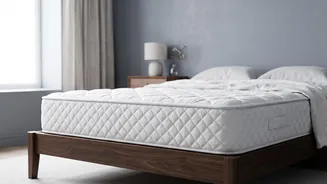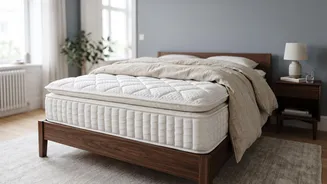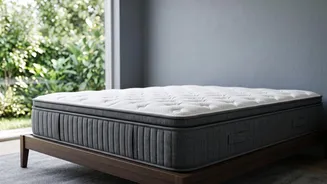





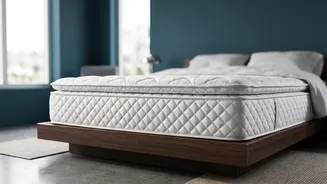

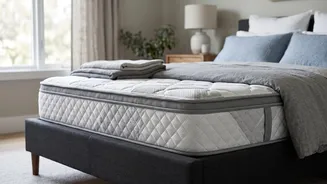
Shopping for a spring mattress can feel overwhelming. Faced with terms like coil count and gauge, it's easy to get lost in technical details. But choosing the right mattress is simpler when you focus on what truly matters: your personal comfort.
Why Personal Comfort Beats a Spec Sheet
A long
list of features doesn't guarantee a good night's sleep. While technical specifications can be helpful indicators of quality, they are not the whole story. The ultimate goal is to find a mattress that supports your body in your preferred sleeping position, and that feeling is deeply personal. A mattress that feels perfect for a back sleeper might cause pressure points for a side sleeper. The most expensive mattress with the highest coil count isn't necessarily the best one for you. The priority should always be how the mattress feels to your body, making in-person testing an invaluable step in the process.
Decoding Key Spring Features
Before you test, it helps to know the basic language. The core of an innerspring mattress is its coil system, which provides the primary support. Here are the main terms to understand: Coil Type: The two most common types are Bonnell and pocket springs. Bonnell coils are interconnected and create a traditional, bouncy feel with uniform firmness. Pocket springs are individually wrapped in fabric, allowing them to move independently. This provides more targeted support, contours to your body's shape, and significantly reduces motion transfer, making it a better choice for couples. Coil Gauge: This refers to the thickness of the wire used for the springs. A lower gauge number means a thicker, firmer wire, while a higher gauge number means a thinner, softer wire. Firmer gauges often signal greater durability. * Coil Count: This is the total number of springs in the mattress. While a higher count can suggest better support, the quality of the coils and the overall construction are far more important. Don't choose a mattress based on coil count alone.
The Art of the In-Store Comfort Test
A quick sit on the edge won't tell you much. To properly test a mattress, you need to simulate how you actually sleep. Plan to spend at least 10-15 minutes on each mattress you are seriously considering. Lie down in your typical sleeping position—whether on your back, side, or stomach. Pay attention to pressure points in your shoulders and hips, and check for spinal alignment. If you're a back sleeper, try sliding your hand under the small of your back; if there's a large gap, the mattress may be too firm, and if you can't slide your hand in at all, it might be too soft. If you share a bed, test it with your partner to check for motion transfer by having one person move around while the other lies still. Finally, sit on the edge to check its support; a good edge won't collapse and will make getting in and out of bed easier.
Remember the Comfort Layers
The springs provide the deep support, but the layers on top are what you feel first. These 'comfort layers' are made from materials like memory foam, latex, or polyester fibre. They are responsible for cushioning, pressure relief, and the initial feel of the mattress. A firm spring system can be paired with a plush pillow top to offer both sturdy support and soft comfort. As you test, pay attention to how these top layers feel against your body. They play a huge role in the overall comfort equation, and finding the right combination of spring support and surface softness is key.
Using Trial Periods as Your Ultimate Test
For many, especially those buying online, the ultimate comfort test is an in home trial period. Many brands offer a trial of 100 nights or more, allowing you to see how the mattress performs in your own bedroom. A showroom test is useful, but a trial period reveals how you feel after a full night's sleep and whether you wake up rested or sore. It also gives your body time to adjust to a new sleeping surface, which can take several weeks. Before committing, always check the fine print of the trial policy, including any conditions for returns or exchanges. This extended test is the best way to ensure the mattress is truly the right fit for your long term health and comfort.