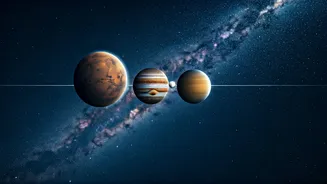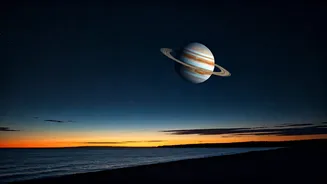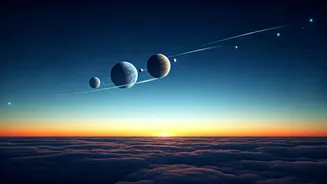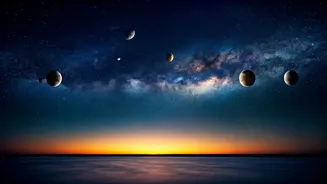



A Trio of Giants
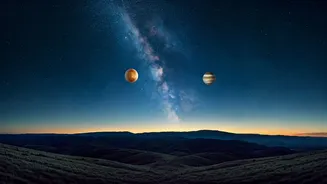
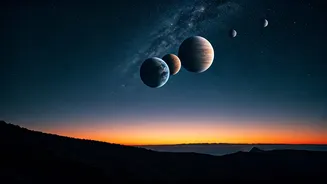
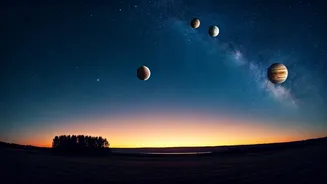
In the coming weeks, the night sky will play host to a beautiful gathering of planets. Mars, Jupiter, and Saturn will appear to draw close to one another, forming a temporary, eye-catching arrangement. While planetary alignments aren’t 'historic' in a once-in-a-lifetime
scientific sense (the planets aren't actually close to each other in space, just aligned from our perspective), this particular grouping is a fantastic opportunity for amateur astronomers and casual observers. Seeing three distinct planets clustered in the same small patch of sky is a visual treat that makes the vastness of our solar system feel a little more intimate and accessible.
When and Where to Look
The best time to view this celestial trio will be in the pre-dawn hours. Set your alarm for about an hour before sunrise. Look towards the eastern horizon, which is where the sun will eventually rise. The planets will be visible in the dark sky before the sun's glare washes them out. The beauty of this event is its accessibility across India; whether you're in Mumbai, Delhi, Chennai, or Kolkata, the viewing instructions are the same. The planets will rise in the east and will be visible for a good 45 to 60 minutes before dawn breaks. The alignment will be visible for several days, so if you have a cloudy morning, you can always try again the next day.
Gearing Up: Telescope or Naked Eye?
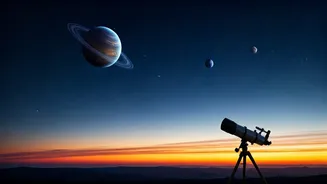
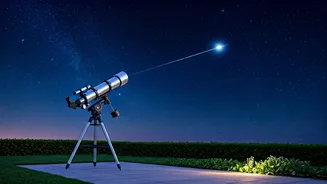
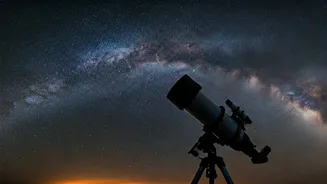
The headline mentions telescopes, but the great news is that you don't necessarily need one. All three of these planets—Mars, Jupiter, and Saturn—are bright enough to be seen with the naked eye. Jupiter will likely be the brightest object in that part of the sky, appearing as a brilliant, steady star. Saturn will be slightly fainter, and Mars will be distinguished by its distinct reddish-orange tint. If you have a pair of binoculars, bring them! They will significantly enhance your view, making the planets appear as small, sharp discs of light rather than just points. A backyard telescope, of course, will reveal even more spectacular detail. With a basic telescope, you might be able to spot Jupiter's four largest moons or even the faint outline of Saturn's famous rings.
How to Spot Each Planet
Distinguishing the planets from stars is easy once you know the trick: planets don't twinkle. Stars, being incredibly far away, have their light distorted by Earth's atmosphere, causing them to twinkle. Planets are much closer, so their light appears as a steady, solid glow.
* **Jupiter:** Look for the brightest 'star' in the lineup. It will outshine everything else in its vicinity, shining with a brilliant, silvery-white light.
* **Saturn:** It will be noticeably fainter than Jupiter and will have a yellowish-white hue. It will be located near Jupiter in the sky.
* **Mars:** The 'Red Planet' lives up to its name. Look for a point of light with a clear and unmistakable reddish or orange colour. It will complete the trio, making for a colourful cosmic display.
Tips for the Best Viewing Experience
To make the most of this celestial event, a little preparation goes a long way. First, find a location with a clear view of the eastern horizon, away from tall buildings or trees. The less light pollution, the better. If you live in a big city, even a rooftop or a park can provide a better vantage point than a street-level view. Give your eyes at least 15 minutes to adjust to the darkness; this will help you see fainter objects. Avoid looking at your phone screen, as the bright light will ruin your night vision. If you need a light, use a red torch. Finally, consider using a free stargazing app on your phone (like Stellarium or SkyView) beforehand to familiarise yourself with the planets' positions. Just be sure to put the phone away when it's time to actually observe.