




The Beauty of Natural Decor
Shifting away from chemical-laden powders and plastic decorations has a dual benefit: it's better for the planet and connects us to time-honoured traditions. Rangoli, a classic Indian art form, was traditionally made with ingredients from the kitchen
and garden. Rice flour was used to feed ants and small birds, symbolizing coexistence with nature, while vibrant flowers added natural colour and fragrance. This practice not only welcomes guests and deities like Goddess Lakshmi but also creates a positive, serene atmosphere at your entrance, believed to ward off negative energy. By choosing materials like marigold and rice flour, you are reviving a meaningful and sustainable cultural practice.
Gathering Your Materials
The beauty of this project lies in its simplicity. You will need only a few natural items, many of which you might already have at home or can easily source from a local market. First, gather fresh marigold flowers; a mix of bright yellow and deep orange provides a wonderful contrast. Next, you'll need plain white rice flour, a staple in many Indian kitchens, which serves as the perfect white outline and base. You will also need a bowl of water to help petals stay in place, and some chalk for sketching your design. For added colour and texture, you can also incorporate other natural elements like rose petals, jasmine flowers, or green leaves like mango or ashoka.
Preparation is Key
Before you begin your creation, a little preparation will make the process smooth and enjoyable. Start by cleaning the area at your doorstep where you plan to create the design. A clean, dry surface ensures the petals and flour will sit well. Next, prepare your flowers. Gently pluck the petals from the marigold heads, separating them by colour into different bowls. You can keep a few whole flower heads aside to use as central or accent pieces in your design. If you wish to create other colours naturally, you can mix a pinch of turmeric into rice flour for a yellow hue or kumkum for red.
Step-by-Step Design Guide
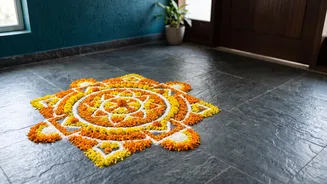
With your materials ready, it's time to bring your vision to life. Start by lightly sketching your chosen design on the floor with chalk; a simple series of concentric circles is a great and forgiving pattern for beginners. Begin by creating an outline with the white rice flour. You can do this by taking a pinch of flour between your thumb and index finger and letting it fall in a steady line as you trace your chalk mark. Once your outline is complete, start filling in the design. Work from the outside inwards to avoid smudging your work. Lay the marigold petals within the sections you’ve created, pressing them down lightly. Alternate between orange and yellow petals for a vibrant effect.
Finishing Touches and Inspiration
The final details will make your doorstep decor truly shine. A simple yet stunning idea is to place a single diya or a whole marigold flower in the center of your design. For a more elaborate look, you can create a border with mango leaves or arrange whole flowers at key points in the pattern. Don't be afraid to experiment with different patterns beyond circles. Geometric shapes, peacock motifs, or lotus patterns are all traditional and beautiful options. The most important part is to enjoy the meditative process of creating something beautiful with your own hands, a tradition that connects generations.