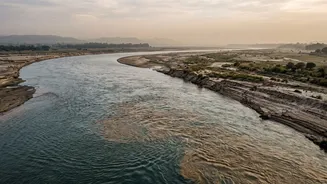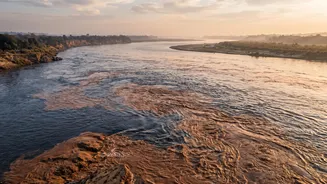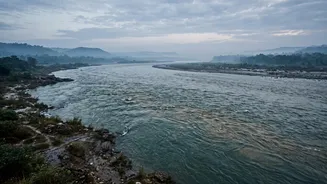






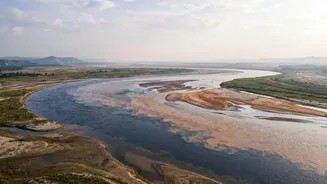
A landmark 30-year treaty on sharing the Ganga's waters between India and Bangladesh is set to expire in December 2026. As the deadline looms, both nations are gearing up for crucial talks that will redefine a cornerstone of their relationship.
A Brief History of the Treaty
Signed
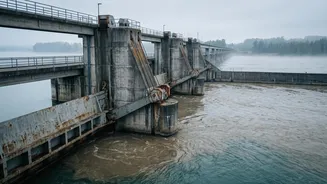
in December 1996, the Ganges Water Treaty was a diplomatic breakthrough. Its primary objective was to regulate the sharing of the river's flow at the Farakka Barrage in West Bengal, especially during the critical dry season from January 1 to May 31. The barrage, which became operational in 1975, had been a major point of contention, with Bangladesh accusing India of diverting essential water and causing significant environmental and economic damage downstream. The 1996 pact established a formula for water allocation based on flow levels, bringing a measure of predictability and cooperation to a historically fraught issue. It has since been regarded as a pillar of the 'golden age' of India-Bangladesh ties.
Why This Renewal Is So Complex
Three decades on, the context has changed dramatically. Climate change is no longer a distant threat but a present reality, altering the river's flow in unpredictable ways. Himalayan glaciers that feed the Ganga are retreating, leading to projections of more intense monsoon floods and, paradoxically, reduced flows in the dry winter months. Both nations have also seen significant population growth and increased demand for freshwater for agriculture, industry, and cities. Within India, states like Bihar and West Bengal are increasingly vocal about their own water needs, adding a layer of domestic political pressure on New Delhi's negotiators. Consequently, Bangladesh is pushing for a revised deal that accounts for these new realities, including provisions on climate change and a basin-wide management approach.
The Unresolved Teesta Issue
Complicating the Ganga talks is the long-unresolved dispute over the Teesta, another of the 54 rivers shared by the two countries. An agreement to share the Teesta's waters was close to being signed in 2011 but was stalled due to strong opposition from the West Bengal government, which feared it would harm its own agricultural interests. For Bangladesh, where the Teesta is a lifeline for its northern regions, securing a deal is a national priority. Many in Dhaka view the two river treaties as linked, and the lack of progress on the Teesta has become a major sticking point in the broader bilateral relationship, casting a shadow over the upcoming Ganga negotiations.
The Dragon in the Room: China's Growing Role
A new and significant geopolitical factor is China's growing involvement in the region's water politics. Frustrated by the lack of progress on the Teesta treaty with India, Bangladesh has turned to China for a multi-billion-dollar 'Teesta River Comprehensive Management and Restoration Project'. In June 2026, during a visit by Bangladesh's Prime Minister Tarique Rahman to Beijing, China agreed to provide technical assistance and strengthen cooperation on managing the Teesta and other rivers. This development has caused unease in New Delhi, which views China's expanding footprint in South Asia with suspicion. India has responded by setting up its own high-powered committee to examine the management of the Teesta basin. China's entry into Bangladesh's water management adds a strategic dimension to what was once a purely bilateral issue.
The Path to a New Agreement
As the December 12 deadline approaches, the path forward remains uncertain. While technical level meetings of the Joint Rivers Commission have taken place, high level political engagement has been pending. A visit by the Bangladeshi Prime Minister to India is seen as crucial to breaking the deadlock, but dates have not been confirmed. Bangladesh's government has formed a committee to lead negotiations, stating its goal is to secure the country's long term interests and rightful water needs. Scenarios range from a straightforward renewal to a complete renegotiation with new terms, possibly with a shorter duration. Some reports suggest Bangladesh is hoping for a short term automatic renewal if a new deal isn't reached in time, though Indian officials have not confirmed this possibility.