



From The Field: A Tale of Two Grains
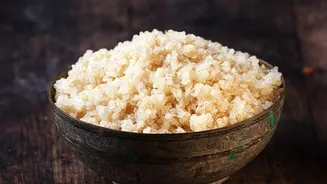
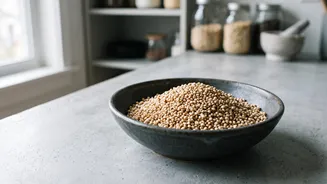
Before they are puffed, the base ingredients—quinoa and rice—start with very different nutritional profiles. Quinoa is technically a pseudocereal, a seed that's consumed like a grain. It's famous for being a 'complete protein', meaning it contains all nine
essential amino acids our bodies can't produce. A cup of cooked quinoa offers about 8 grams of protein and 5 grams of fiber. It's also naturally rich in minerals like iron, magnesium, and manganese. Rice, on the other hand, comes in many varieties. The puffed rice found in many commercial snacks and cereals, including the popular Indian snack 'murmura', is often made from white rice. White rice has its bran and germ removed, which strips away much of its fiber and nutrients. Puffed brown rice is a whole-grain alternative that retains more fiber and minerals. However, even brown rice has less protein and fiber than quinoa, typically providing around 4.5 grams of protein and 3.5 grams of fiber per cooked cup.
The Puffing Process: More Than Just Hot Air
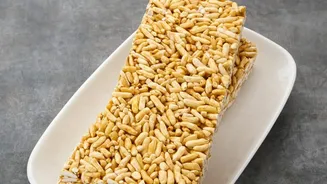
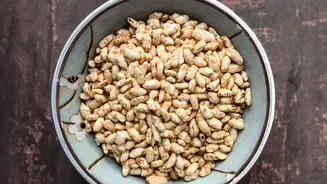
The transformation from dense grain to airy puff involves a process called explosion puffing. Grains are heated under high pressure with steam, which causes the moisture inside to flash into steam and expand the kernel, creating that familiar light, crispy texture. This process is fundamentally the same for both rice and quinoa. However, the impact on nutrition can vary. Research shows that puffing can make starches and proteins more digestible. At the same time, the high heat can cause a slight reduction in some vitamins and change the structure of proteins and fats. While some marketing claims the puffing process doesn't affect nutritional value, scientific studies show there are definite changes, such as a decrease in fat and moisture content and an increase in total sugars as starches break down. So, while the process makes the grains crunchier and easier to eat, it's not without nutritional trade-offs.
Nutritional Knockout: The Puffed Comparison
When you compare the final puffed products, quinoa generally maintains its nutritional edge. Puffed quinoa delivers significantly more protein and fiber than puffed white rice. One cup of puffed rice has about 57 calories, 1 gram of protein, and only 0.2 grams of fiber. By contrast, cooked quinoa (the closest available data for a volume comparison) has more than double the calories but also four times the protein and over ten times the fiber. This higher protein and fiber content in quinoa puffs makes them more satiating, meaning they are better at keeping you feeling full. Puffed brown rice is a better option than puffed white rice as it retains more of its natural fiber and minerals, but it still typically falls short of the protein and mineral content found in quinoa.
The Blood Sugar Impact: Glycemic Index
For many, the biggest question is how these snacks affect blood sugar. The Glycemic Index (GI) measures how quickly a food raises blood glucose levels. Foods with a high GI can cause sharp spikes and subsequent crashes in energy. Puffed rice, especially from white rice, has a high GI, often rated at 87 or higher, similar to other refined carbohydrates. This means it can cause a rapid increase in blood sugar. Quinoa, in its cooked form, has a low-to-medium GI, typically around 53. This is due to its higher protein and fiber content, which slows down the digestion and absorption of carbohydrates. This makes puffed quinoa a more favourable choice for maintaining stable energy levels and for individuals monitoring their blood sugar. Puffed brown rice has a lower GI than white rice, but it's still generally higher than quinoa.