


Amol Muzumdar: The Run Machine in the Wrong Era
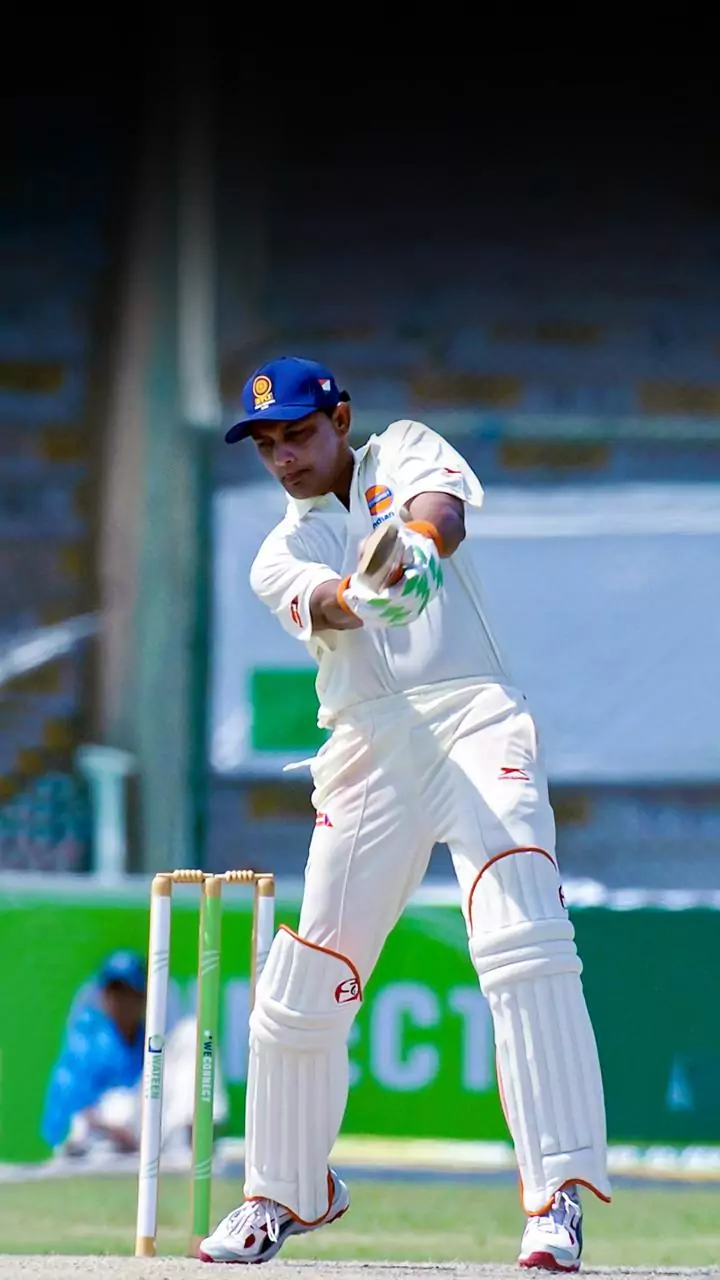
Perhaps no name is more synonymous with the title of 'uncapped legend' than Amol Muzumdar. A technically sound and prolific right-handed batsman from Mumbai, Muzumdar's story is one of cruel timing. He famously scored 260 on his first-class debut for
Mumbai in 1994, a record at the time. He was padded up to go in next when Sachin Tendulkar and Vinod Kambli put on their world-record school partnership, a moment that seemed to foreshadow his career: always close to greatness, but just on the sidelines. Muzumdar finished his career with 11,167 first-class runs, a testament to his consistency and hunger. However, his peak coincided with Indian cricket’s 'Golden Era' of middle-order batsmen. With a lineup featuring Sachin Tendulkar, Rahul Dravid, Sourav Ganguly, and VVS Laxman, there was simply no vacancy. Despite captaining Mumbai to a Ranji Trophy title, the India cap remained agonizingly out of reach.
Rajinder Goel: The Master of Spin
If Muzumdar was the nearly man of batting, Rajinder Goel was his bowling counterpart. A left-arm spinner with a relentless and nagging accuracy, Goel holds the record for the most wickets in the history of the Ranji Trophy. He finished his illustrious 27-year career with a staggering 750 first-class wickets. His mastery was such that the great Sunil Gavaskar dedicated a chapter to him in his book 'Idols', admitting that Goel was the one bowler he truly dreaded facing. Goel’s flatter trajectory made him nearly impossible to step out to and drive. So, why did he never play for India? The answer, in two words, is Bishan Singh Bedi. Goel’s career ran parallel to one of India’s greatest-ever spinners, who bowled in a similar style. Despite once being called up to the Test squad, he was left out of the final playing XI at the last moment and never got another chance.
Padmakar Shivalkar: Another Genius Eclipsed
The story of Padmakar 'Paddy' Shivalkar is intertwined with that of Rajinder Goel. Also a left-arm spinner, Shivalkar was a giant for the dominant Bombay team of his era. He ended his career with an incredible 589 first-class wickets, with many of them being crucial in Bombay's numerous Ranji Trophy triumphs. Like Goel, Shivalkar was also honoured in Sunil Gavaskar's book 'Idols' as one of the finest players to have never worn the India cap. And just like Goel, he had the misfortune of playing in the age of Bishan Singh Bedi, which created a bottleneck for left-arm spinners in the national team. Together, Goel and Shivalkar represented a peculiar tragedy of Indian cricket: two of the most potent domestic bowlers of a generation were denied international careers because an even greater genius stood in their path.
A Legacy Beyond the Cap
The list extends beyond these few names. Players like batsman Amarjit Kaypee, who held the Ranji run-scoring record before Muzumdar, and pacer Ranadeb Bose, who was selected for a tour but never played, also have similar stories. Their careers highlight the immense depth of talent within Indian cricket. To be overlooked was not necessarily a reflection of their own shortcomings but rather a testament to the fierce competition for a handful of spots on the national team. For every player who achieves the dream, there are countless others who toil in domestic cricket, their names chanted by local crowds and their feats recorded in the domestic annals. They are the foundation upon which the grand cathedral of Indian cricket is built, proving that a legacy can be forged even without an international cap.