

The Foundation: Budget-Friendly Blooms
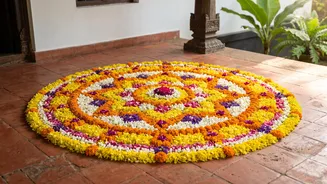
The most beautiful Pookalams are built on a foundation of affordable, high-volume flowers. Marigolds (Jamanthi/Chendumalli) are the undisputed champions here. Available in brilliant yellows and oranges, their petals are easy to separate and can fill large
areas of your design, offering a cheerful and prosperous look without breaking the bank. Another cost-effective hero is the Globe Amaranth (Vadamalli), whose sturdy, ball-like flowers in purple and white hold their shape well and are sold at reasonable prices. Traditionally, small, locally-sourced flowers like Thumba (Ceylon Slitwort), with its tiny white petals, are used for the central ring, symbolising purity and a humble start. If you have access to a garden, these local gems are often free.
Adding Colour: Mid-Range Marvels
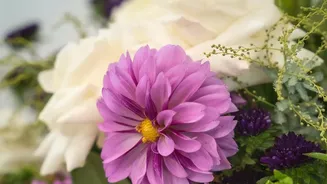
To add layers of colour and texture, turn to mid-range options. Chrysanthemums (Jamanthi) are a fantastic choice, available in a wide spectrum of colours including white, yellow, and pink. They offer great value as their dense petals can cover significant space. Hibiscus (Chemparathy), with its bold, dark crimson petals, adds a striking and traditionally significant pop of colour representing strength and devotion. Similarly, the brilliant blue of the Butterfly Pea flower (Shankupushpam) provides a beautiful contrast and is considered sacred. These flowers are perfect for creating the middle rings of your Pookalam, adding visual interest and adhering to tradition.
The Accent: Premium & Fragrant Petals
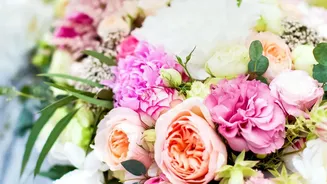
While they come at a higher price, a small quantity of premium flowers can elevate your entire design. Use them sparingly as accents. Rose petals, in shades of pink and red, lend an elegant and soft touch to the Pookalam. Jasmine (Mullappoo) is prized not just for its delicate white appearance but for the beautiful fragrance it adds to your home, signifying purity. For a truly special centrepiece, a few lotus petals can create an unmatched sense of divinity and grace. Due to their higher cost, especially during the festival rush, these flowers are best used in the most prominent or central parts of the design to draw the eye.
Smart Sourcing and Design Tricks
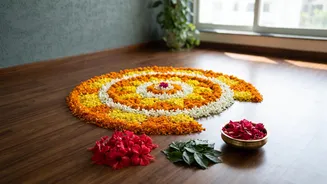
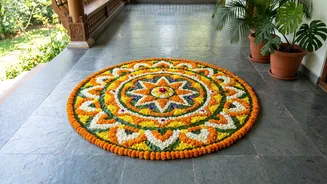
Budgeting for a Pookalam isn't just about choosing cheaper flowers; it's about smart planning. Where possible, buy your flowers from wholesale markets early in the morning rather than packaged kits from local stores, as prices can be significantly lower. Be aware that prices tend to spike in the final days before Thiruvonam, so planning ahead helps. When designing, sketch your pattern first to calculate how much you need, preventing waste. A clever trick is to use green elements like Tulsi leaves or other foliage to create borders or fill gaps; this adds volume and contrast at a very low cost. Creating a smaller, intricate centre and surrounding it with simple, broad rings of colour gives an impression of complexity without requiring a huge quantity of flowers.
Community and Longevity
The spirit of Onam is community, and this can extend to your Pookalam. For those living in apartments or close-knit neighbourhoods, creating a large, shared Pookalam is a wonderful way to foster community spirit while splitting the daily cost among several households. This often results in a grander and more beautiful design than one family might manage alone. To keep your creation looking fresh, only separate the petals from the flowers right before you are ready to arrange them. Lightly sprinkling the finished Pookalam with water can also help the petals stay vibrant for longer. Remember, the tradition involves adding a new layer each day, so start small and let your design grow, which also helps spread the cost over the festival period.