



The Next Giant Leap for India
For decades, ISRO has been a source of immense national pride, achieving incredible feats on a shoestring budget. From its first Mars mission, Mangalyaan, succeeding on its initial attempt, to the historic landing near the Moon’s south pole, the agency
has consistently pushed boundaries. Now, ISRO is leveraging that experience for a new era of space exploration. The upcoming mission pipeline is a clear signal of soaring ambitions, moving from orbital missions to human spaceflight, planetary landings, and building a sustainable presence in space. These aren't just singular goals; they are interconnected parts of a grander strategy to secure India’s place as a leading space-faring nation.
Gaganyaan: Putting an Indian in Orbit
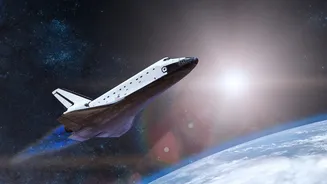
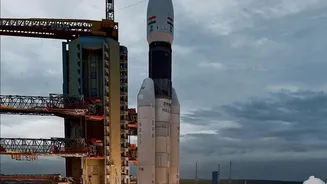
The crown jewel of ISRO's immediate plans is the Gaganyaan mission, which aims to send Indian astronauts, or 'Gaganyatris', into a 400 km orbit for a three-day mission. This undertaking is exponentially more complex than any robotic mission. It requires a human-rated launch vehicle (HLVM-3), a sophisticated crew module with life support systems, and flawless execution of re-entry and recovery. After a series of crucial uncrewed test flights, including some carrying a humanoid robot named Vyommitra, the first crewed flight is anticipated around 2027. Success would make India only the fourth country in the world to independently send humans to space, a monumental achievement that paves the way for a future Indian space station by 2035.
Exploring New Worlds: Venus and Mars
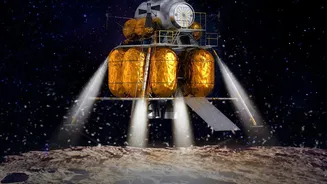
Beyond low-Earth orbit, ISRO is setting its sights back on the planets. A Venus orbiter mission, Shukrayaan-1, is in the works to study the mysterious and hostile atmosphere of our neighbouring planet. Following the remarkable success of the first Mangalyaan, an ambitious successor is being planned. Mangalyaan-2 is intended to be a lander mission, potentially including a rover and even a helicopter. This represents a major technological leap from an orbiter, requiring advanced systems for a soft landing on the Martian surface, a feat only a handful of nations have accomplished. The mission, expected around 2030, aims to conduct in-depth studies of the planet's surface, atmosphere, and environment.
A New Space Economy Takes Flight
Perhaps the most significant change is not in space, but on the ground. The Indian Space Policy of 2023 is a landmark reform designed to open the sector to private companies. This policy clearly defines roles: ISRO will focus on advanced research and development, while private entities are encouraged to take over manufacturing, launch services, and satellite operations. This shift is already creating a vibrant startup culture. Companies like Skyroot Aerospace and Agnikul Cosmos are developing their own private launch vehicles, while others like Pixxel are building advanced satellite constellations. This private-sector boom is expected to grow India's share of the global space economy from its current 2-3% to a projected $44 billion by 2033.
IN-SPACe: Fueling the Private Rocket Race
At the heart of this transformation is the Indian National Space Promotion and Authorisation Centre (IN-SPACe). Acting as a single-window agency, IN-SPACe is responsible for authorising, promoting, and supervising the activities of private space companies. It facilitates access to ISRO's state-of-the-art facilities and expertise, helping to level the playing field for startups. Meanwhile, NewSpace India Limited (NSIL), ISRO's commercial arm, focuses on marketing and commercialising space technologies, transferring ISRO-developed tech to industry, and procuring launch services from private players. Together, these organisations are creating an ecosystem where private innovation can thrive, turning what was once a government-led programme into a national collaborative enterprise.