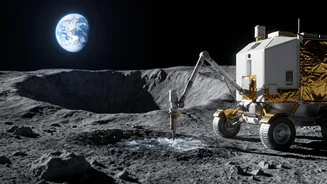

A Frozen Oasis in Permanent Shadow
For billions of years, the floors of certain craters at the Moon's South Pole have never seen a single ray of sunlight. In these permanently shadowed regions (PSRs), temperatures plummet to some of the coldest in the solar system, around -233 degrees
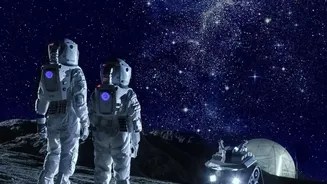
Celsius. This extreme cold has created the perfect trap for water ice, which is believed to exist in vast quantities, mixed in with the lunar soil, or regolith. Data from orbiters like NASA's Lunar Reconnaissance Orbiter (LRO) have mapped these regions, identifying them as prime targets for future exploration. NASA's plan for a long-term lunar outpost is centered on this region precisely because of this potential resource. Tapping into this frozen reservoir is the foundational goal for establishing a sustainable human presence beyond Earth.
Water: The Oil of Outer Space
The reason NASA and its commercial partners are so focused on this ice has little to do with quenching astronaut thirst, though that is a benefit. Water (H2O) is the ultimate multipurpose resource for space exploration. When its molecules are split through electrolysis, it provides hydrogen and oxygen. The oxygen can be used to create breathable air for habitats, and both liquid hydrogen and liquid oxygen are the primary components of powerful rocket propellant. The ability to manufacture propellant on the Moon is a complete game-changer. It could turn the Moon into a refueling station for missions venturing deeper into the solar system, such as to Mars. This concept, known as in-situ resource utilization (ISRU), is central to making long-term space exploration economically feasible by dramatically reducing the mass that needs to be launched from Earth.
The Robotic Prospectors and Drills
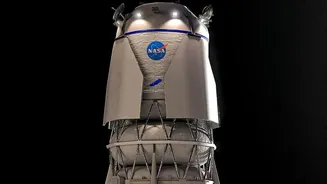
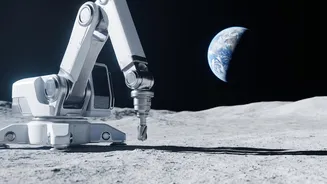
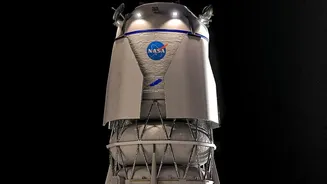
Before astronauts can set up a lunar processing plant, NASA needs to know exactly where the best ice deposits are and how to get to them. This is the job of robotic prospectors. A key mission was the Volatiles Investigating Polar Exploration Rover, or VIPER. This golf-cart-sized rover was designed to drive into the dark, frigid craters with headlights, using a one-meter drill to measure the concentration and composition of water ice below the surface. Though the original mission plan was altered, the completed rover was revived in late 2025 with Blue Origin contracted for its delivery to the Moon, now scheduled for 2027. Other technologies, like the Polar Resources Ice Mining Experiment-1 (PRIME-1), have already tested drilling and gas-analyzing hardware in the harsh lunar environment. These missions are paving the way, testing the tools—like Honeybee Robotics' TRIDENT drill and the MSOLO mass spectrometer—that will be essential for future large-scale extraction.
Fueling a New Lunar Economy
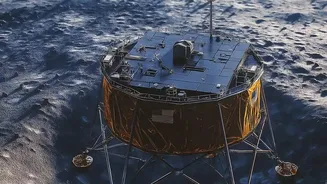
The quest for lunar water isn't just a NASA-led endeavor; it's the bedrock of a burgeoning commercial space economy. Through programs like the Commercial Lunar Payload Services (CLPS) initiative, NASA is contracting private companies to deliver science and technology to the lunar surface. Companies like Intuitive Machines and Astrobotic are building the landers. Blue Origin, SpaceX, and others are developing the human landing systems that will bring astronauts to the work sites. This public-private partnership model stimulates innovation and competition. NASA has awarded contracts to companies specifically to develop resource-extraction technologies and to demonstrate the collection of lunar soil. These investments are intended to create a market where NASA is just one of many customers, buying services like water processing and refueling from commercial providers operating on the Moon, creating a self-sustaining economic ecosystem far from Earth.