






The Importance of Deep Sleep
First, let's clarify what we're talking about. Sleep isn't a single, uniform state; you cycle through different stages, including light sleep, deep sleep, and REM. Deep sleep, also known as slow-wave sleep, is the most physically restorative stage. It's
when your body gets to work repairing tissues, building bone and muscle, strengthening your immune system, and consolidating memories. Waking up feeling truly refreshed and restored is largely dependent on getting enough high-quality deep sleep. Without it, you might feel groggy and struggle to focus, even after eight hours.
The Blue Light Disruption
The primary way screens sabotage sleep is through the emission of blue light. Our bodies have an internal 24-hour clock, or circadian rhythm, that is heavily influenced by light. When your eyes are exposed to light, it signals your brain to be awake. Darkness, on the other hand, triggers the pineal gland to release melatonin, the hormone that makes you feel sleepy. The short-wavelength blue light from phones, tablets, and laptops is particularly potent at tricking your brain into thinking it's still daytime. This suppresses melatonin production, delaying your body's natural wind-down process and making it harder to fall asleep.
It's More Than Just Light
While blue light is a major biological disruptor, the content on our screens is a psychological one. Engaging with work emails, scrolling through stressful news headlines, or playing an intense video game keeps your brain in a state of high alert. This cognitive and emotional stimulation increases your heart rate and keeps your mind racing, which is the exact opposite of the calm, relaxed state needed to drift into sleep. Even seemingly passive activities like binge-watching a suspenseful series can generate an emotional response that makes it difficult to unwind. This mental stimulation makes it harder to fall asleep and can lead to more fragmented rest during the night.
Creating a 'Digital Sunset'
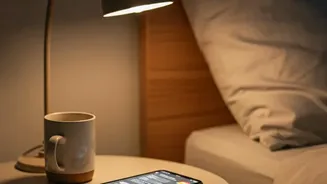
The solution is to create a 'digital sunset'—a deliberate transition away from screens before bed. The most effective strategy is to establish a screen-free buffer zone of at least 60 to 90 minutes before your intended bedtime. Make it a rule to put all devices away. If you must use a device, enable 'night mode' features to shift the screen to warmer tones and reduce the brightness, but be aware this isn't a perfect fix. An even better habit is to charge your devices outside the bedroom entirely. This removes the temptation to check a notification or 'just quickly' look something up if you wake up during the night.
Better Alternatives for Winding Down
So, what do you do during this new screen-free time? The goal is to replace stimulating activities with calming ones that signal to your brain and body that it's time to rest. Reading a physical book or magazine is a classic for a reason—it focuses the mind without the disruptive blue light. Other excellent options include listening to calm music or a podcast, doing some light stretching, taking a warm bath, or practicing mindfulness or meditation. Even simple activities like journaling or sipping a cup of non-caffeinated herbal tea can become a powerful part of a relaxing bedtime ritual.