
The Book Stack: A Sturdy Yoga Block
Yoga blocks are used to 'bring the floor closer to you', providing support in poses where your hands can't quite reach the mat. This helps maintain proper alignment and prevents strain. Instead of buying foam or cork blocks, look to your bookshelf. A
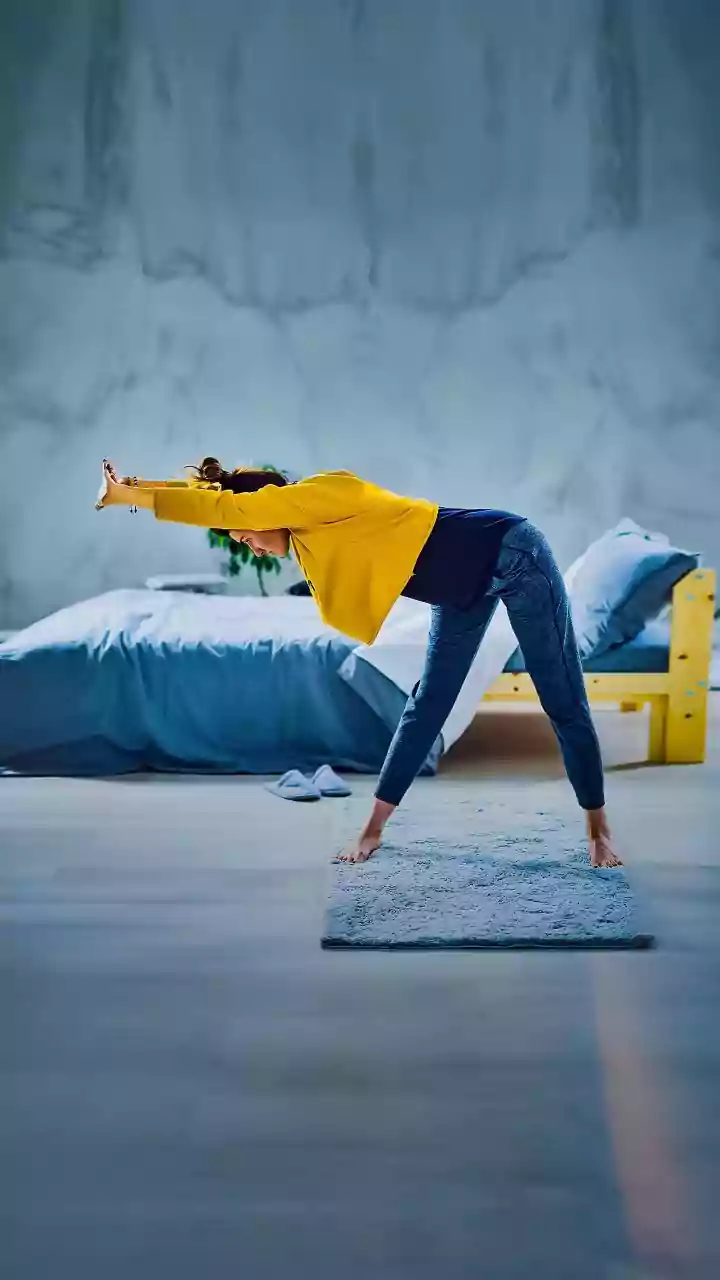
stack of thick, hardcover books makes an excellent substitute. Choose books of similar size for a stable surface, like textbooks or large novels. They are perfect for placing under your hands in poses like Triangle Pose (Trikonasana) or Half Moon Pose (Ardha Chandrasana). For added comfort, you can place a small towel over the books. Always ensure your stack is stable and won't slide before putting weight on it.
The Belt or Scarf: Your Flexible Yoga Strap
A yoga strap is a fantastic tool for assisting with flexibility, acting as an extension of your arms to help you deepen stretches safely. You don't need a special cotton strap to get these benefits; a bathrobe tie, a regular belt, or a long scarf will work perfectly. These items can help you gently pull your feet toward you in a Seated Forward Fold (Paschimottanasana) or support your lifted leg in Reclined Hand-to-Big-Toe Pose (Supta Padangusthasana), allowing you to relax into the stretch without forcing it. The key is to find something long and durable that won't snap under gentle tension.
Pillows and Cushions: A Restorative DIY Bolster
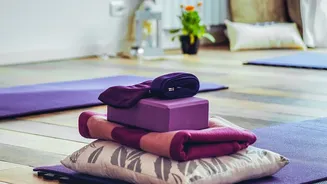
Bolsters are firm, dense pillows used in restorative yoga to support the body, encouraging deep relaxation and release. While a dedicated bolster is a wonderful prop, you can easily recreate the experience. A few firm pillows from your bed or, even better, a sturdy sofa cushion can provide excellent support. For poses that require back support, like a gentle heart-opener, you can also roll a thick blanket or quilt tightly. The goal is to create something that has some heft and won't completely flatten under your body weight. These can be placed under the knees in Savasana or along the spine for a supported backbend.
The Humble Blanket: For Warmth and Support
Perhaps the most versatile prop of all is a simple blanket, which you certainly have at home. Yoga blankets are often used for more than just staying warm during final relaxation. A folded blanket can be placed under your seat during seated postures to elevate the hips, making it easier to maintain a straight spine. It can also provide crucial padding for sensitive knees in poses like Cat-Cow or low lunges. Any comfortable household blanket or even a thick beach towel will do the trick, adding a layer of comfort and support wherever you need it.
A Chair or Wall: Your Balance Partner
Sometimes the biggest challenge in yoga is stability, especially for beginners. Instead of wobbling through balancing poses, use a sturdy piece of furniture. A chair can be an excellent substitute for a block, offering a higher surface for support in standing poses. A wall is another invaluable asset already in your home studio. You can practice Legs-Up-the-Wall Pose (Viparita Karani) for relaxation or use the wall for support while learning challenging balancing postures like Handstand. It provides a sense of security that allows you to explore the pose with more confidence.
Setting the Scene: Ambiance on a Dime
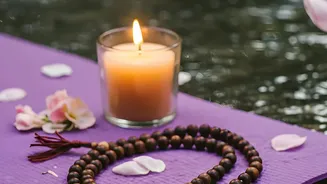
Creating a peaceful practice space goes beyond physical props. It's about crafting an environment that signals to your mind it's time to slow down. This doesn't require a big budget. Simply find a quiet corner and clear it of clutter. Dim the lights, or practice by candlelight. Use your phone to play calming music or a guided meditation. A pleasant scent from an essential oil diffuser or an incense stick can also help transform your space. The goal is to create a small sanctuary that feels separate from the hustle and bustle of your daily life, making it easier to turn your focus inward.