

Planetary Parade Continues
While the peak of the Perseids coincided with a remarkable six-planet alignment, many of these worlds remain visible in the late August sky. Saturn and Mars are the most rewarding targets for naked-eye observers. Mars, with its distinct reddish hue, will
be high in the sky before dawn. Saturn will also be a prominent, steady light. While Jupiter and Mercury were part of the lineup earlier in the month, they are now increasingly difficult to spot as they linger near the bright morning twilight. Uranus and Neptune require binoculars or a telescope and a very dark sky to be seen. The best time to try and spot this planetary procession is in the hour before sunrise, looking towards the east.
The Summer Triangle and Milky Way
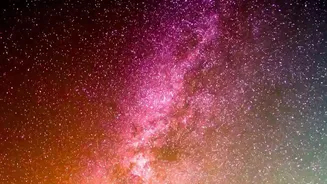
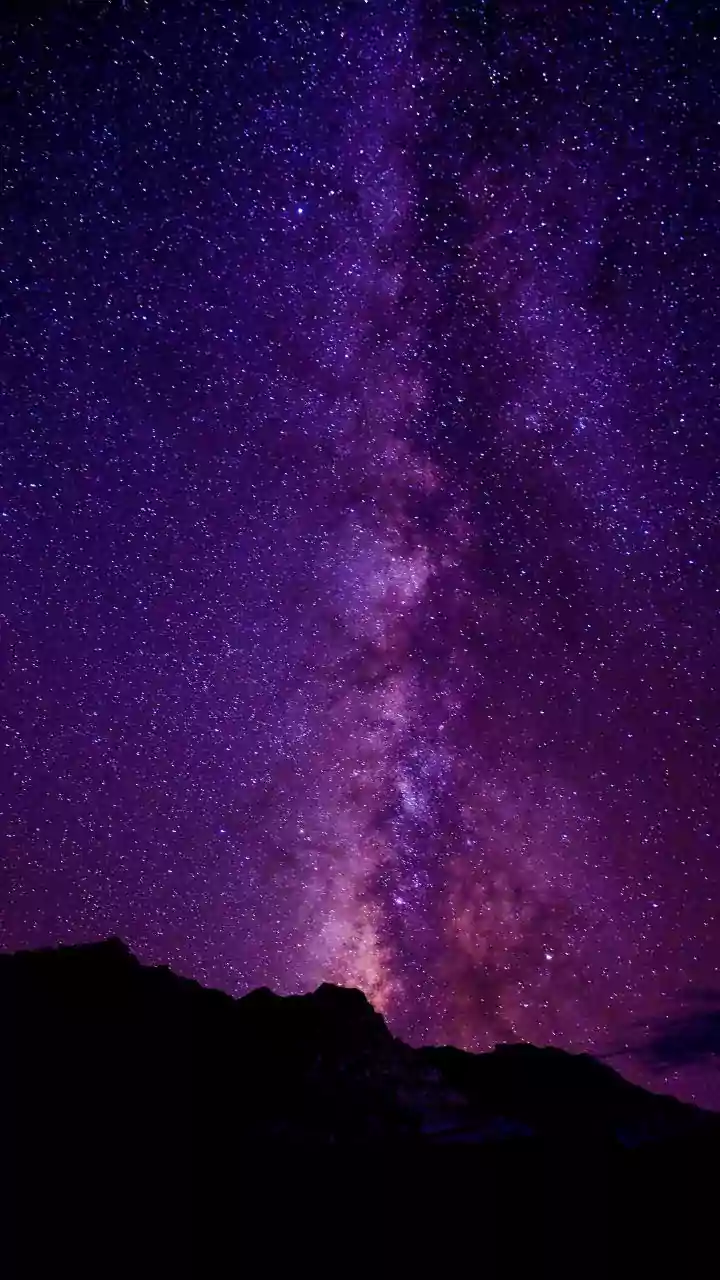
August is a prime month for enjoying the heart of our own galaxy. On clear, moonless nights away from city lights, the Milky Way arches overhead like a faint, shimmering cloud. To find its brightest section, look towards the southern horizon for the constellation Sagittarius, whose brightest stars form a pattern resembling a teapot. The 'spout' of the teapot points directly at the dense, glowing centre of the Milky Way. Dominating the sky high overhead is the Summer Triangle, an unmistakable formation of three brilliant stars: Vega, Deneb, and Altair. Each of these stars is the brightest in its own constellation (Lyra, Cygnus, and Aquila, respectively). The Summer Triangle is so bright that it can be spotted even from moderately light-polluted urban areas, serving as a reliable guidepost for navigating the summer sky.
A Faint Meteoric Encore
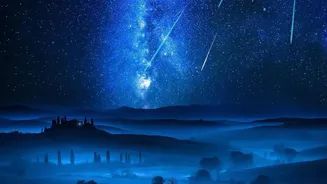
The Perseids might be the main event, but they aren't the only shooting stars of August. The Kappa Cygnid meteor shower remains active until about August 28. This is a very minor shower, producing only about three meteors per hour at its peak, which was around August 17. However, it's known for producing occasionally bright and noticeably slow-moving fireballs, which can be a delightful surprise for a patient observer. Unlike the swift Perseids, a Kappa Cygnid appears to drift more slowly across the sky. With the moon setting early in the evening for the remainder of the shower's activity, viewing conditions are favorable. Look toward the constellation Cygnus, the Swan, which is high overhead as part of the Summer Triangle.
The Moon’s Partial Eclipse
Mark your calendars for August 28, when a partial lunar eclipse will be visible. During this event, a portion of the full Moon will pass through the Earth's darkest shadow, called the umbra. This will cause part of the lunar surface to appear noticeably dimmer or even reddish, while the rest remains brightly lit by the sun. It's a subtle but beautiful event that can be easily observed without any special equipment. It provides a wonderful opportunity to watch the mechanics of our solar system in real time, as the Earth's shadow falls upon our natural satellite. Check local timings for the best window to observe the eclipse from your location.
Tips for Indian Stargazers
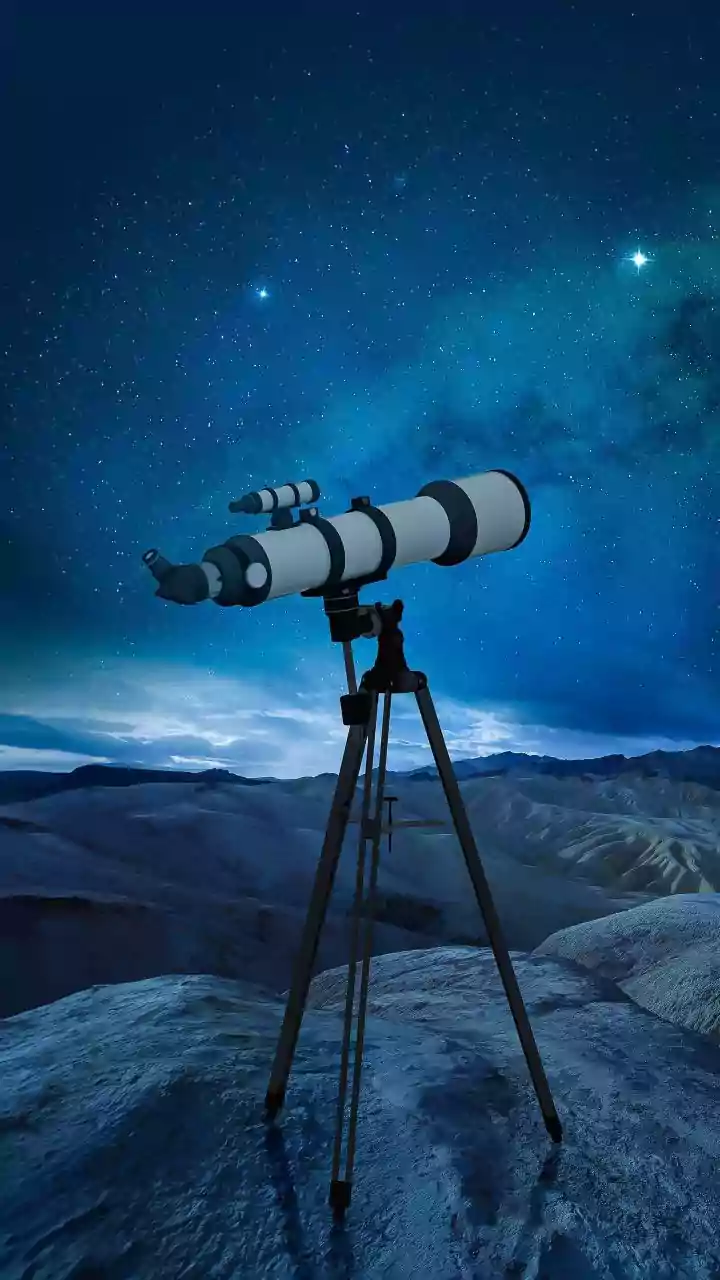
The biggest challenge for many observers in India during August is the monsoon. Clouds can obstruct the view for days at a time, making it crucial to take advantage of any clear breaks. For the best experience, try to get away from city lights. Light pollution washes out fainter objects like the Milky Way and minor meteor showers. High-altitude, remote locations like those in Ladakh, Spiti, or the Rann of Kutch offer the darkest skies. However, even from a city balcony, you can still spot bright planets like Mars and Saturn, along with the stars of the Summer Triangle. Give your eyes about 20-30 minutes to fully adapt to the darkness; this will dramatically increase the number of stars you can see. Stargazing apps on your phone can be an invaluable tool for identifying constellations and planets.