





Jamun (Java Plum)
This deep purple, tart fruit is a monsoon classic in India for good reason. Jamun is loaded with essential nutrients like iron, potassium, and vitamins A and C that help strengthen your body's defences. It's particularly beneficial during the rainy season
for its digestive properties; its natural astringent quality can help manage common stomach issues like diarrhoea and bloating. With a low glycemic index, jamun is also an excellent choice for those managing blood sugar levels, releasing energy slowly without causing sharp spikes. Rich in iron, it also supports healthy blood circulation and haemoglobin levels.
Litchi (Lychee)
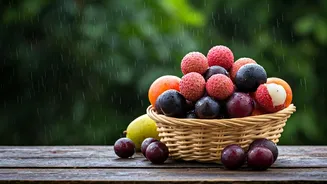
The arrival of litchis signals the start of the monsoon for many. Beyond their sweet, juicy taste, these fruits are an powerhouse of Vitamin C, a crucial nutrient for a strong immune system. Regular consumption can help your body fight off the common colds and infections that are prevalent during this humid season. Litchis are also packed with antioxidants and compounds that have anti-inflammatory and antiviral properties. Their high fibre and water content aid digestion and help prevent acidity, making them a refreshing and light snack.
Pears (Nashpati)
Crisp, sweet, and juicy, pears are one of the best fruits to enjoy during the monsoon. They are incredibly high in dietary fibre, which is essential for maintaining a healthy digestive system and preventing constipation, a common complaint when our activity levels might dip. Pears are also a great source of immunity-boosting Vitamin C. Their high water content helps keep you hydrated, while antioxidants like flavonoids help reduce inflammation in the body. This combination of fibre and nutrients makes pears a filling, low-calorie snack that supports both gut health and overall immunity.
Plums (Aloo Bukhara)
These vibrant, tangy fruits are another monsoon staple that offer significant health benefits. Plums are loaded with dietary fibre and natural compounds like sorbitol, which help regulate the digestive system and relieve constipation. They are also a rich source of Vitamin C, strengthening your body's resistance against infections. The reddish-blue pigments in plums, called anthocyanins, are powerful antioxidants that protect your cells from damage and have anti-inflammatory properties. Plums also support heart health by helping to manage cholesterol levels and blood pressure.
Cherries
Available in abundance during the rains, cherries are small powerhouses of nutrition. They are packed with antioxidants that fight free radicals and reduce inflammation, which can be particularly helpful for relieving the arthritis pain that sometimes worsens in damp weather. Rich in vitamins and minerals, cherries help bolster your body’s defences against infection. They also contain melatonin, a hormone that can help regulate sleep cycles, promoting better rest. Whether eaten fresh or added to yoghurt, these ruby-red gems are a delicious way to support your well-being.
Peaches (Aadu)
Soft, fragrant, and juicy, peaches are a delightful seasonal treat. They are an excellent source of vitamins A and C, which are crucial for maintaining healthy skin and a robust immune system. Vitamin C stimulates the production of white blood cells that fight off infections, while Vitamin A plays a role in enhancing vision and skin health. Peaches also contain dietary fibre that aids in smooth digestion. Their combination of immunity-boosting and skin-protecting nutrients makes them an ideal addition to your monsoon diet.