




Sourav Ganguly
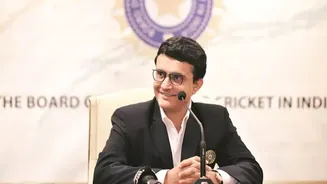
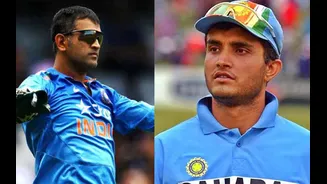
As a captain, Sourav Ganguly transformed India into a formidable fighting unit, instilling a new brand of fearlessness. He led his team to the 2003 World Cup final, a feat India hadn't achieved since 1983. Ganguly was brilliant in the tournament, scoring
three centuries. However, they met their match against a dominant Australian side in the final, falling at the last hurdle. Though the team he built would eventually win in 2011, the trophy eluded the captain who arguably laid its foundation.
Rahul Dravid
Known as 'The Wall' for his resilience, Rahul Dravid was the quintessential team man. He was the top run-scorer in the 1999 World Cup, even though India didn't make the semi-finals. In 2003, he took on the dual role of batsman and wicketkeeper to provide balance to the side, a key factor in India's run to the final. His worst World Cup memory is likely the 2007 campaign, where as captain, the team suffered a shocking group-stage exit. Despite a stellar ODI career with over 10,000 runs, a World Cup winner's medal remained absent from his collection.
AB de Villiers
Arguably the most dynamic batsman of his generation, AB de Villiers could win a match from any position. His heartbreak is synonymous with the 2015 World Cup semi-final. As captain, he was in sensational form throughout the tournament. But in a rain-affected thriller against New Zealand, a series of missed chances and high drama saw South Africa crash out in the final overs. The image of a tearful de Villiers after the loss remains one of the World Cup's most poignant moments, encapsulating the fine line between glory and despair.
Jacques Kallis
Widely regarded as the greatest all-rounder in modern cricket, Jacques Kallis brought unparalleled balance to the South African side for nearly two decades. He is the only player in history to score over 10,000 runs and take more than 250 wickets in both Test and ODI cricket. Despite playing in five World Cups from 1996 to 2011 and being a pillar of consistency, the Proteas' notorious struggles in knockout matches meant Kallis never reached a final, let alone lifted the trophy.
Brian Lara
The 'Prince of Port of Spain' was a genius, a batsman who could single-handedly dismantle any bowling attack. His career coincided with the decline of the once-invincible West Indies. While he produced moments of magic, like his stunning century against South Africa in the 1996 quarter-final, his team often lacked the collective strength to go all the way. Lara's individual brilliance was undeniable, but the ultimate team prize remained elusive throughout his storied career.
Kumar Sangakkara
Few have felt World Cup final heartbreak as acutely as Kumar Sangakkara. The elegant Sri Lankan wicketkeeper-batsman played in two consecutive finals and lost both. In 2007, Sri Lanka were defeated by Australia, and in 2011, he captained the side that lost to India. He even lost two T20 World Cup finals. His phenomenal performance in the 2015 tournament, where he scored a record four consecutive centuries, was a spectacular swansong, but ended in a quarter-final exit.
Waqar Younis
Waqar Younis's story is one of cruel timing. At the peak of his powers, forming a lethal partnership with Wasim Akram, he was a favourite to dominate the 1992 World Cup. But a stress fracture in his back just before the tournament forced him to pull out. He had to watch from home as Pakistan, the team he was supposed to lead with the ball, went on to lift the trophy. While he did play in other World Cups, including the 1999 final, that 1992 victory remains the one that got away.
Ian Botham
England's legendary all-rounder Sir Ian Botham came agonisingly close to World Cup glory, most notably in 1992. Throughout that tournament, he was a pivotal figure with both bat and ball, taking 16 wickets and providing impetus at the top of the order. England reached the final as a formidable unit, but were outplayed by Pakistan in a memorable contest at the MCG. Botham, who also featured in the 1979 final loss, has often called the 1992 defeat one of his biggest disappointments.
Graham Gooch
Perhaps the unluckiest cricketer in World Cup history, Graham Gooch holds the painful distinction of playing in three finals and losing every single one. The stoic England opener was on the losing side against the West Indies in 1979, Australia in 1987, and Pakistan in 1992. His century in the 1987 semi-final against India is considered one of the all-time great World Cup knocks, but it only led to more finals heartbreak. Three finals, three decades, three losses.
Lance Klusener
For a few weeks in 1999, Lance Klusener was the most destructive force in world cricket. His explosive hitting in the death overs single-handedly dragged South Africa through several matches, earning him the Player of the Tournament award. His defining moment came in the infamous semi-final against Australia. With scores tied, a calamitous run-out on the final ball resulted in a tie, with Australia advancing on account of their higher group stage finish. It remains one of cricket's most dramatic and heartbreaking exits.