






The Perils of the Lunar Surface
Living on the Moon is not for the faint of heart. With virtually no atmosphere, the lunar surface is an unforgiving place. Astronauts and their habitats would face a constant barrage of galactic cosmic radiation and solar particle events, which can damage
DNA and increase cancer risk. Adding to the danger are micrometeoroids, tiny particles of space debris that travel at incredible speeds and can puncture a spacesuit or habitat. Then there's the temperature: a scorching 127°C in the lunar day can plummet to a frigid -173°C at night. Building structures that can withstand these extremes is a massive engineering hurdle for NASA's Artemis program, which aims to create a sustainable human presence on the Moon.
Nature's Underground Shelter
The solution might have been waiting for us all along, just beneath the surface. For years, scientists have theorized about the existence of vast, hollow caverns known as lava tubes. These tunnels were formed billions of years ago when the Moon was volcanically active. Rivers of lava carved out channels, and when the outer layer cooled and hardened, the molten rock inside drained away, leaving behind a hollow cave. Orbital probes have identified hundreds of 'skylights'—collapsed sections of a tube's roof that create deep pits on the surface. These pits are believed to be gateways to extensive underground networks that could provide near-perfect protection from radiation, meteoroids, and those wild temperature swings. Studies suggest temperatures inside these caves could be a stable and comfortable 17°C.
Meet GIMLI, NASA's Cave Hunter
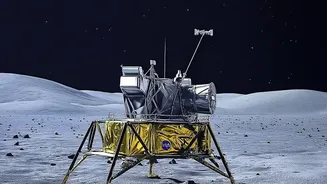
While we've seen these pits from orbit, we've never confirmed what lies within. That's about to change. NASA has officially selected a new mission as part of its Payloads and Research Investigations on the Surface of the Moon (PRISM) program to get some ground truth. Fittingly named GIMLI (Geophysical Instruments for Marius Lunar pit Investigation) after the cave-loving dwarf from 'The Lord of the Rings', the mission will target the Marius Hills Pit, a large hole discovered in 2009. Led by the Planetary Science Institute, GIMLI will not descend into the pit itself. Instead, a rover on the surface will use a suite of powerful instruments to peer beneath the ground.
How to Scan a Moon Cave
The GIMLI rover will be equipped with ground-penetrating radar and seismic sensors to map out the structure and size of any potential void beneath the Marius Hills Pit. It will also carry a gravimeter, an instrument that measures tiny changes in the gravitational field, which can indicate an empty space underground. This data will help scientists create a 3D model of what's down there, confirming whether the pit opens into a larger lava tube and estimating its size. Confirming a large, stable cave would be a game-changer for future lunar base planning. The mission's instruments will be built by Honeybee Robotics and delivered to the Moon via NASA's Commercial Lunar Payload Services (CLPS) initiative, which partners with private companies for launches.
A Blueprint for Survival
The GIMLI investigation is one of three new missions selected by NASA to prepare for a long-term human presence on the Moon. While GIMLI hunts for shelters, other missions will investigate hidden water ice deposits and monitor environmental hazards. Nicky Fox, an associate administrator at NASA, referred to these efforts as building the 'ultimate interplanetary survival guide'. Finding and confirming the existence of accessible lava tubes would be a critical chapter in that guide. These natural structures could drastically reduce the cost and complexity of building a lunar outpost, offering ready-made real estate that is safer and more stable than any surface habitat we could build.