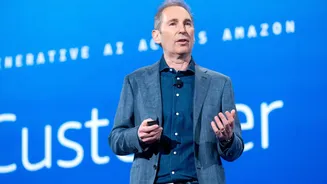




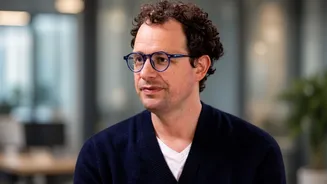


The CEO of AI company Anthropic, Dario Amodei, recently made a stunning claim: artificial intelligence could help make cancer a 'relic of the past' in less than a decade. It's a bold vision in a field defined by incremental progress.
An 'Age of Miracles'
During a presentation
related to his company's IPO, Anthropic CEO Dario Amodei suggested that AI could compress 50 to 100 years of medical progress into just five to ten. 'Cancer, Alzheimer's, heart disease, mental illness — these will be relics of the past in, I think, less than a decade', he stated, envisioning an 'age of miracles'. Amodei is not alone in his optimism. Other tech leaders, like Google DeepMind's Demis Hassabis, have also pointed to AI's potential to dramatically shorten research timelines. Anthropic, the company behind the AI model Claude, is already partnering with biotech firms to accelerate drug discovery for various diseases, including cancer. This push comes as AI companies seek to apply their powerful technology to solve some of humanity's most complex and persistent problems.
How AI Is Accelerating the Fight
The core idea is that AI can supercharge nearly every aspect of cancer research and treatment. In diagnostics, AI algorithms are already being used to analyze medical images like mammograms with a level of precision that can surpass human radiologists, helping to catch cancer earlier. Beyond detection, the technology is transforming drug discovery. One of the biggest breakthroughs is in understanding proteins, the complex molecules that drive diseases like cancer. AI systems like Google's AlphaFold can predict the 3D structure of proteins, a task that once took years. This allows scientists to design new drugs that can more effectively 'dock' onto these proteins. Anthropic itself has used its models to help design cancer-fighting immune cells and improve potential drug candidates at a preclinical stage. By sifting through massive datasets of genetic information and clinical trials, AI can identify novel drug targets, predict how a patient will respond to a certain therapy, and even match them to the right clinical trial, accelerating access to cutting-edge treatments.
The Sobering Reality
However, many in the medical and pharmaceutical fields view the ten-year timeline with significant skepticism. Critics point out that cancer is not one disease but hundreds, each with unique genetic drivers. While AI can identify promising drug candidates with incredible speed, that is only the first step in a long and arduous process. As one pharmaceutical executive bluntly put it, such claims are 'complete BS'. Vertex Pharmaceuticals' Executive Chairman noted that after evaluating 50 AI companies across 10,000 compounds, none independently produced a working drug. Promising molecules must still undergo years of laboratory research, animal testing, and multi-phase human clinical trials to prove they are both safe and effective. These crucial, time-consuming steps cannot be easily compressed by an algorithm. Furthermore, the success of AI models depends heavily on vast, high-quality, and diverse datasets, which can be difficult to obtain. Algorithmic bias, where a model performs poorly on populations underrepresented in its training data, remains a significant concern.
A Powerful Tool, Not a Magic Bullet
The consensus is that AI is a revolutionary tool, but not a magical cure. It has the potential to make every stage of the fight against cancer faster and more intelligent. AI is already acting as a 'co-scientist' in labs, helping researchers form new hypotheses and design experiments. We are seeing real-world results in early detection, with AI-assisted mammography catching more cancers than standard screening in major trials. But translating a computer-designed molecule into a widely available, approved treatment is a journey measured in years, not weeks. The ambitious timelines proposed by tech executives often overlook the complex realities of biology, clinical safety, and regulatory approval. These hurdles, which exist to protect patients, are the primary bottleneck in drug development, not the initial discovery phase that AI excels at accelerating. While the 'age of miracles' may not arrive in the next decade, the AI revolution in cancer research is already well underway.