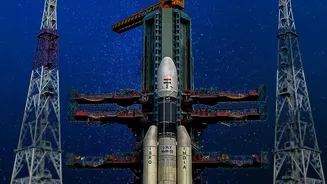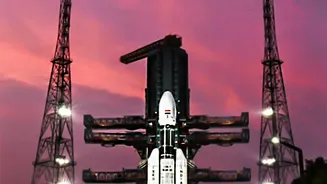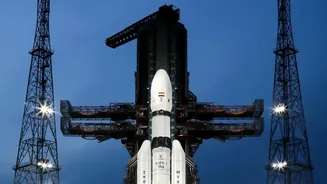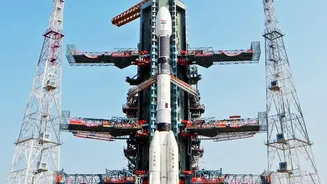




A Major Policy Overhaul
For decades, ISRO was the sole architect of India's celebrated space programme, handling everything from research and development to building and launching rockets. This government-led model brought immense national pride and significant technological
achievements. However, a major strategic pivot, solidified by the Indian Space Policy 2023, is redefining the landscape. The new policy explicitly carves out distinct roles: ISRO will now focus primarily on advanced research and development, deep-space exploration, and national security missions, leaving the commercial aspects to other entities. This deliberate shift is designed to transform the sector from a government-run programme into a dynamic, collaborative ecosystem driven by both public and private innovation.
Enter IN-SPACe and NSIL
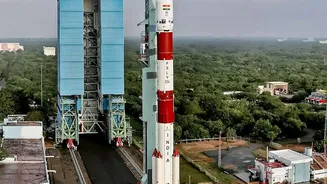
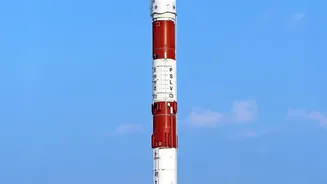
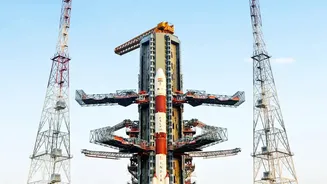
At the heart of this transformation are two key bodies: the Indian National Space Promotion and Authorisation Centre (IN-SPACe) and NewSpace India Limited (NSIL). IN-SPACe acts as a single-window agency, a crucial bridge between ISRO and the private sector. Its job is to authorise, promote, and regulate the activities of private companies, simplifying what was once a complex bureaucratic process. Startups no longer need to navigate multiple ISRO departments; they now have a dedicated body to facilitate access to ISRO's facilities, expertise, and testing infrastructure. Meanwhile, NSIL operates as ISRO's core commercial arm. It is responsible for manufacturing operational launch vehicles like the PSLV through industry consortiums, managing satellite services, and transferring ISRO-developed technologies to private companies. By tasking NSIL with routine production and commercial contracts, ISRO is freed up to concentrate on pioneering future technologies.
A Universe of Startup Opportunities
This new framework has thrown open the doors for startups to innovate across the entire space value chain. The opportunities extend far beyond just building rockets. Today, India is home to over 400 space-tech startups. These companies are developing everything from launch vehicles and satellite manufacturing to downstream data analytics and ground-based communication systems. The success of companies like Skyroot Aerospace, which developed and launched an orbital rocket, has boosted investor confidence and demonstrated that private Indian firms can handle complex space missions. Other startups are focusing on the lucrative downstream market, using satellite data to create commercial applications for sectors like agriculture, logistics, telecommunications, and climate monitoring. This has turned space technology into one of India's most promising deep-tech investment areas.
Fueling the Ecosystem with Investment
The policy clarity has unlocked a significant flow of capital into the sector. The Indian space-tech ecosystem has attracted hundreds of millions of dollars in funding, with a record $200 million raised in 2025 alone. Bengaluru has emerged as the leading hub, accounting for more than half of all funding. This influx of investment is critical, as space ventures are capital-intensive and have long development cycles. The government is also stepping in to de-risk these ventures for private investors, with IN-SPACe launching initiatives like a Venture Capital Fund to support startups with promising technologies. This combination of private and public funding is helping companies move from the drawing board to commercial operations.
Challenges on the Launchpad
Despite the momentum, the path is not without its challenges. The industry is still in a nascent stage, and startups face hurdles. Access to sophisticated testing facilities, while improving, can still be a bottleneck. The sector also requires a highly skilled workforce, and attracting and retaining top talent in niche fields remains a priority. Furthermore, while the Indian Space Policy 2023 provides a strong vision, a comprehensive and detailed national space law is still needed to provide absolute clarity on complex issues like liability and international collaborations, which would further boost investor confidence.