



Black pepper is the 'King of Spices' in every Indian kitchen, but is the jar in your pantry 100% pure? Adulteration is common, with cheap lookalikes often mixed in. Here’s how to ensure you're getting the real, pungent deal.
The King and Its Counterfeits
Genuine black pepper comes
from the dried unripe fruit of the Piper nigrum vine, a plant native to South India. Its characteristic sharp heat and complex aroma come from a compound called piperine and various essential oils. Because of its high value and demand, black pepper is one of the world's most frequently adulterated spices. The most common counterfeit is dried papaya seeds, which are cheap, widely available, and look strikingly similar to real peppercorns at first glance. Other less common adulterants can include blackberry seeds, tamarind seeds, and even mineral oil used to give inferior peppercorns an artificial shine.
The Visual Test: What to Look For
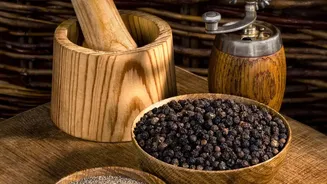
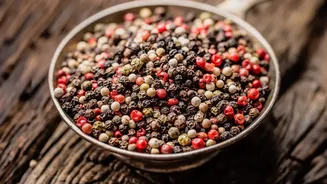
Before you even think about taste, your eyes can tell you a lot. Genuine black peppercorns have a very distinct appearance. They are typically uniform in size, almost perfectly round, and have a dense, deeply wrinkled surface that looks like a tiny network of ridges. Papaya seeds, on the other hand, are often slightly oval or pear-shaped. Their surface is shrunken and wrinkled, but generally smoother than that of a true peppercorn. They also tend to have a greenish-brown or blackish-brown hue, whereas real pepper is a more consistent dark brown to black. If you see peppercorns that look unnaturally glossy or leave a greasy film when rubbed, they may have been coated with mineral oil to mask poor quality.
The Float Test: A Simple Home Experiment
One of the easiest and most reliable ways to check for papaya seeds is the water test, a method recommended by the Food Safety and Standards Authority of India (FSSAI). Simply drop a spoonful of your whole peppercorns into a glass of plain water. Genuine, high-quality black peppercorns are dense and will sink to the bottom. Papaya seeds, being lighter and less dense, will float to the surface along with any hollow or immature pepper berries. Don't be alarmed if one or two genuine peppercorns float, as they can sometimes trap air. However, if a significant portion of the seeds remains on the surface, your pepper is likely adulterated.
The Crush Test: Texture and Aroma
Your sense of touch and smell are powerful tools. Take a single peppercorn and press it firmly with your thumb or a heavy object. A true peppercorn is quite hard and requires significant pressure to crush. When it breaks, it will yield a small amount of an oily, aromatic powder. The smell should be instantly sharp, pungent, and woody. A papaya seed, in contrast, is much softer and crushes easily into a tasteless, yellowish-brown mush. It will lack the characteristic pungent aroma of pepper and may have a faint, repulsive smell.
Why Purity Matters
Choosing pure black pepper isn't just about flavour; it's also about your health. While papaya seeds themselves aren't acutely toxic, they offer none of the culinary or digestive benefits of real pepper. The real danger often lies in other adulterants. Mineral oil, for example, is a petroleum derivative that can cause gastrointestinal issues. In some cases, vendors may use industrial dyes or even lead coatings to make low-quality peppercorns appear darker and more mature, which can pose serious long-term health risks. By ensuring your pepper is pure, you are protecting both your recipes and your well-being.