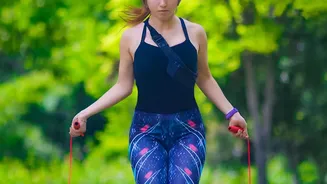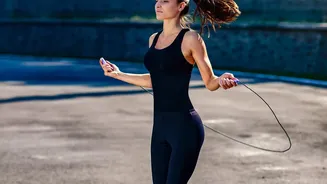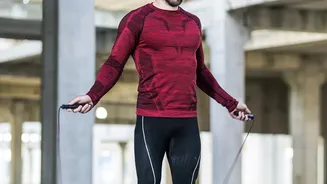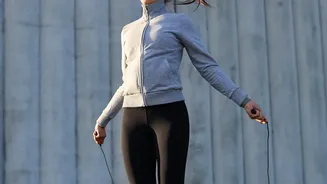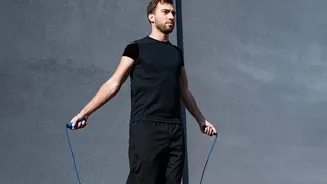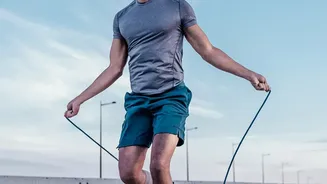




Jumping rope is one of the most efficient and accessible workouts available. But before you start skipping, your success begins from the ground up. The right space and footwear are not just details; they are crucial for preventing injury.
Finding Your Perfect Jump Space
Where you jump
matters just as much as how you jump. The ideal surface provides a balance of firmness and forgiveness. Hard, unforgiving surfaces like concrete or tile can be tough on your joints, leading to shin splints or knee pain. If you must jump on a hard surface, using a mat is highly recommended. Suspended wood floors, like those in a basketball court or dance studio, are often considered the gold standard because they offer natural shock absorption. Other excellent options include rubber gym flooring, running tracks, and even dense carpeting. Whatever surface you choose, ensure you have enough space. You'll need a clear area not just above your head but also in front and behind you to allow the rope to turn without snagging on furniture or walls.
The Foundation: Choosing The Right Footwear
The right shoes protect your feet and joints by absorbing impact. Look for shoes with good forefoot cushioning, as this is where you land with each jump. Unlike running shoes that often stack cushioning in the heel, the best shoes for skipping provide support under the ball of the foot. Cross-training shoes are often a great all-around choice because they are designed for high-impact, multi-directional movements. They typically feature a stable, flat sole, a firm midsole, and a secure upper to prevent your foot from sliding. While you can use running shoes, especially for shorter sessions, be wary of those with very thick, soft soles, as they can feel unstable and increase the risk of rolling an ankle. Ultimately, the best shoe should feel lightweight and supportive, allowing for agility without sacrificing protection.
Do You Really Need a Jump Rope Mat?
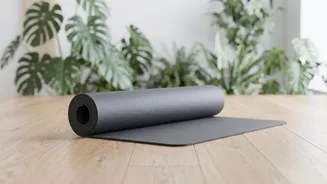
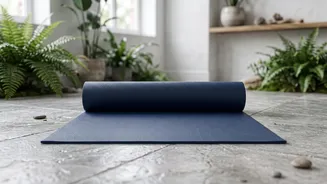
A jump rope mat is a valuable tool, especially if you regularly train on hard surfaces. Its primary benefit is shock absorption, which helps protect your joints from repetitive impact and can prevent injuries like shin splints. A good mat also extends the life of your jump rope by providing a smooth, non-abrasive surface that prevents the cable from fraying or splitting, a common issue on concrete or asphalt. Furthermore, a mat offers a consistent and non-slip surface, which can improve your performance and make it possible to jump almost anywhere, from a tiled floor at home to a patch of grass outside. They also have the added benefit of dampening the noise of your workout, something your family or neighbours will surely appreciate.
Common Mistakes and How to Avoid Them
Two of the most common mistakes beginners make are choosing the wrong surface and wearing inadequate footwear. Jumping barefoot on a hard floor, for example, sends the entire shock of landing through your feet and up into your joints with no buffer. While some experienced jumpers prefer minimalist shoes for better ground-feel, beginners are safer starting with cushioned, supportive shoes until their form is solid. Another frequent error is using worn out shoes. The foam in athletic shoes loses its ability to absorb shock long before the shoe looks visibly worn. If your landings start to feel harsh or your feet ache, your shoes may be the culprit. Finally, avoid shoes that are too heavy or have an excessively high heel, as they can interfere with the rhythm and efficiency of your jumping.