



How Webb 'Sees' Water Across Light-Years
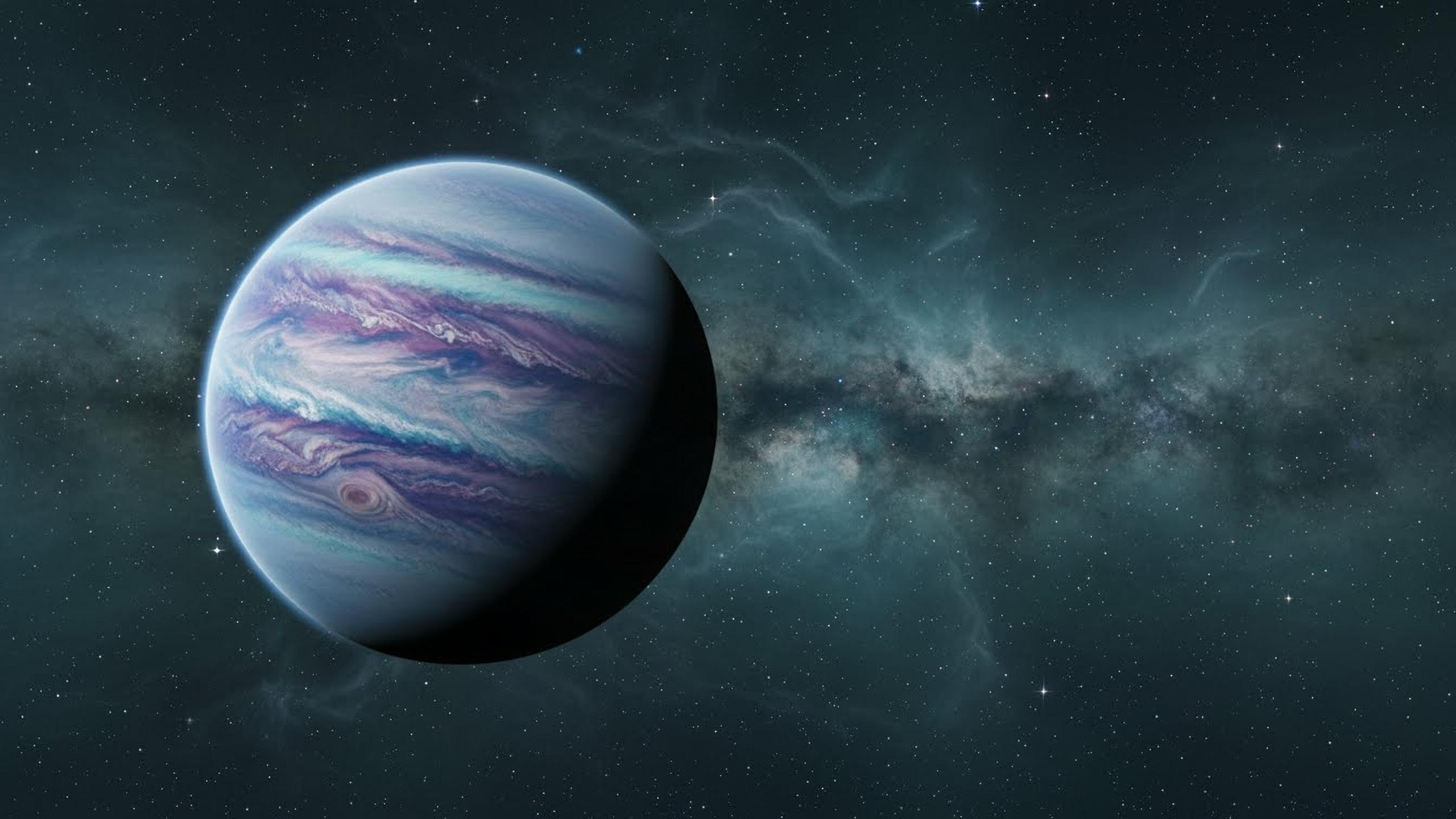
Imagine trying to figure out the air quality of a city from hundreds of kilometres away, using only a streetlight. This is the challenge astronomers face, and their clever solution is called transmission spectroscopy. When an exoplanet—a planet outside
our solar system—passes in front of its host star, a tiny fraction of the starlight filters through the planet's atmosphere. The James Webb Space Telescope's highly sensitive instruments, like its Near-Infrared Spectrograph (NIRSpec), can capture this filtered light. Molecules in the planet's atmosphere absorb very specific colours, or wavelengths, of this light. Water vapour, for example, leaves a distinct and recognisable pattern of missing light, like a chemical fingerprint or a unique barcode. By reading this 'barcode' in the starlight, scientists can confirm the presence of water from light-years away, a feat that was once the stuff of science fiction.
From Gas Giants to Rocky Worlds
Webb's early observations successfully confirmed water in the atmospheres of hot gas giants like WASP-96 b, proving the technology worked as expected. But the real prize is finding water on smaller, rocky planets, which are more analogous to Earth. Recently, astronomers announced the unambiguous detection of water vapour, along with carbon dioxide, on a temperate rocky exoplanet located just 48 light-years away, marking a huge step in characterising worlds within their star's habitable zone. This builds on other landmark discoveries, such as the detection of water in the atmosphere of GJ 9827d, the smallest exoplanet to date to have its atmospheric water signature identified. These findings are crucial because they demonstrate Webb's ability to probe the atmospheres of the very types of planets that could potentially harbour life, pushing us closer to understanding worlds that are truly Earth-like.
Is It a Water World or a Steamy Sauna?
Detecting water vapour is just the first, tantalising clue. The context is everything. The case of GJ 9827d perfectly illustrates this point. While water is present, the planet is as hot as Venus, with a scorching surface temperature of around 425 degrees Celsius, making it completely inhospitable. The data leaves scientists with two exciting possibilities: either the planet is a 'mini-Neptune' with a hydrogen-rich atmosphere that contains some water, or it is a new type of planet altogether—a 'steam world' with an atmosphere predominantly made of water. This distinction is vital. It shows that the ultimate goal is not just to ask 'Is there water?' but to ask 'In what form, at what temperature, and under what pressure?' Answering these questions helps astronomers build a complete picture of a planet's climate and determine if conditions could ever allow for liquid water to exist on its surface, a key ingredient for life as we know it.
Water from the Very Beginning
One of the most profound questions in planetary science is how Earth got its water. Did it arrive late, delivered by icy comets and asteroids, or was it present from the start? The Webb telescope has provided a groundbreaking clue from 370 light-years away, in a young solar system called PDS 70. There, Webb detected abundant water vapour in the inner, planet-forming disk of dust and gas, the very region where rocky, terrestrial planets are thought to be assembling. This was the first time water has been found this close to a star in a disk that is already known to host planets. The discovery is incredibly exciting because it suggests that rocky planets can be 'born wet'. This means worlds like our own may have water available to them from their very formation, baked in as a fundamental ingredient rather than added later. This significantly increases the odds that other rocky planets forming across the galaxy could have this essential component for life right from the start.