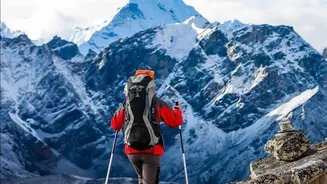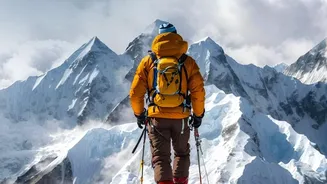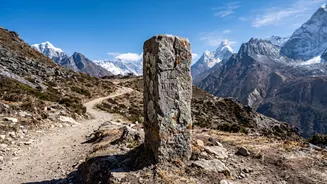





The dream of trekking through Nepal’s majestic Himalayas has long captivated Indian adventurers. But recent reports of Indian hikers facing penalties have served as a stark reminder that the rules of the trail have changed significantly.
A Cautionary Tale on the Trail
Recent events
have cast a spotlight on a critical shift in Nepal's tourism policy. According to reports from local media outlets in Nepal, a group of Indian hikers was recently penalised for trekking without a licensed guide in a restricted area. The trekkers were reportedly found violating regulations that have been in effect for over a year, leading to official action by tourism authorities. While the exact penalties in this specific case are still being confirmed, the incident serves as a crucial wake-up call for the thousands of Indians who travel to Nepal for adventure tourism each year. The era of spontaneous, solo trekking in many of Nepal's famed regions is over, and understanding the new landscape is essential for a safe and legal journey.
The End of Solo Trekking As We Knew It
The core of the issue lies in a major policy change implemented by the Nepal Tourism Board. Since April 1, 2023, it has been mandatory for all foreign trekkers, including those from India, to hire a licensed guide for their treks. Furthermore, the old system of obtaining a permit as a Free Independent Trekker (FIT) has been discontinued. This means you can no longer simply pack your bag, grab a permit, and head for the mountains on your own. The government's stated reason for this significant change is to enhance trekker safety and create more employment opportunities within its tourism sector. The rule was prompted by a rising number of incidents involving trekkers going missing or facing life-threatening situations while hiking alone in remote, high-altitude environments.
What a 'Mandatory Guide' Really Means
The new regulation requires every group of foreign trekkers to be accompanied by a guide licensed by the Nepali government. You cannot hire just anyone; the guide must be registered with an authorised trekking agency in Nepal. This ensures that trekkers are led by professionals who are familiar with the terrain, weather patterns, and emergency protocols. In addition to the guide, trekkers must still obtain a Trekkers' Information Management System (TIMS) card through their chosen agency. This card is crucial for tracking and rescue operations. While this adds a layer of planning and cost to the trip, it also provides an invaluable safety net. The guide is not just a navigator but a cultural liaison, a first responder in case of an accident, and a source of local knowledge that can enrich the entire trekking experience.
Planning Your Trek Under the New Rules
For Indian travellers planning a trek, the process now starts with research and booking, not at the trailhead. You must connect with a government-registered trekking agency in Kathmandu or Pokhara. These agencies will handle the entire process, from securing your new TIMS card and any necessary national park permits to assigning a qualified guide. The cost of hiring a guide can vary, but generally ranges from $25 to $40 per day, which typically includes the guide's food, accommodation, and insurance. While this increases the overall budget, splitting the cost with a group can make it more manageable. It's a fundamental shift from the budget-friendly, independent treks many were accustomed to, requiring more forethought and financial planning.
The Consequences of Breaking the Rules
The penalties for flouting these regulations are serious and go beyond a simple slap on the wrist. As the recent incident with the Indian hikers illustrates, authorities are actively enforcing the new system. Trekkers caught without a guide or a valid TIMS card can face significant fines. Beyond financial penalties, they risk having their trek cut short, being escorted back to the city, and potentially facing legal action or deportation for violating the country's tourism laws. More importantly, trekking without a guide not only puts you at legal risk but also at physical risk. In an emergency, without a registered guide, your travel insurance may be voided, and coordinating a rescue becomes infinitely more complicated and expensive. The rules are in place for safety, and ignoring them can have severe consequences.