







The New Resume is a Portfolio
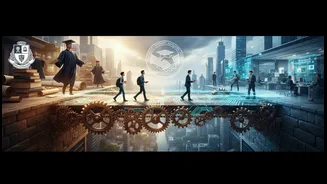
For decades, a student’s resume was a predictable document: grades, a degree, and maybe an internship. But in today’s competitive job market, companies are seeking more. They want to see what a candidate can do, not just what they have studied. Enter
the portfolio: a curated collection of projects that showcases a student's practical skills, problem-solving abilities, and creativity. Unlike a resume which lists skills, a portfolio demonstrates them. For an engineering student, this could be a robot built for a competition; for a marketing student, a detailed campaign strategy for a local business; for a coder, a live app they developed. It's the difference between saying you can cook and showing someone a delicious meal you made.
Why the Shift to 'Proof of Work'?
Several factors are driving this trend. Firstly, employers are finding that traditional academic scores do not always translate to real-world performance. A student with a 9.0 GPA might struggle with teamwork or creative problem-solving—skills that are essential in the modern workplace. Project-based learning, which often results in portfolio-worthy pieces, helps develop these crucial 21st-century skills like critical thinking, collaboration, and communication. Secondly, the nature of work itself is changing. With the rise of the gig economy and remote work, many roles are project-based. A strong portfolio signals to a potential employer that a candidate can manage a project from start to finish and deliver tangible results. It shows initiative beyond the prescribed curriculum.
How Universities Are Responding
Educational institutions in India are taking note. Many are integrating project-based learning directly into their curriculum, aligning with the goals of the National Education Policy (NEP) 2020. Career services departments, once focused on resume-building workshops, are now helping students curate digital portfolios on platforms like LinkedIn and GitHub. Some universities are forming partnerships with industries to create capstone projects where students tackle real-world business challenges. These initiatives not only provide students with valuable content for their portfolios but also bridge the gap between academic theory and industry practice, making graduates more job-ready.
What Do Employers Want to See?
A portfolio isn't about quantity; it's about quality and context. Employers are not impressed by a 50-page document listing every assignment ever completed. They want to see a few strong projects that are relevant to the job they are hiring for. Crucially, they want to understand the process. A good portfolio doesn't just show the final polished product; it tells the story behind it. What was the problem you were trying to solve? What was your role in the team? What challenges did you face, and how did you overcome them? Including sketches, early drafts, and reflections shows a level of critical thinking and self-awareness that employers value highly.
Building Your First Portfolio
For students daunted by the idea, starting is simpler than it seems. Begin by documenting the projects you are already doing for your coursework. Take photos, save drafts, and write a short summary of each project upon completion. Look for opportunities outside of class—participate in hackathons, volunteer for a non-profit, or start a personal passion project. The key is to choose projects that genuinely interest you, as your passion will shine through in the final presentation. Online platforms offer easy-to-use templates to create a professional-looking digital portfolio without needing any coding skills. Start small, stay consistent, and remember that your portfolio is a living document that will grow and evolve with you throughout your career.