





The Race Against Time
For rose growers around Bengaluru, the business has always been a high-stakes race against time. A harvested rose is incredibly perishable; its delicate nature means its value plummets with each passing hour. This vulnerability creates immense pressure
on farmers. Without access to adequate cooling facilities, they are often forced to sell their entire harvest on the same day, regardless of market prices. This leads to a situation where a glut in supply can cause prices to crash, leaving farmers with meagre profits for their hard work. Studies have shown that across India’s horticulture sector, post-harvest losses can be as high as 30 to 40 percent, primarily due to the lack of a consistent cold chain from farm to market. For an industry built on beauty and freshness, this level of waste is a constant economic burden.
A Sustainable Innovation Takes Root
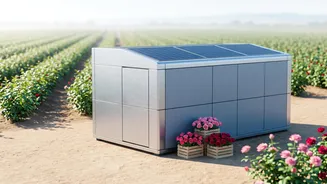
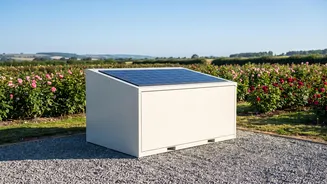
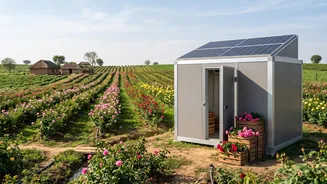
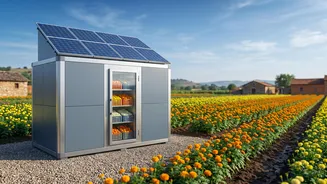
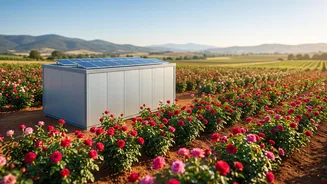
Enter the solar-powered cold hub: a game-changing solution that is beginning to reshape the landscape for small and marginal farmers. These are not massive, centralized industrial facilities, but rather modular, farm-level walk-in coolers powered entirely by the sun. Companies across India have developed these portable units specifically for rural areas where electricity can be unreliable or completely unavailable. By harnessing solar energy, these hubs provide consistent, low-cost cooling right where it's needed most—at the source. This allows farmers to pre-cool their freshly cut roses, immediately halting the deterioration process and preserving their quality and value. It's a simple yet powerful intervention that directly addresses the industry's most significant bottleneck.
How the Technology Works
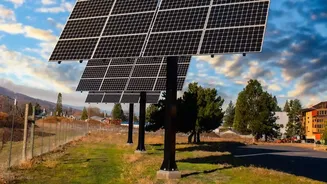
The genius of these systems lies in their simplicity and sustainability. Rooftop solar panels capture sunlight to power a refrigeration unit that cools the insulated chamber. What makes many of these new-generation hubs particularly innovative is their use of thermal energy storage instead of conventional chemical batteries. Some systems use technology that essentially creates and stores ice or other thermal materials during peak sunlight hours. This stored energy is then used to maintain a cool temperature, often between 4°C and 10°C, for over 30 hours without any sun. This provides a reliable 24/7 cooling solution without the high maintenance and environmental concerns of battery banks or the cost and pollution of diesel generators. Some advanced models even feature mobile apps that allow farmers to monitor and control the temperature and humidity remotely, ensuring optimal conditions for their specific crop.
From Surviving to Thriving
The impact on the ground is transformative. With access to on-farm cold storage, rose farmers are no longer at the mercy of daily market fluctuations. Instead of selling immediately, they can safely store their flowers for days, and in some cases, for up to three weeks. This newfound power allows them to consolidate their harvest, wait for favourable prices during peak demand periods like festivals and weddings, and negotiate with buyers from a position of strength. The results are tangible: reports from across the country show farmers doubling their income or gaining access to more distant, lucrative markets. By drastically reducing spoilage, these hubs not only boost farmer profits but also cut down on the immense food and flower waste that plagues the agricultural sector.
A Blueprint for Indian Agriculture
While Bengaluru’s rose growers are seeing significant benefits, this technology's potential extends far beyond floriculture. These solar cold hubs are being successfully deployed across India for a wide range of perishable goods, including fruits, vegetables, and dairy products. From tomato farmers in Maharashtra to litchi growers in Bihar, the story is the same: access to affordable, sustainable cold storage empowers farmers, stabilizes supply chains, and enhances food security. Government bodies and development organizations have recognized this potential, supporting initiatives to make this technology more accessible to farmer producer organizations and smallholders. This innovation represents a crucial step towards building a more resilient and profitable agricultural future for India, one powered by the sun.