




Living with asthma means being mindful of your breath. While medication is essential, specific breathing exercises can be a powerful tool for managing symptoms. This guide explores gentle practices and, crucially, their important safety limits.
Why Controlled Breathing Can Help
When you
have asthma, shortness of breath can be a frequent and distressing symptom. Breathing exercises work by helping you gain control over your breathing patterns. Techniques can strengthen respiratory muscles, improve the exchange of oxygen and carbon dioxide, and help calm the anxiety that often accompanies breathing difficulties. By practising when you are calm, you can build the muscle memory needed to support yourself during moments of breathlessness or physical activity. These practices aim to make each breath more efficient, keeping airways open longer to clear trapped air and reduce the overall effort of breathing.
Beginner Practice: Pursed-Lip Breathing
Pursed-lip breathing is one of the simplest and most effective techniques, especially during shortness of breath. It slows your breathing rate, relieves breathlessness, and releases air trapped in the lungs. To do it, relax your neck and shoulders. Inhale slowly through your nose for a count of two. Then, purse your lips as if you're about to whistle or gently blow out a candle and exhale slowly through your mouth for a count of four or longer. The key is to make your exhale at least twice as long as your inhale without forcing the air out. You can practice this anytime to feel more in control of your breath.
Strengthening Your Core: Diaphragmatic Breathing
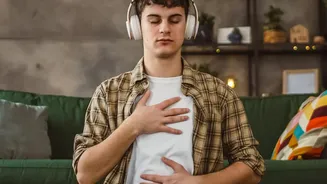
Also known as 'belly breathing', this technique focuses on strengthening your diaphragm, the large muscle below your lungs that is essential for efficient breathing. Many people tend to be 'chest breathers', using smaller muscles in the upper chest and shoulders. Diaphragmatic breathing helps you take deeper, more effective breaths, which can reduce your body's oxygen demand. To practice, lie comfortably or sit in a chair. Place one hand on your upper chest and the other on your belly. Breathe in slowly through your nose, focusing on making your belly rise while your chest stays relatively still. Then, exhale slowly through your mouth, feeling your belly fall. Practicing this for 5-10 minutes daily can make it a natural habit.
Exploring Other Methods: Buteyko and Yoga
You may have heard of other methods like the Buteyko technique or yogic breathing (pranayama). The Buteyko method is based on the idea of reducing over-breathing (hyperventilation) and encourages slow, gentle, nasal breathing. Some studies suggest it can help reduce asthma symptoms and the need for reliever medication for some people. Similarly, yoga practices like alternate nostril breathing focus on calming the nervous system and controlling the breath. While many find these beneficial, they are often more complex than basic pursed-lip or diaphragmatic breathing and are best learned under the guidance of a qualified instructor who understands asthma.
The Crucial Limits: When to Be Cautious
The most important rule is that breathing exercises are a supplement to, not a replacement for, your prescribed asthma medication. Never stop taking your medication without consulting your doctor. Crucially, do not attempt to use these exercises to manage a severe asthma attack. If you are experiencing significant shortness of breath, coughing, or wheezing that doesn't improve, use your reliever inhaler as prescribed and seek immediate medical help if symptoms persist. Also, if any exercise causes you to feel more breathless, dizzy, or panicked, stop immediately. Your body’s comfort is the ultimate guide.
Integrating Breathing Practice Safely
The best time to learn and practice these techniques is when your asthma is wellcontrolled and you feel calm. Think of it as training for the times you might need it. Before starting any new regimen, it's vital to speak with your doctor. They can ensure the practices are appropriate for you and your specific condition. If you plan to exercise, a proper warmup and cooldown are essential. Activities in warm, moist air, like swimming, are often better tolerated than exercising in cold, dry air, which can be a trigger for some. Always carry your reliever inhaler with you.