








Ahmedabad-Rajkot Semi-High Speed Rail
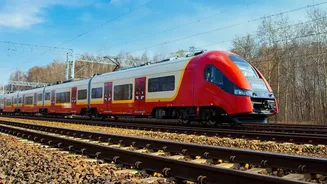
One of the most anticipated projects is the Ahmedabad-Rajkot semi-high-speed rail line. This 227-km corridor, designed for trains running at a top speed of 160 km/h, aims to slash travel time between the two major cities to just two hours, a significant
reduction from the current 4.5 hours by road. Promoted by the Gujarat Rail Infrastructure Development Corporation (G-RIDE), the project is currently in the approved and tendering stage. By connecting to the Mumbai-Ahmedabad bullet train project at Sabarmati, it will effectively create a high-speed link from Rajkot to Mumbai, cutting that journey time from 12 hours to under five. The line is poised to be a game-changer for business and leisure travel to the Saurashtra region.
Boosting Freight with Dedicated Corridors
On the freight front, the complete operationalisation of the Western Dedicated Freight Corridor (WDFC) is a landmark achievement. Recent inaugurations of key sections like Sanand-Makarpura mean the entire corridor is now functional, providing a high-speed, high-capacity artery for goods movement. This is complemented by the development of Gati Shakti Multi-Modal Cargo Terminals (GCTs), such as the one at New Sanjali near Surat. These terminals integrate rail, road, and warehousing, allowing for faster and more efficient transport of goods from industrial hubs like Ankleshwar and Dahej to major ports, reducing logistics costs and easing congestion on highways.
Upgrading to Broad Gauge
A quiet revolution is happening as Indian Railways converts old metre-gauge lines to broad gauge, unifying the network for more efficient operations. Recently, century-old lines from the princely state of Baroda's railway network, like the Kalol-Kadi-Katosan Road section, have been upgraded. Similarly, the conversion of the Dhasa-Jetalsar section means the entire line is now broad gauge, improving connectivity for the Botad, Amreli, and Rajkot districts. These upgrades allow for faster, heavier trains and provide new, direct routes, such as connecting the Amreli region with Somnath and Porbandar. The recently completed Ahmedabad-Udaipur broad gauge line has also opened up a vital new link between Gujarat's tribal areas and North India.
New Lines and Capacity Expansion
Several new lines and track doubling projects are set to ease congestion and connect new areas. Foundation stones have been laid for adding third and fourth lines on the busy Vadodara-Ratlam section, a critical link between Gujarat and Madhya Pradesh on the Delhi-Mumbai corridor. The doubling of the Vishwamitri-Dabhoi line will also improve capacity and is expected to enhance connectivity towards the Statue of Unity. Furthermore, new lines are being developed to connect tribal and remote areas, such as the Jobat-Tanda Road line, which is part of the Chhota Udepur-Dhar project, bringing the national rail network to previously underserved regions. The under-construction Indore-Dahod line will further reduce travel distances and connect new industrial zones.
World-Class Station Redevelopment
The travel experience is also being enhanced through the ambitious redevelopment of major railway stations. Ahmedabad station is being transformed into a massive multimodal transport hub, with its design inspired by the Modhera Sun Temple. The project aims to integrate the railway station with the bullet train, metro, and bus systems, catering to a projected daily footfall of over 300,000 passengers. Stations across Gujarat are being modernised under a nationwide scheme, equipping them with better passenger amenities, digital information systems, and improved accessibility, ensuring that the infrastructure keeps pace with the growing demands of modern travel.