

Eyes on the Sky
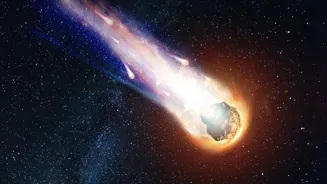
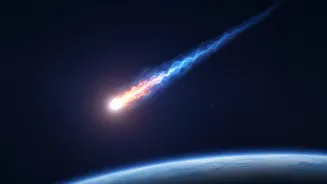
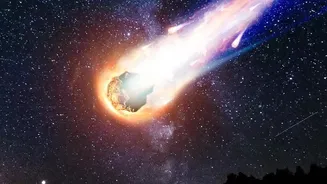
The first step is detection. While many sightings still come from casual stargazers, a global network of sophisticated cameras now stands guard. Projects like NASA's All-Sky Fireball Network and the Global Meteor Network use specialised, wide-angle cameras to
constantly monitor the skies. These systems, often hosted by universities and even amateur astronomers, run software that automatically flags the tell-tale streak of a meteor. By having multiple cameras with overlapping fields of view, scientists can triangulate the meteor's position with incredible accuracy. Even weather radar can sometimes detect the passage of a meteor, especially larger ones, and can help track debris as it falls.
Decoding the Light
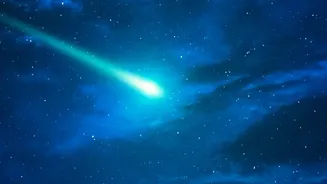
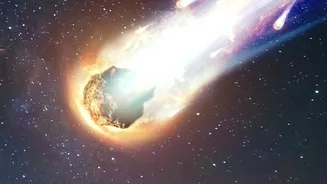
A meteor's light is more than just a pretty glow; it's a chemical fingerprint. As the meteoroid burns up in the atmosphere, it vaporises, and the superheated gas emits light. Scientists use an instrument called a spectrometer, which works like a high-tech prism, to break this light down into its component wavelengths. Each element—like iron, magnesium, or sodium—burns with a unique colour signature. By analysing this spectrum, researchers can determine the chemical composition of the meteoroid without ever touching it. This technique, called spectroscopy, provides instant clues about the object's origin, whether it was a piece of a rocky asteroid or an icy comet.
Calculating the Journey
Once a meteor is captured by multiple cameras, the real number-crunching begins. By combining the data from different viewpoints, scientists can build a 3D model of its path through the atmosphere. This allows them to calculate its speed, trajectory, and deceleration. Working backwards, they can even determine its original orbit around the sun, which helps pinpoint where in the solar system it came from. More importantly for people on the ground, this data allows them to predict if any pieces survived the fiery descent. They can calculate a potential landing area, known as a 'strewn field,' narrowing down the search for any fragments that made it to the surface.
The Search for Fallen Stars
When calculations suggest a meteorite (the name for a meteor that survives and hits the ground) may have landed, the hunt begins. These fallen space rocks are scientifically priceless. Visually, they often have distinct features. A thin, dark, glassy layer called a fusion crust forms as the surface melts during atmospheric entry. Many also have shallow, thumbprint-like indentations called regmaglypts, sculpted by the intense heat and air pressure. Because most meteorites contain significant amounts of iron and nickel, they are typically much denser than Earth rocks and will attract a magnet, which is a key field test for meteorite hunters.
Secrets Written in Stone
In the lab, a meteorite becomes a time capsule. Scientists slice off small pieces for detailed analysis. Techniques like mass spectrometry reveal the precise isotopic ratios of different elements, which can be used to determine the rock's age—often dating back to the formation of our solar system itself. Electron microscopes and CT scans reveal the rock's internal structure, identifying minerals and tiny, ancient grains called chondrules. Some carbon-rich meteorites, known as carbonaceous chondrites, even contain organic molecules and water, providing crucial clues about the building blocks of life that may have been delivered to a young Earth.