





The Challenge of Urban Stargazing
The main obstacle for any city-based astronomer is light pollution. The overwhelming glow from streetlights, buildings, and cars creates a haze called 'skyglow' that washes out all but the brightest celestial objects. For a beginner, this makes it nearly
impossible to distinguish a planet from a distant aeroplane or a bright star. On top of that, buildings and trees often block large parts of the sky, making it hard to know if you're even looking in the right direction for a planet like Jupiter. This combination of factors can make the hobby feel inaccessible before you even start.
Your Phone as a Pocket Planetarium
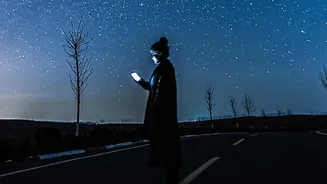
This is where skywatching apps transform the experience. Using your phone's built-in GPS, compass, and gyroscope, these apps know your exact location and which way you're pointing your device. They generate a real-time map of the sky above you, identifying stars, constellations, satellites, and planets. Apps like Star Walk 2, SkyView Lite, and Stellarium essentially act as a digital guide, removing the guesswork entirely. All you have to do is point your phone towards the sky, and the app will show you exactly what you're looking at.
Augmented Reality Cuts Through the Haze
The most powerful feature for city beginners is augmented reality (AR). Many apps use your phone's camera to overlay their star map directly onto your live view of the sky. So, as you look at your screen, you'll see the faint dot you spotted and the app will label it for you: "Jupiter." This simple act of identification is a massive confidence booster. It confirms that the bright 'star' you're looking at is, in fact, the largest planet in our solar system. The app tells you precisely where to look, helping your eyes find objects that are bright enough to punch through the city's light pollution.
Finding a Giant Like Jupiter
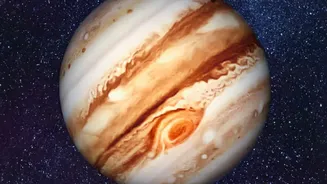
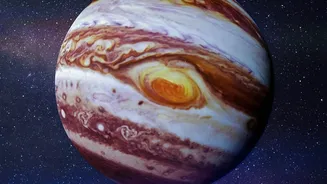
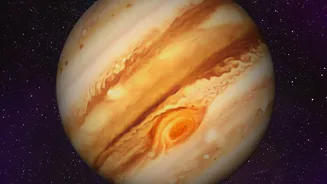
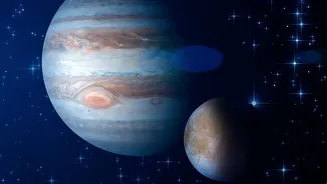
Jupiter is one of the brightest objects in the night sky, making it a perfect target for urban stargazers. Even in a light-polluted area, it appears as a brilliant, steady point of light that doesn't twinkle as much as stars do. Toward the end of August 2026, Jupiter rises in the east in the pre-dawn sky, becoming a little higher and easier to spot each day. An app makes finding it simple: you can use its search function to locate Jupiter and then follow an on-screen arrow that guides your phone—and your eyes—to the correct position on the horizon. Even if it's low in the sky, the app confirms you've found it.
Beyond the Brightest Planets
Once you get the hang of spotting Jupiter, these apps open up the rest of the visible sky. You can use them to trace the shapes of major constellations like Ursa Major or Orion, which are often partially visible from cities. You can also get alerts for when the International Space Station (ISS) will be passing overhead—a surprisingly bright and fast-moving object that's thrilling to watch. Some apps even provide a calendar of celestial events, like meteor showers or conjunctions, when planets appear close to each other in the sky.
Tips for Your First Night Out
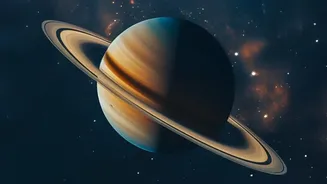
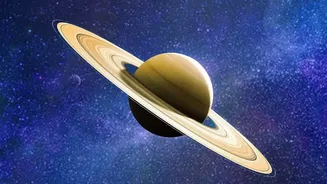
Ready to give it a try? First, download a free or beginner-friendly app to get started. Find the safest spot you can with the widest possible view of the sky, like a park, an open field, or even a high balcony. Give your eyes at least 15-20 minutes to adjust to the darkness; you’ll be surprised by how many more stars become visible. Don't try to find everything at once. Pick one bright target—like Jupiter, Saturn, or Venus—and focus on finding that. The goal is not to become an expert overnight, but to experience the simple joy of connecting with the cosmos above.