



The Universe’s Speed Limit
Everything you see is thanks to light. But light, while incredibly fast, does not travel instantly. It moves at a breathtaking but finite speed: about 300,000 kilometres per second. This means that for any object, there's a delay between when light leaves
it and when it reaches your eyes. Think of it like thunder and lightning. You see the flash instantly, but the sound, which travels much slower, arrives seconds later. On an astronomical scale, the distances are so vast that even light takes a significant amount of time to cross them. This delay is called 'lookback time'. When we look at a celestial object, we are seeing it as it was when the light left it, not as it is right now. The night sky isn't a snapshot of the present; it's a collage of different pasts.
A Journey Through Our Cosmic Neighbourhood
This effect happens even within our own solar system. The sunlight warming your face isn't 'live'. It took about 8 minutes and 20 seconds to travel from the Sun to Earth. If the Sun were to suddenly vanish, we wouldn't know for over eight minutes. The effect becomes more dramatic when we look at stars. The closest star system to ours is Alpha Centauri, about 4.3 light-years away. A light-year is the distance light travels in one year—a staggering 9.5 trillion kilometres. So, the light we see from our nearest starry neighbour tonight actually left it in late 2020. Sirius, the brightest star in our night sky, is about 8.6 light-years away. When you gaze at its brilliant blue-white glow, you're seeing light that started its journey when a child born today would be starting third grade.
Peeking into Human History
This is where the 'time travel' gets truly profound. Many of the familiar stars in our sky are hundreds of light-years away. Take Polaris, the North Star. It's approximately 430 light-years from Earth. The faint photons of light hitting your retina tonight left Polaris around the year 1594, during the height of Emperor Akbar's reign in the Mughal Empire. You are literally seeing light from another era of human history. Or consider Betelgeuse, the giant red star in the Orion constellation. It's about 640 light-years away. The light we see from it now began its journey around the year 1384, when the Tughlaq dynasty was ruling the Delhi Sultanate. Every time you look at these stars, you are peering back across centuries, witnessing light that is older than many of the cities and monuments we cherish today.
Voyage to Deep Time
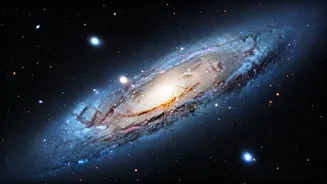
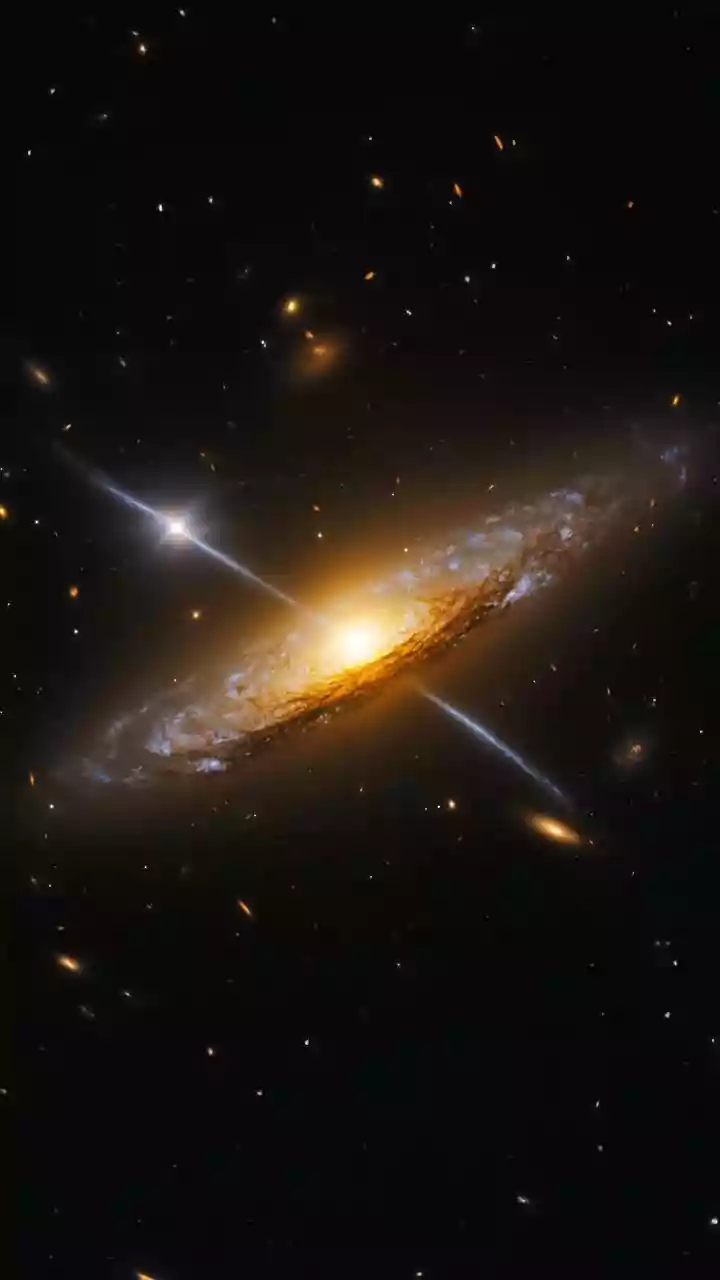
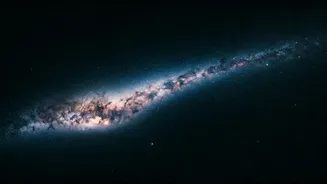
And we can go back even further. With a good pair of binoculars on a dark night, away from city lights, you might be able to spot a faint, fuzzy patch in the sky. This is the Andromeda Galaxy, our closest major galactic neighbour. It may not look like much, but that smudge of light is on a journey of its own. It’s 2.5 million light-years away. The light you see from Andromeda tonight left before modern humans, Homo sapiens, even walked the Earth. You are looking at light that is older than our entire species. This isn't science fiction; it's the fundamental reality of our universe. The farther we look into space, the deeper we look into time. Powerful telescopes like the James Webb Space Telescope are essentially time machines, designed to capture light from the very first galaxies that formed over 13 billion years ago.