






Why Protein is Key for Recovery
After any strenuous exercise, your muscles experience tiny micro-tears. Protein is the essential nutrient your body uses to repair this damage, which in turn helps muscles grow stronger. This repair process, known as muscle protein synthesis, requires
a sufficient supply of amino acids, the building blocks of protein. Consuming protein shortly after a workout helps kickstart this process, reducing muscle soreness and promoting faster recovery. While whey protein, derived from dairy, has long been the gold standard, a growing number of people are seeking plant-based alternatives for reasons ranging from lactose intolerance to environmental concerns.
Pea Milk: The Protein Powerhouse
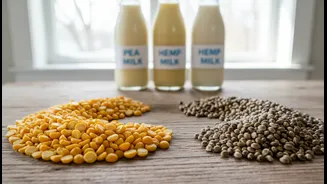
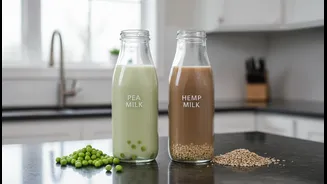
One of the frontrunners in the high-protein plant milk category is pea milk. Made from yellow split peas, it’s surprisingly creamy and packs a powerful protein punch. An unsweetened cup of pea milk contains around 8 grams of protein, the same amount found in a cup of cow's milk and significantly more than the 1 gram typically found in almond milk. Importantly, pea protein is considered a 'complete' protein, meaning it contains all nine essential amino acids your body can't produce on its own. While it is slightly lower in one amino acid, methionine, studies have shown that pea protein is nearly as effective as whey for promoting muscle growth and repair when consumed after exercise. This makes it an excellent, allergen-friendly option for those avoiding dairy, soy, and nuts.
Hemp Milk: More Than Just Protein
Hemp milk, made from the seeds of the hemp plant, is another strong contender, though for slightly different reasons. While its protein content is lower than pea milk's, typically around 3-5 grams per cup, it offers a complete amino acid profile, including all nine essential ones. What sets hemp milk apart is its impressive content of healthy fats. It boasts an ideal ratio of omega-6 to omega-3 fatty acids, which have anti-inflammatory properties. Since intense exercise can trigger inflammation, consuming hemp milk post-workout may help manage this response, potentially soothing muscle soreness and aiding overall recovery. It's also a good source of minerals like iron and magnesium, which are crucial for energy and muscle function.
How They Compare to Other Milks
So, how do pea and hemp stack up against other popular choices? Compared to dairy milk, unsweetened pea milk offers the same protein with fewer carbohydrates and less sugar. Soy milk is its closest plant-based rival, also offering around 7-8 grams of complete protein per cup. However, pea and hemp are great alternatives for those with soy allergies. Other popular plant milks like almond, oat, coconut, and rice milk are generally low in protein, often containing just 1-3 grams per serving unless they are fortified with a protein source like pea protein. While oat milk offers a creamy texture popular in cafes, it's higher in carbohydrates and lower in protein, making it less ideal for a recovery-focused drink.
Making the Right Choice for Your Recovery
Choosing the best milk for your post-workout shake depends on your priorities. If maximising protein intake is your primary goal, pea milk is one of the strongest plant-based options available, rivalling dairy and soy. If you're looking for a more holistic recovery aid that combines moderate protein with anti-inflammatory fats, hemp milk is an excellent choice. Both are also considered more sustainable crops than almonds, which require significant water, and they provide a great option for people with common allergies. When shopping, always look for unsweetened varieties to avoid unnecessary added sugars that can negate some of the health benefits.