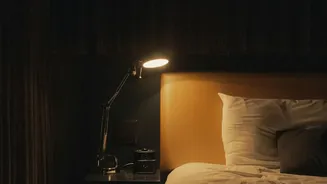








Your Body's Master Clock
Deep within your brain is a master clock called the suprachiasmatic nucleus (SCN), which governs your circadian rhythm — the 24-hour cycle that controls when you feel sleepy and when you feel alert. The most powerful signal you can give this clock is light.
Exposing your eyes to light tells your body it’s time to be awake, while darkness signals that it’s time to wind down. When this rhythm is stable, it regulates everything from hormone release to mood and energy levels. By strategically using morning sunlight and evening darkness, you can anchor this natural cycle, leading to more consistent and restorative sleep.
The Morning Sunlight Prescription
The single most effective way to set your internal clock for the day is to get direct sunlight exposure within 30 to 60 minutes of waking. This early light exposure triggers a healthy rise in the hormone cortisol, which helps you feel alert and focused, and suppresses melatonin, the hormone that makes you sleepy. This morning signal also starts a timer for your body to begin producing melatonin again roughly 14 to 16 hours later, preparing you for sleep that evening. Aim for 5 to 10 minutes of sunlight on a clear day. If it's overcast, you'll need longer, around 15 to 20 minutes, because cloud cover filters the light's intensity. Importantly, this needs to happen outdoors. Getting light through a window isn't as effective because glass filters out much of the beneficial light spectrum. You don't need to stare at the sun; just being outside without sunglasses is enough.
Why Complete Darkness Matters at Night
Just as morning light tells your body to wake up, darkness tells it to sleep. Exposure to light at night, especially blue light from phones, tablets, and even streetlights filtering into your bedroom, can suppress and delay your body's natural release of melatonin. Even very low levels of light during sleep can disrupt your circadian rhythm, fragment sleep, and reduce the time you spend in deep, restorative stages. This disruption doesn't just make you feel groggy; chronic poor sleep is linked to a higher risk of mood swings, weakened immunity, and impaired cognitive performance. To protect your sleep, the goal is to make your bedroom as dark as possible.
Creating a Sleep Sanctuary with Blackout Shades
Blackout shades or curtains are a highly effective tool for creating an ideal dark environment. They are designed to block more than 90% of external light, preventing streetlights, car headlights, and early morning sun from disrupting your sleep. This helps maintain your body's melatonin production and supports a more consistent sleep cycle. Beyond light-blocking, these window treatments can also offer a layer of thermal insulation, helping to keep your room cooler in the summer and warmer in the winter. Some studies suggest they can also provide a minor reduction in outside noise. For those who are particularly light-sensitive or shift workers who need to sleep during the day, blackout shades can be transformative.
Putting It All Together for Better Sleep
To get the most benefit, combine these two strategies into a daily routine. Make morning sunlight a non-negotiable part of your wake-up process. Try drinking your morning tea or coffee outside, or taking a brief walk. In the evening, an hour or two before your desired bedtime, begin dimming the lights in your home to signal to your body that the day is ending. Finally, ensure your bedroom is a true sanctuary for sleep: cool, quiet, and completely dark. This powerful combination of a bright start and a dark finish provides your body with the clear, consistent signals it needs to regulate sleep effectively.