



The Twin Dangers: Darkness and Downpour
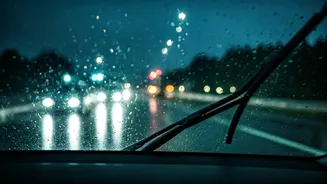
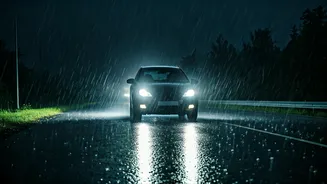
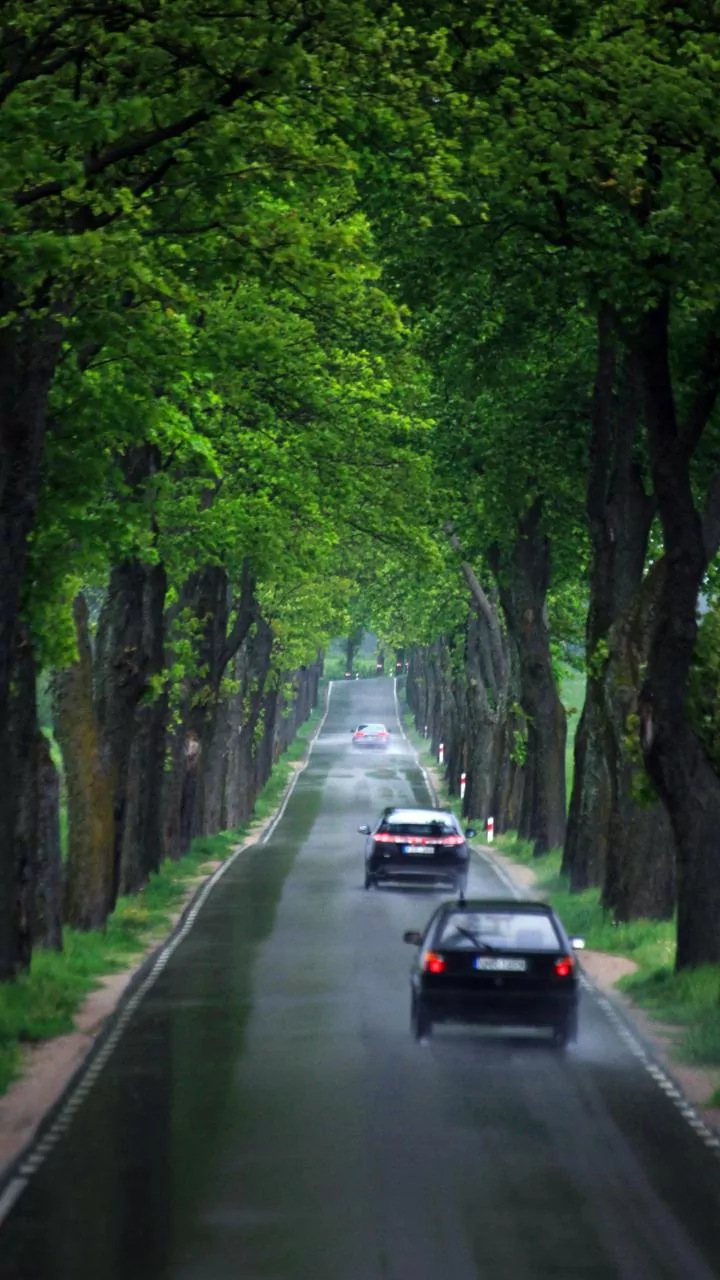
The combination of night and heavy rain creates a uniquely hazardous environment for any driver. Raindrops on the windshield distort and scatter light, which can blur your vision. [20, 21] At night, this effect is magnified. Glare from oncoming headlights
and streetlights reflects intensely off wet surfaces, making it difficult to judge distances or spot hazards on the road. [20] Your overall visibility is dramatically reduced, as the rain and darkness work together to lower the contrast between objects and their background. [16] This can make it nearly impossible to see pedestrians, cyclists, or debris until it's too late. Foggy windows, a common result of increased humidity during rain, further obstruct your view. [19, 20]
The Hidden Menace of Hydroplaning
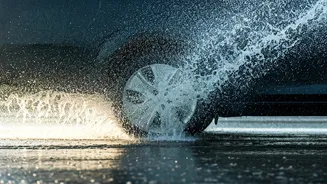
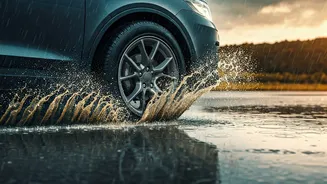
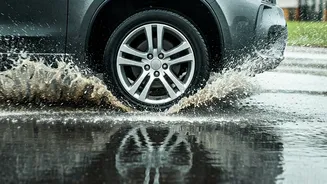
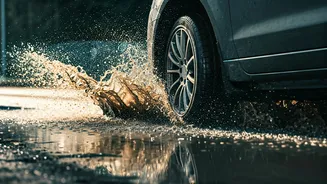
One of the most significant dangers on wet roads is hydroplaning, which occurs when a layer of water builds up between your tyres and the road surface, causing a loss of traction and control. [7, 12] At night, it is much harder to see the large puddles or sheets of standing water where hydroplaning is most likely to happen. [19] Speed is a major contributing factor; hydroplaning can occur at speeds as low as 55 km/h if conditions are right. [11, 12] The condition of your tyres is also critical; worn treads cannot channel water away effectively. [10, 12] If you feel your vehicle begin to hydroplane, it's crucial not to slam on the brakes. Instead, ease your foot off the accelerator and steer gently in the direction you want to go until you feel your tyres regain contact with the road. [6, 7]
Potholes and Waterlogging: India’s Monsoon Challenge
Indian roads present specific challenges during the monsoon that are amplified at night. [2] Potholes, already a common issue, become invisible when filled with rainwater, turning into a severe threat that can cause significant damage to your vehicle or lead to a loss of control. [2, 22] Waterlogging in low-lying areas and underpasses is another frequent problem. [30, 31] It is impossible to judge the depth of standing water in the dark. [6] Just six inches of water can be enough to cause a loss of control or stall your engine, and two feet can sweep a vehicle away. [8] Authorities often issue advisories during heavy rainfall, sometimes closing vulnerable routes like the Mumbai-Pune Expressway or ghat sections due to risks of landslides and flooding. [23, 24]
If You Absolutely Must Travel: A Safety Checklist
While the best advice is to wait, sometimes travel is unavoidable. [19] If you must drive, take these precautions. First, prepare your vehicle: ensure your headlights, taillights, and indicators are working perfectly. [4] Check that your wiper blades are in good condition and can clear the screen effectively, and that your tyres have adequate tread. [2, 3] Once on the road, slow down significantly—far below the posted speed limit. [26] Double the normal following distance between you and the vehicle ahead to allow for increased braking distances on wet surfaces. [6] Use your low-beam headlights to be more visible to others; high beams reflect off rain and fog, worsening visibility for you and oncoming drivers. [18] Avoid using cruise control, as you need to be in complete control of your speed. [7, 10]
What To Do If You Get Stuck
Getting stranded is a real possibility. If your vehicle stalls in a flooded area, do not attempt to restart the engine. [5] This could draw water into the engine and cause catastrophic damage. [5, 15] If water levels are rising around your car, your priority is your safety, not the vehicle's. [13] Turn on your hazard lights, unbuckle your seatbelt, and try to open your windows to escape before the water pressure makes it impossible to open the doors. [8, 13] If the windows are powered and fail, you may need to break one. Once you are out of the vehicle, get to higher ground immediately and wait for help. [9] Do not attempt to wade through fast-moving water, as even shallow, rushing water can knock you off your feet. [9]