





The Age-Old Question
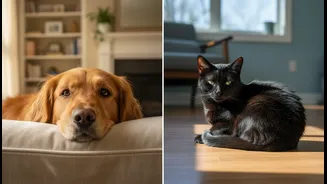
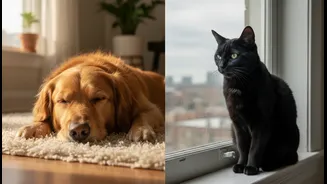
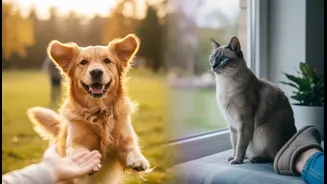
Are you a 'dog person' or a 'cat person'? It is a question often asked to gauge personality, loyalty, and even one's need for affection. Dogs are stereotypically seen as loyal, enthusiastic companions, always ready for a walk or a game of fetch. Cats,
on the other hand, are often painted as independent, aloof, and more passive in their affection. For years, pet owners have argued their case based on personal experience. A recent study published in the journal Frontiers in Psychology, however, decided to look at the data, moving beyond anecdotes to see how interacting with our furry friends truly affects our emotional state.
How the Study Worked
Researchers in the Netherlands conducted an experiment involving 188 dog and cat owners. Instead of bringing them into a lab, they used a method called 'ecological momentary assessment'. Participants used a smartphone app to log their moods, stress levels, and interactions with their pets up to 10 times a day for five days. This approach allowed the scientists to gather almost 8,000 real-time reports of how people felt during their everyday lives, providing a more natural picture of the human-animal bond and its effect on stress. The study aimed to see if interacting with a pet could act as a 'stress buffer'—something that lessens the impact of stressful moments as they happen.
A Boost for Everyone
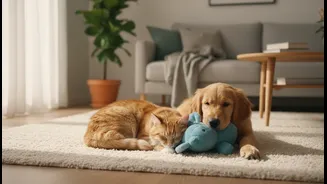
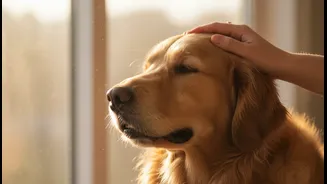
The first major finding was good news for all pet lovers: interacting with both dogs and cats was linked to a boost in positive emotions. When owners reported higher levels of interaction—be it petting, playing, or just hanging out—they also reported feeling more cheerful, happy, and satisfied. This positive effect was consistent across both species, with neither dogs nor cats proving to be more effective than the other at providing a short-term mood lift. The researchers suggested this might be because people tend to choose pets that match their own personalities, creating a strong owner-pet 'match' regardless of species.
The Surprising Twist on Stress
When it came to stress, the results were more complex and challenged a common belief. The study found that interacting with a pet did not actually reduce feelings of stress in the moment it was occurring. While pets provide general companionship, they didn't act as an immediate buffer against negative feelings caused by a stressful event. For dog owners, interactions during stressful moments were found to be neutral; they didn't make things better, but they didn't make them worse either. The findings for cat owners, however, were more surprising. The research tentatively suggested that for people who were already stressed, more intense interactions with their cats were linked to stronger negative feelings.
Why the Difference With Cats?
The scientists offered a speculative explanation for this unexpected finding. They theorised that because interactions with cats can be more passive and less physically demanding, a person seeking comfort during a high-stress moment might find the interaction more emotionally intense. An owner might be seeking a specific type of active support that a cat, by its independent nature, isn't always primed to give. This mismatch could potentially heighten feelings of frustration or sadness. However, the researchers urged caution in interpreting this result, noting that the sample of cat owners was smaller and the finding was not consistently observed across all their analyses.
The Final Verdict?
So, does this mean dogs are 'better' at handling our stress? Not at all, according to the study's authors. The key takeaway is not about which species wins, but about understanding the different ways they contribute to our well-being. Both pets provide a clear mood boost and a sense of companionship that improves our lives. The study simply shows that the idea of petting an animal to instantly erase stress in a specific moment might be a simplification. The benefits of pet ownership are real but may be more related to overall companionship and a general sense of feeling less alone, rather than an on-demand stress cure. Ultimately, the best pet is the one that fits an owner's personality and lifestyle.