




The Rocket Builders: Reaching for the Stars
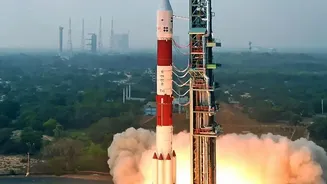
At the forefront of India's private space push are the launch vehicle startups, aiming to provide cost-effective rides to orbit for small satellites. Hyderabad-based Skyroot Aerospace made history by becoming India's first private company to launch a suborbital
rocket, the Vikram-S, in 2022. Their momentum continued with the successful orbital launch of the Vikram-1 rocket in July 2026, a vehicle capable of placing payloads into Low Earth Orbit and a major milestone for the country's private sector. Similarly, Chennai's Agnikul Cosmos is innovating with its Agnibaan rocket, which successfully flew a suborbital test mission in May 2024. A key feature of Agnibaan is its single-piece, 3D-printed semi-cryogenic engine, a world-first technology that promises to make rocket manufacturing faster and more reliable. Both companies are crucial in building indigenous capacity to compete in the global small satellite launch market.
The Eye in the Sky: Satellite Constellations
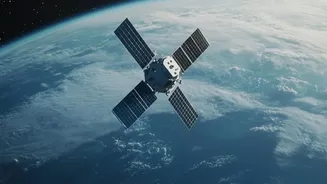
While rockets get satellites to space, a new breed of startups is focused on what those satellites do once they are in orbit. Pixxel is a leader in this domain, building a constellation of hyperspectral imaging satellites. Unlike standard cameras, these satellites capture data across hundreds of spectral bands, revealing information invisible to the naked eye, such as crop health, mineral deposits, and pollution levels. The company has already launched several demonstration and commercial satellites for its 'Firefly' constellation and is developing the next-generation 'Honeybee' constellation. Another key player is Dhruva Space, a full-stack space engineering company that builds satellite platforms and subsystems. The Hyderabad-based firm recently secured significant funding for its 'Project Garud,' which aims to develop a 500 kg-class satellite platform for communications and defence, further reducing India's reliance on foreign hardware.
In-Space Mobility: The Propulsion Pioneers
Getting to orbit is one challenge; moving around efficiently once you are there is another. Bellatrix Aerospace is tackling this with its advanced satellite propulsion systems. The Bengaluru-based startup is developing Hall-effect thrusters, a form of electric propulsion that is far more fuel-efficient than traditional chemical rockets. These thrusters, marketed as the Arka series, provide the gentle, sustained push needed for satellites to perform crucial tasks like station-keeping, collision avoidance, and eventual de-orbiting, thereby extending mission life and making operations more sustainable. By pioneering these high-efficiency thrusters in India, Bellatrix is providing a critical component for the long-term viability of satellite constellations being built by other startups.
The Broader Ecosystem: From Policy to Parts
The rise of these startups is no accident. It is the direct result of the Indian Space Policy 2023, which formally opened the sector to private participation, and the creation of IN-SPACe, a single-window agency to promote and authorise private space activities. This supportive environment has seen the number of Indian space startups grow from just one in 2014 to over 400 by 2026. This ecosystem extends beyond the headline-grabbing rocket and satellite builders to companies working on downstream data analytics, ground station services, and specialized components. For example, Astrogate Labs is developing optical communication terminals to enable high-speed data transfer between satellites. This combination of ambitious startups and government enablement is what positions India to capture a much larger share of the global space economy, which is projected to grow significantly in the coming years.