







The Science of a Sticky Counter
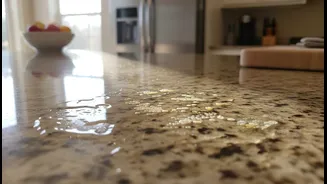
Warm, humid conditions are a paradise for bacteria. Moisture is a necessary ingredient for most bacteria to thrive and multiply. During the monsoon season in India, when ambient humidity can exceed 80-90%, this problem is magnified. A thin, invisible
film of moisture can form on surfaces like your kitchen countertop, providing the hydration bacteria like E. coli and Staphylococcus need to flourish. Even non-porous surfaces such as granite or plastic, which are designed to resist moisture absorption, can sustain bacterial life for days in these conditions, especially when combined with tiny food particles or grease residue.
Why Your Usual Wipe-Down Fails
A quick pass with a damp cloth might make your counter look clean, but in high humidity, it can make the problem worse. Simply moving bacteria around, a damp sponge or cloth is often a thriving bacterial colony itself. Many common cleaning methods can leave behind just enough moisture to fuel the next wave of bacterial growth. Furthermore, the effectiveness of some disinfectants can be compromised in humid environments. The crucial step is not just cleaning—removing dirt and grime—but disinfecting, which kills germs on contact. And most importantly, ensuring the surface is left completely dry afterwards.
A Better Cleaning and Disinfecting Strategy
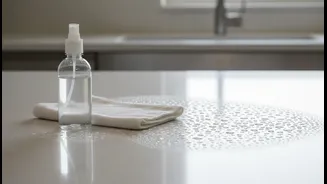
To truly combat bacteria in a humid climate, a multi-step approach is necessary. First, clear the counter and clean it with soap and warm water to remove all food debris and grease. This initial step removes the nutrients that bacteria feed on. Next, disinfect the surface. A simple and effective solution is a 50/50 mixture of 70% isopropyl alcohol and water in a spray bottle. This is safe for most countertop materials like granite and quartz and evaporates quickly. For a natural alternative, you can use white vinegar, which has antifungal and antibacterial properties. After disinfecting, the final, non-negotiable step is to dry the counter thoroughly with a clean, dry microfiber cloth. Microfiber is excellent at trapping any remaining moisture and particles.
Maintaining a Drier Kitchen Environment
Your cleaning routine is only half the battle; managing the overall environment is key. Increase ventilation by using an exhaust fan while cooking and even afterwards to help pull moist air out of the kitchen. If possible, open windows on less humid days to encourage air circulation. Be vigilant about wiping up spills immediately and keeping the sink area dry. You can also use natural moisture absorbers around the kitchen, such as bowls of rock salt or activated charcoal, placed in corners or inside cabinets to help reduce ambient humidity. Regularly cleaning your sponges and dishcloths is also critical; microwaving a damp sponge for two minutes can kill 99.9% of bacteria.