

Shahi Tukda, the 'royal piece' of Indian desserts, is more than just a sweet treat; it's an experience. Adding this Mughlai bread pudding to your menu can offer a perfect blend of tradition and indulgence that diners are looking for.
Understanding the Royal Legacy
Before adding it to
a menu, it’s essential to understand the dessert’s heritage. Shahi Tukda, which translates to 'royal piece', has its roots in Mughal cuisine, believed to have been developed by royal chefs to impress the court. It was conceived as an ingenious way to use bread, transforming it into a luxurious pudding by frying it in ghee, soaking it in a fragrant syrup, and topping it with a rich, thickened milk known as rabri. This history provides a powerful story you can share on your menu, instantly elevating the dish from a simple dessert to a taste of culinary history. Its association with festive occasions like Eid and grand celebrations also gives it a premium, celebratory feel that can attract customers looking for something special.
The Ranveer Brar Approach: Quick and Refined
Celebrity chef Ranveer Brar’s take on Shahi Tukda offers a masterclass in balancing tradition with modern kitchen practicalities. One of his notable innovations is an 'instant rabri' that delivers the classic creamy texture without the hours-long process of reducing milk. His method often involves using condensed milk and breadcrumbs blended into a sweetened milk base to create a smooth, rich topping quickly. This approach is ideal for a busy restaurant environment, ensuring consistency and saving valuable prep time without compromising on flavour. Brar's recipes also emphasize presentation, with elegant garnishes like saffron milk, rose petals, and silver leaf (varq), transforming a humble dish into a visually stunning creation fit for a fine-dining menu.
Core Recipe Inspired by the Master
To create a restaurant-quality Shahi Tukda, focus on three key stages. First, prepare the bread. Use thick-sliced white bread with the crusts removed, cut into triangles. Fry these slices in ghee over a medium flame until they are crisp and a deep golden brown. Second, create the syrup. A simple syrup of milk, sugar, and a few strands of saffron boiled for a few minutes is a quick and effective choice. Dip the fried bread slices into this warm syrup just long enough for them to absorb the sweetness without becoming soggy. Finally, prepare the quick rabri. Following Brar’s method, blend the remaining sweetened milk from the syrup with condensed milk, a few breadcrumbs, cardamom powder, and rose water until smooth. This creates a luscious, pourable rabri that can be made in minutes.
Perfecting Presentation and Plating
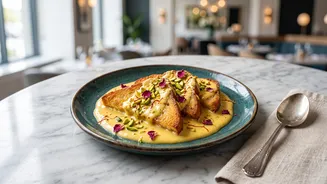
How you present Shahi Tukda is just as important as how it tastes. For a modern, clean look, arrange two or three syrup-soaked bread triangles neatly on a plate. Gently pour the chilled rabri over the top, allowing it to pool around the base. The contrast between the warm, crisp bread and the cool, creamy rabri is a key part of the experience. Elevate the dish with thoughtful garnishes. A sprinkle of finely sliced pistachios and almonds adds texture, while a few strands of saffron or delicate, edible rose petals provide colour and an aromatic finish. For a truly royal touch, a small piece of edible silver leaf (varq) can be placed on top, signalling to the diner that this is a premium dessert.
Menu Strategy: Pricing and Pairing
Shahi Tukda is a cost-effective dessert to produce, as its primary ingredients—bread, milk, and sugar—are relatively inexpensive. This allows for a healthy profit margin while still offering customers a dish with high perceived value. When adding it to your menu, describe it with evocative language like 'A royal bread pudding, fried in ghee and soaked in saffron-cardamom milk, served with chilled creamy rabri'. This paints a picture for the customer. In terms of pairing, Shahi Tukda is quite rich, so it stands well on its own. However, offering it with a cup of black coffee or a light, unsweetened tea can provide a welcome contrast to its sweetness. For a more modern spin, a small scoop of vanilla or pistachio ice cream can be served alongside, though be mindful not to overwhelm the dessert's delicate flavours.